A radiant heating system in High Point, NC turns cold slab floors and uneven winter comfort into warm, even heat that never blows dust through a vent. This guide covers how electric and hydronic radiant heat actually work, what each costs installed in 2026, where it pays off fastest in Piedmont Triad homes, and when a repair beats tearing out the floor. By the end you'll know which system fits your home and what to ask before you book an installer.
How a Radiant Heating System Works
Radiant heat warms objects and people directly through a floor surface instead of heating and circulating air through ductwork. The U.S. Department of Energy notes that this approach is more efficient than baseboard heating and usually more efficient than forced-air heating because no energy is lost through ducts . That's a meaningful distinction for older High Point homes with leaky crawlspace ductwork, since the floor itself becomes the heat emitter rather than relying on a duct system to deliver warmth from room to room.
There are two main categories homeowners choose between:
- Electric radiant heat uses thin cable or mat elements wired to a dedicated thermostat, installed directly beneath tile, stone, or engineered flooring.
- Hydronic radiant heat circulates heated water through PEX tubing connected to a boiler, feeding one zone or an entire home.
Independent lab testing cited by Scientific American also found that radiant systems transmit heat on average some 15 percent more efficiently than conventional radiators , which is one reason hydronic retrofits are gaining ground in the Triad's older brick ranches.
Electric vs. Hydronic Radiant Heat for High Point Homes
Both systems get floors warm, but they solve different problems. Use this table to narrow down which one fits your project before you call for quotes.
| Factor | Electric Radiant | Hydronic Radiant |
|---|---|---|
| Installed cost | $8 to $15 per sq ft | $12 to $25 per sq ft |
| Best application | Single rooms: bathrooms, kitchens, additions | Whole-home heating, new construction, major remodels |
| Heat source | Dedicated electrical circuit | Boiler (gas, electric, or heat pump-fed) |
| Operating cost | Higher per BTU at scale | Lower per BTU over the long run |
| Typical lifespan | 15 to 25 years (heating elements) | 25 to 35+ years (tubing); boiler 15 to 20 years |
| Retrofit difficulty | Easier, minimal floor height change | More invasive, may need subfloor or joist access |
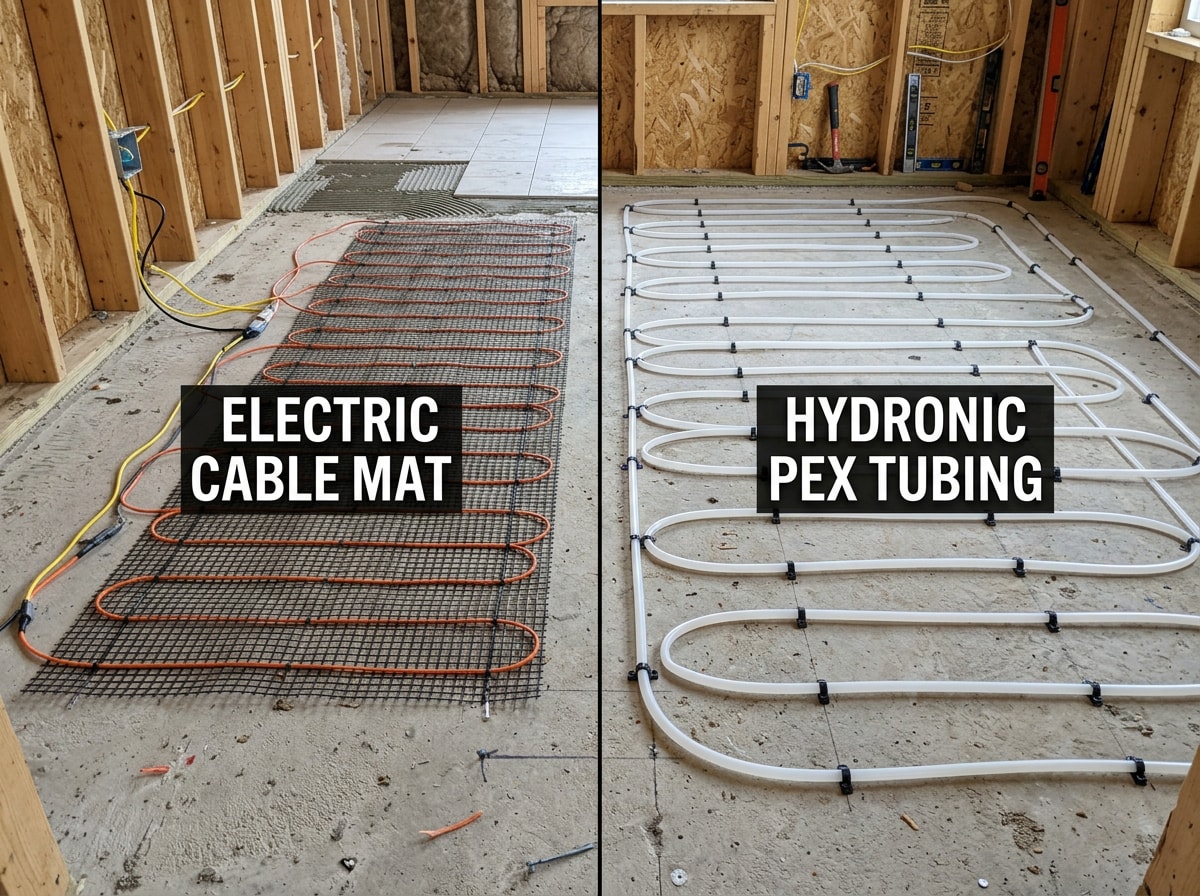
If you're only warming a primary bathroom or a sunroom addition, electric almost always wins on upfront cost. If you're replacing a forced-air system house-wide or building new, hydronic typically wins on long-term operating cost and equipment life. For a closer look at electric-boiler-driven radiant setups specifically, see our guide to electric boilers for radiant heat in Archdale, which breaks down equipment sizing and install costs in more detail.
Benefits of Radiant Floor Heating in High Point, NC
Homeowners in the Piedmont Triad choose radiant heat for a few consistent reasons:
- Even warmth, no cold spots. Heat radiates from the entire floor rather than a handful of vents.
- Quiet operation. No blower motor or air handler cycling on and off.
- Better indoor air quality. Without ductwork, there's less opportunity to circulate dust, pet dander, and allergens.
- No visible equipment. No registers, grilles, or radiators to work around when placing furniture.
- Lower operating temperatures. Hydronic systems run at lower water temperatures than baseboard radiators, which can extend boiler life.
The Real Downsides of Radiant Heat
Most local contractor pages skip this part. We won't, because it affects whether radiant heat is the right call for your specific house.
- Slow response time. A cold radiant floor can take hours to reach target temperature, so it's a poor fit for homes that want fast setback-to-comfort recovery.
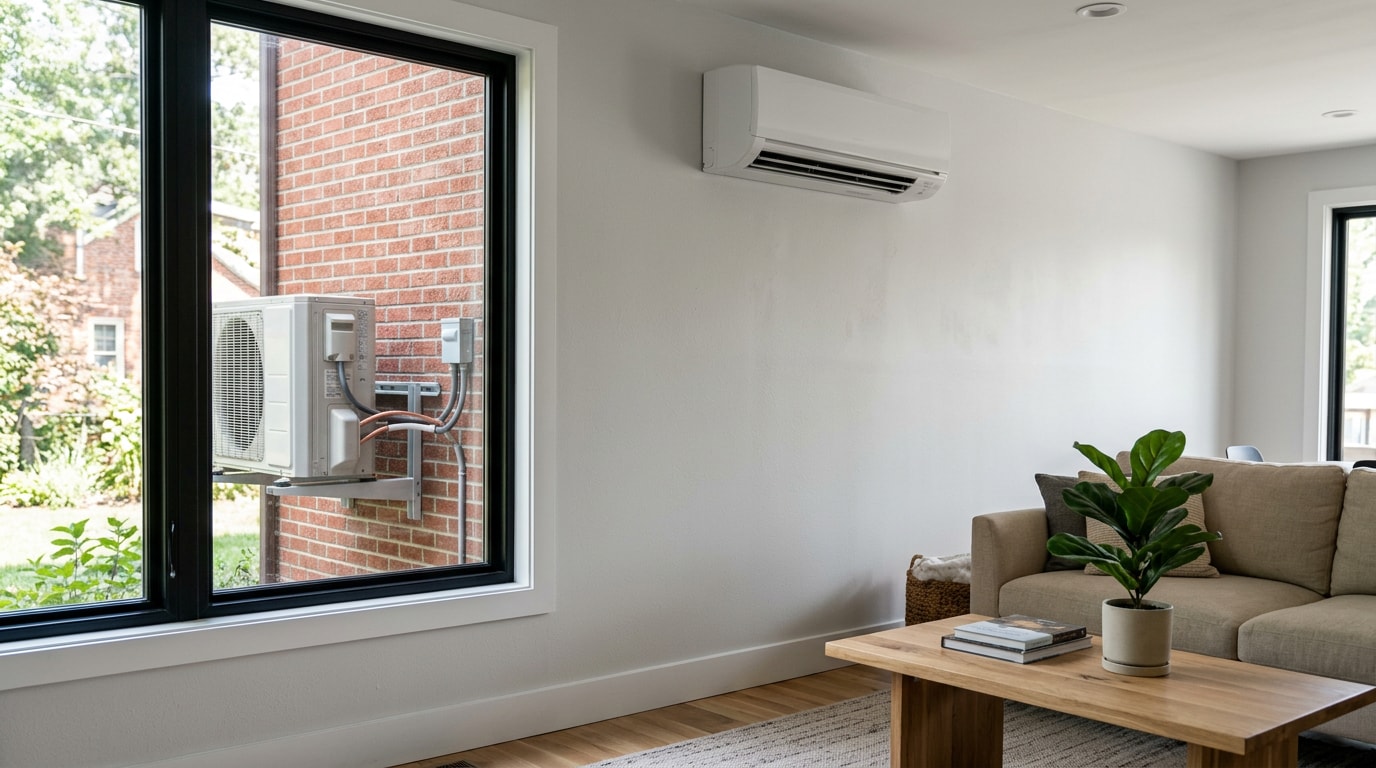
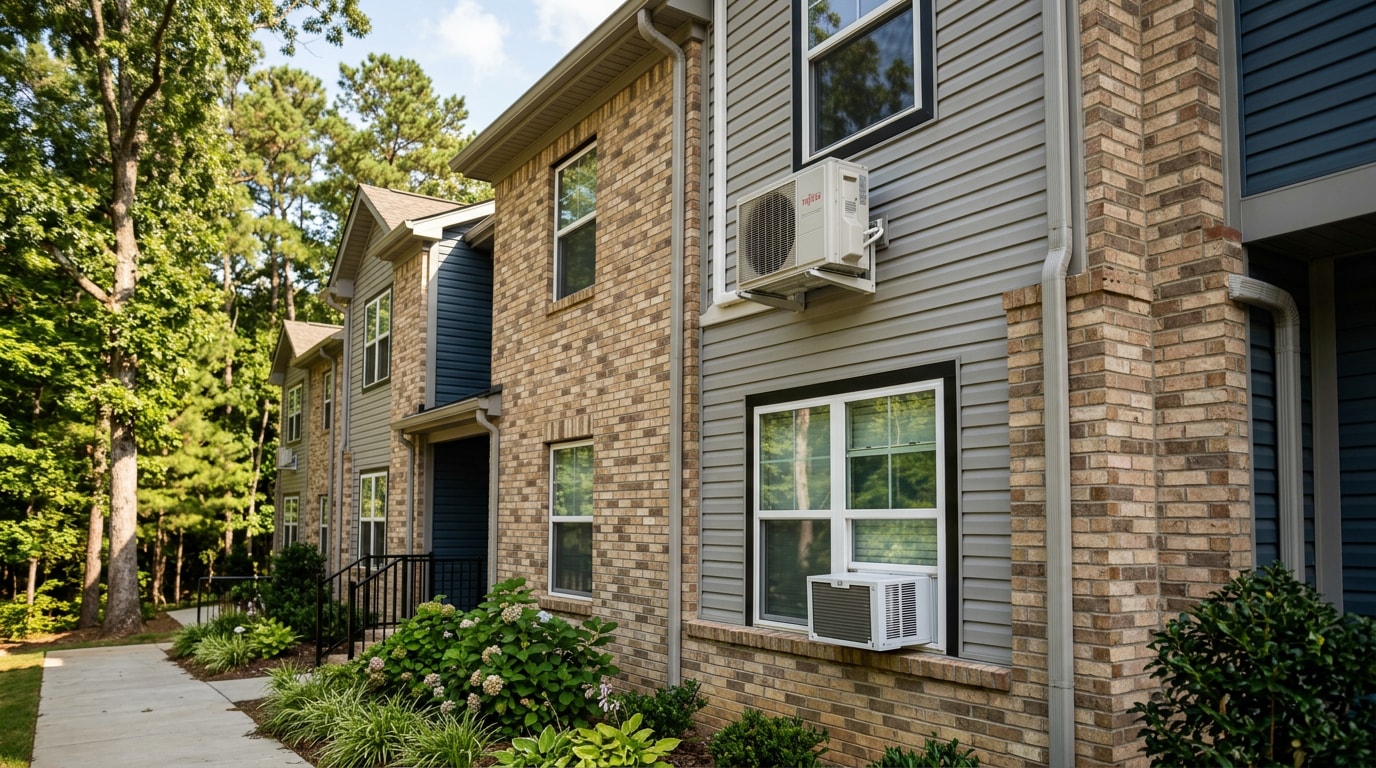
- No cooling. Radiant floors heat only. You'll still need central air conditioning, a heat pump, or ductless mini-splits for summer cooling.
- Repairs can be disruptive. Because elements sit under the finished floor, diagnosing and fixing a dead zone sometimes means lifting flooring, especially with older electric mats that weren't installed with a spare loop.
- Floor height changes. Retrofits typically raise finished floor height by about half an inch to an inch, which can affect door clearances and transitions to adjacent rooms.
- Flooring compatibility matters. Solid hardwood is more prone to gapping and cracking from the heat cycling than tile, stone, or engineered wood.
None of these are dealbreakers for most projects, but they're worth weighing against the comfort gains before you commit to a whole-home hydronic install.
2026 Radiant Heating Installation Cost in High Point, NC
Installed pricing depends heavily on whether you're adding radiant heat to new construction, retrofitting an existing room, and whether new flooring is part of the job.
| Project Type | Typical Installed Cost |
|---|---|
| Electric mat, single bathroom retrofit | $400 to $1,700 depending on size and flooring |
| Electric radiant, whole room (kitchen/den) | $8 to $15 per sq ft |
| Hydronic radiant, new construction | $12 to $25 per sq ft |
| Hydronic radiant, whole-home retrofit | $15,000 to $45,000+ depending on square footage and boiler capacity |
A few things that move the price up or down:
- Retrofits cost more than new construction because of flooring removal, subfloor prep, and sometimes crawlspace access work.
- Boiler sizing and zoning add cost for hydronic systems but improve comfort and efficiency if the home has multiple living levels.
- ENERGY STAR-qualified boilers cost more upfront but run more efficiently; certified gas boilers carry
annual fuel utilization efficiency (AFUE) ratings of 87% or greater for oil boilers and 90% or greater for gas boilers , according to ENERGY STAR.
If you're weighing radiant against a full system swap, our heating system repair page and seasonal heating maintenance service can help you decide whether your current setup is worth saving first.
Best Flooring and Rooms for Radiant Heat
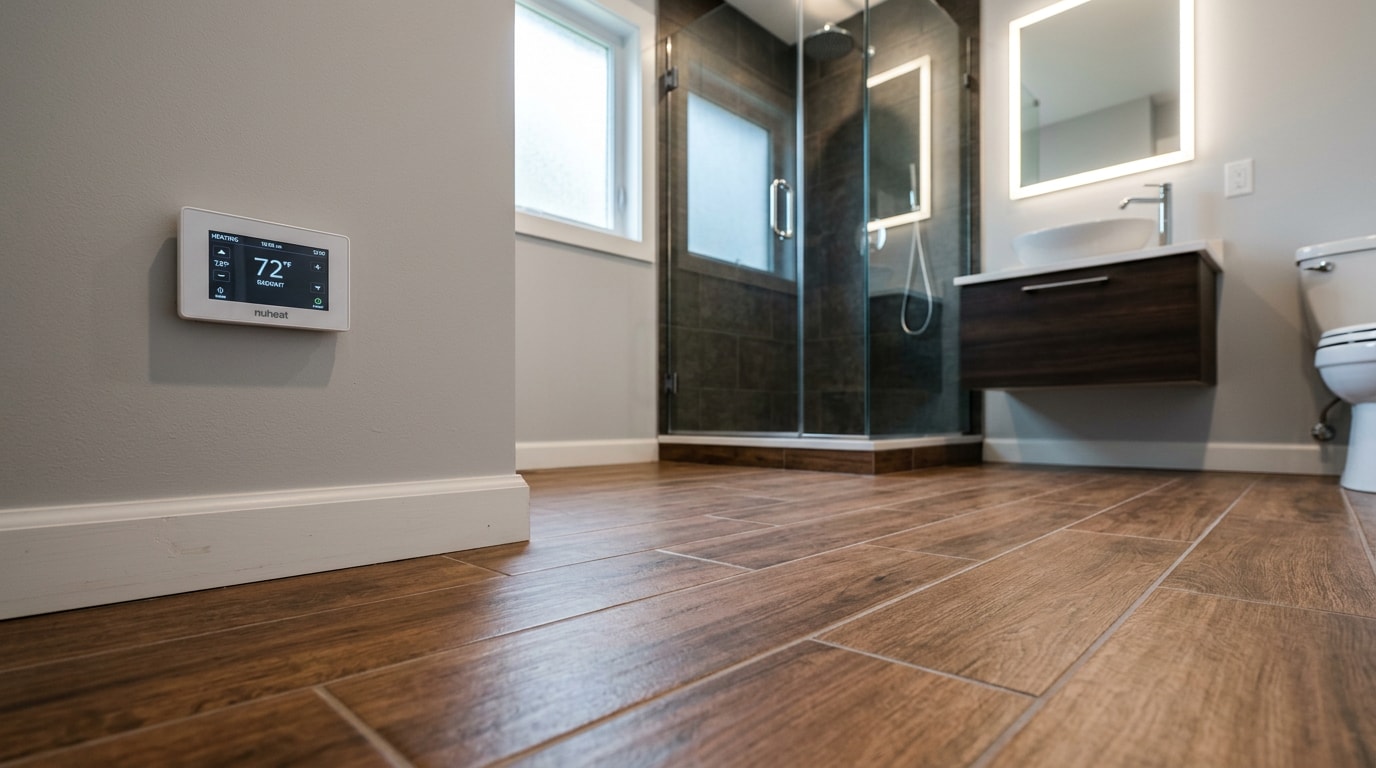
Tile and natural stone conduct heat efficiently and are the most common pairing for radiant systems, which is why bathroom floor heating remains the most popular single-room upgrade. Engineered wood and some luxury vinyl products also work well. Solid hardwood needs careful evaluation because of expansion and gap risk as the floor cycles between warm and cool.
Rooms where radiant heat performs best in High Point homes:
- Bathrooms and ensuites
- Kitchens
- Finished basements
- Sunrooms and additions
- Whole-home installs in new construction or major renovations
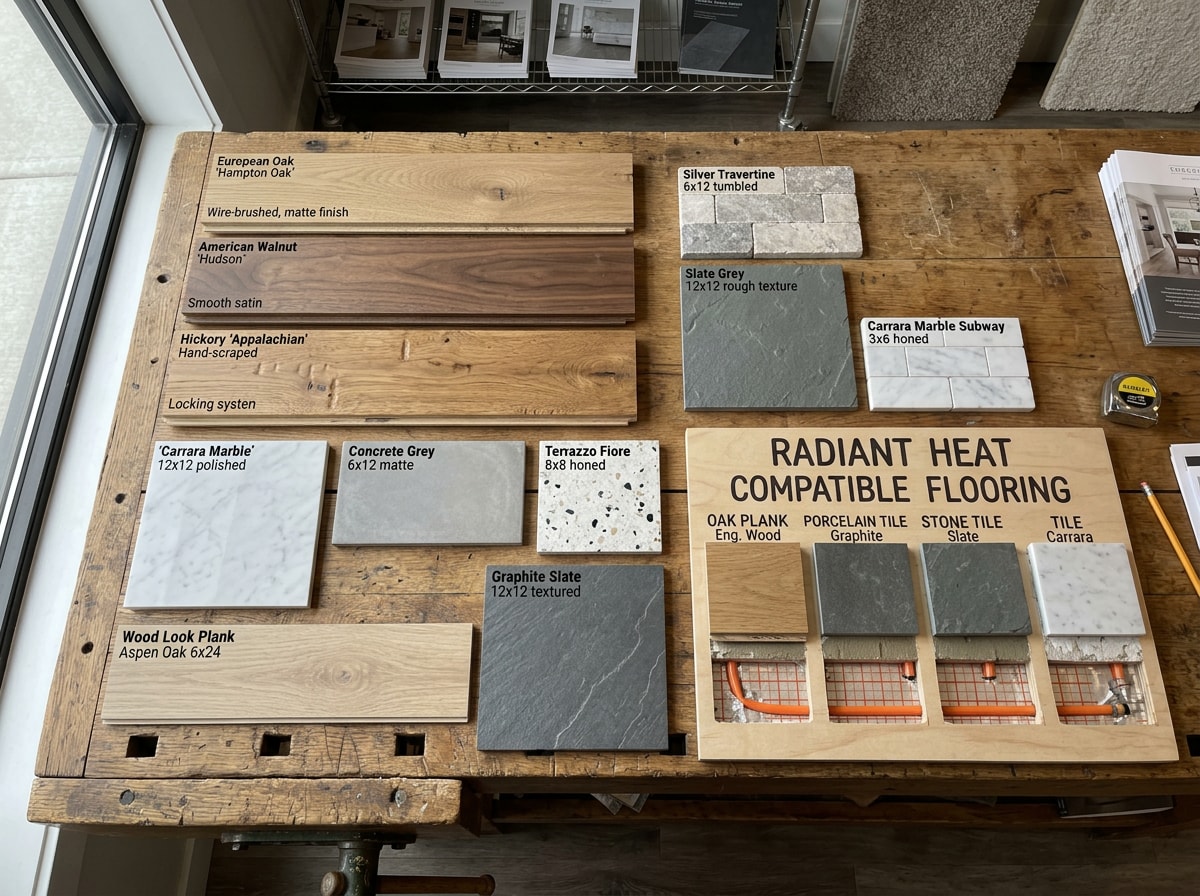
Our Installation Process
Every radiant heat project starts with a site visit and a conversation about how the room is used, not just its square footage. From there, the process typically looks like this:
- Assessment and system selection. We evaluate floor height, subfloor type, crawlspace or basement access, and existing heat source before recommending electric or hydronic.
- Permitting. North Carolina requires that anyone who wants to
erect, install, enlarge, alter, repair, remove, convert or replace a mechanical system... shall first make application to the code official and obtain the required permit for the work , per the North Carolina Mechanical Code. We handle this step so you don't have to track down the paperwork.
- Installation. Electric mat jobs often wrap in a day or two; hydronic loops, manifolds, and boiler tie-ins take longer, especially on whole-home projects.
- Inspection and testing. Hydronic loops are pressure-tested before flooring goes down; electric mats are tested for continuity before the mortar bed is poured.
In the slab-on-grade ranches and split-levels common around High Point and Jamestown, crawlspace access is usually the single biggest factor in whether a retrofit finishes in a few days or stretches into a multi-week job. We've found it's worth confirming access before quoting a firm timeline. Browse our recent projects to see completed installs in the area, and check our High Point service area page for coverage details.
Radiant Heat Repair: Signs You Need Service
Uneven warmth, unusual noise near a boiler, or moisture near flooring edges are the most common signs a radiant system needs attention. Minor hydronic issues like trapped air in the lines are usually repairable. Aging electric mats with a failed heating element more often call for replacement of that section rather than a patch repair.
If your system has stopped heating altogether or you're dealing with a no-heat emergency in the middle of winter, our emergency heating service team can get a technician out quickly. For non-emergency diagnostics, our heating contractor services team can tell you whether a repair or a section replacement makes more sense for your system.
Ready to talk through your options? Get a free estimate and we'll walk you through electric vs. hydronic for your specific floor plan.
FAQ
How long does radiant floor heating last?
Hydronic tubing commonly lasts 25 to 35 years or more, with boilers typically running 15 to 20 years before replacement. Electric radiant elements average 15 to 25 years with minimal maintenance.
Is radiant floor heating worth it?
For bathrooms, kitchens, and whole-home installs in frequently used living space, most High Point homeowners find the comfort and efficiency gains justify the upfront cost. It's a weaker fit for rental properties or rooms you rarely use, where the payback period is longer.
What is the downside of radiant floor heating?
The biggest tradeoffs are slower response time compared to forced air, no cooling capability, higher upfront cost for hydronic systems, and more disruptive repairs since components sit under the finished floor.
Can I install radiant heating under my existing floors?
Retrofitting is possible under most flooring types, though it typically raises finished floor height by about half an inch to an inch, which can affect door clearances and transitions.
How long does radiant heating installation take?
A single-room electric retrofit often takes one to three days. Whole-home hydronic installations can take one to two weeks or more depending on boiler work, zoning, and crawlspace access.
What is the difference between electric and hydronic radiant heat?
Electric radiant heat uses cable or mat elements and suits smaller spaces like bathrooms. Hydronic radiant heat circulates heated water through tubing and is better suited to whole-home heating, with lower long-term operating costs.
Do I still need a furnace or AC with radiant floor heat?
Yes. Radiant floors provide heating only, not cooling, so most homes still need central air conditioning, a heat pump, or a ductless system for summer comfort.
About the Author
This guide was reviewed by the licensed heating technicians at Repair Solutions HVAC, a North Carolina HVAC and plumbing contractor serving High Point, Greensboro, Winston-Salem, and the greater Piedmont Triad. Our team holds NC HVAC contractor licensing and handles radiant, forced-air, and hydronic heating installs and repairs throughout the region. Questions about your project? Contact us or visit the Repair Solutions HVAC homepage to see our full range of heating and cooling services.