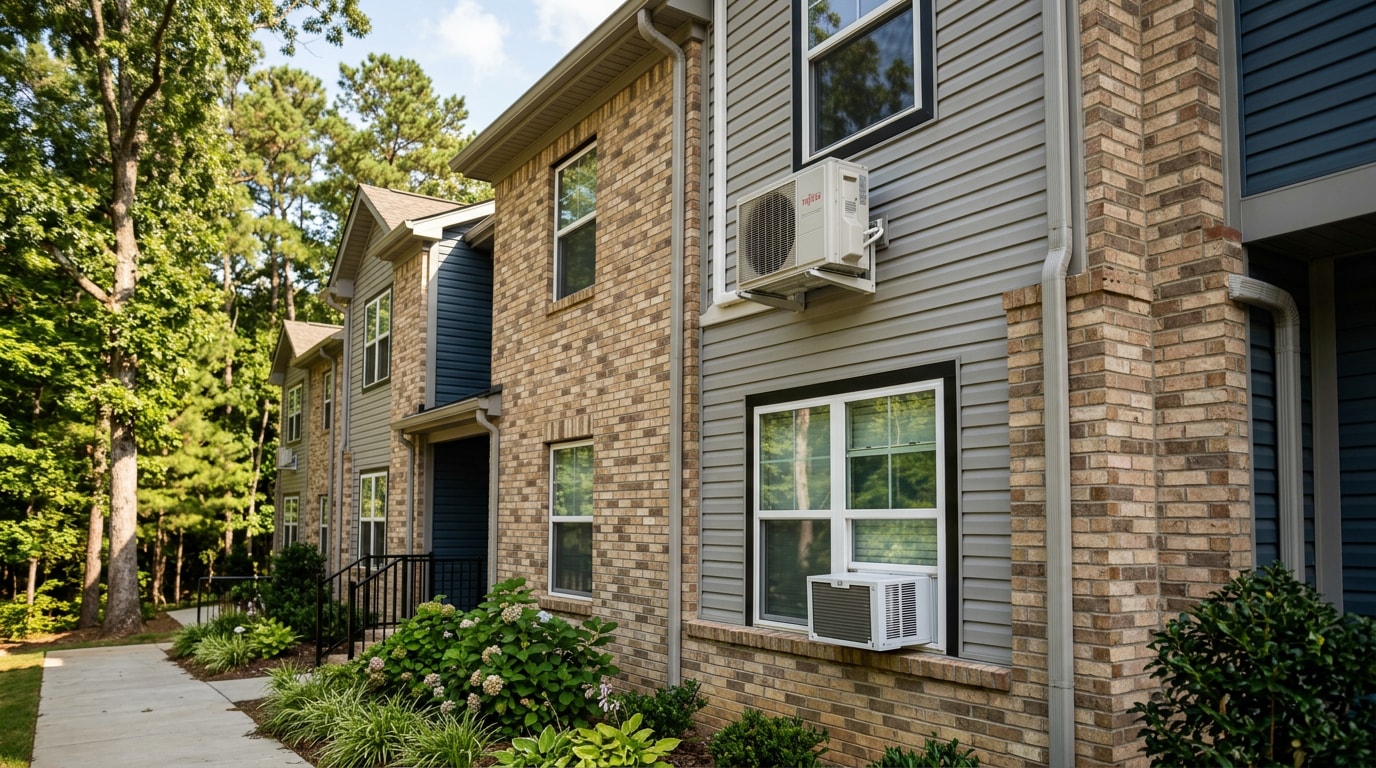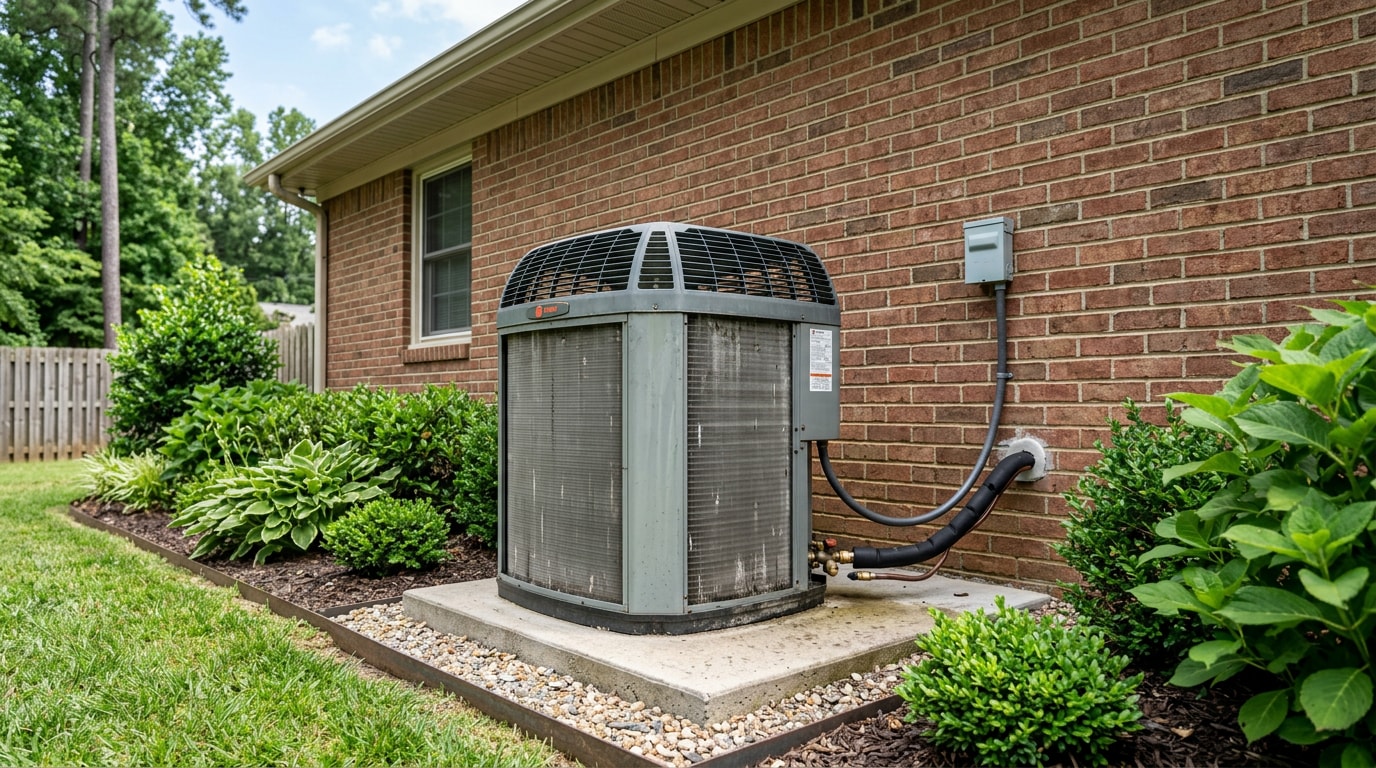
Mini split heat and ac Greensboro, NC installations give homeowners one system that cools in July and heats in January, with no new ductwork to cut into. Piedmont summers push humidity into the 90s while winter mornings routinely dip into the 20s, so the equipment has to earn its keep both ways. Below is what these systems actually cost here, how install and repair work, and when ductless beats central air for your home.
What Is a Ductless Mini Split Heat and AC System?
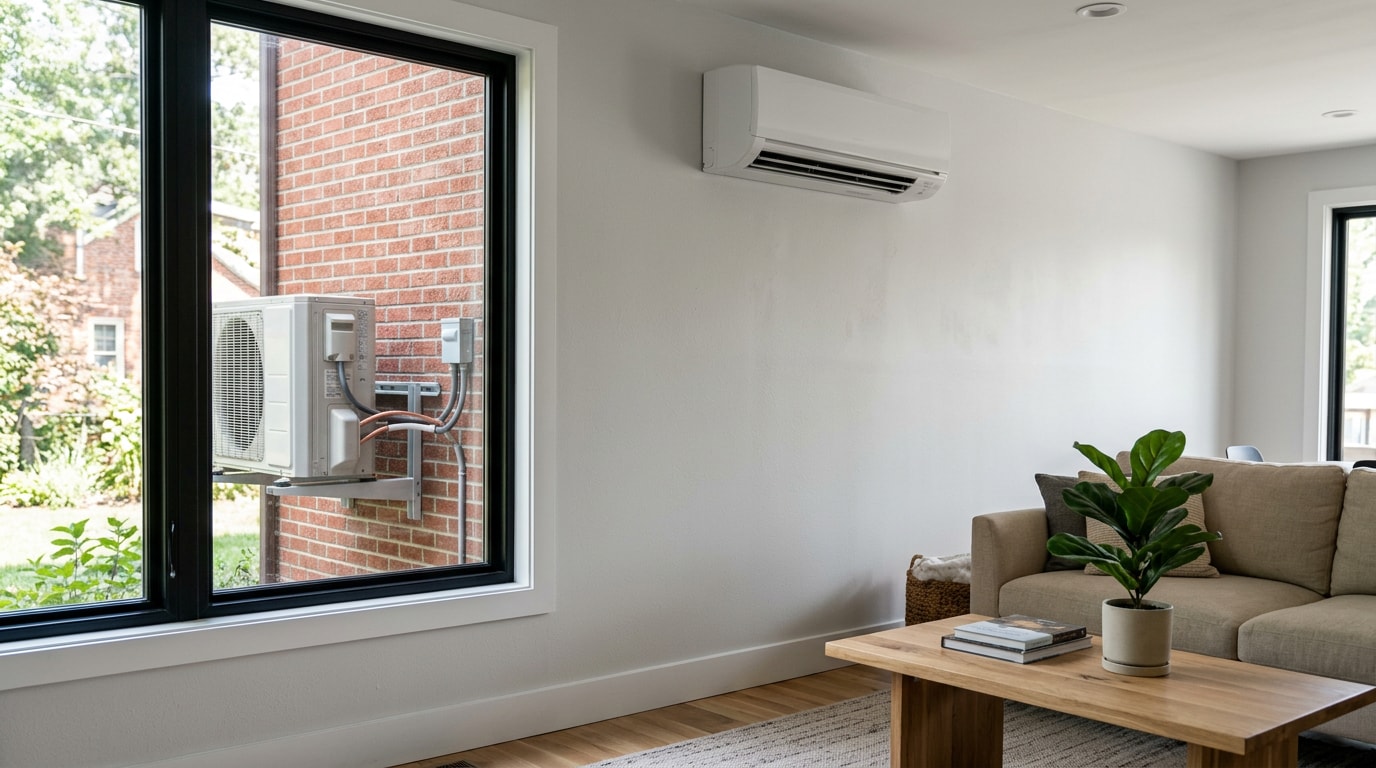
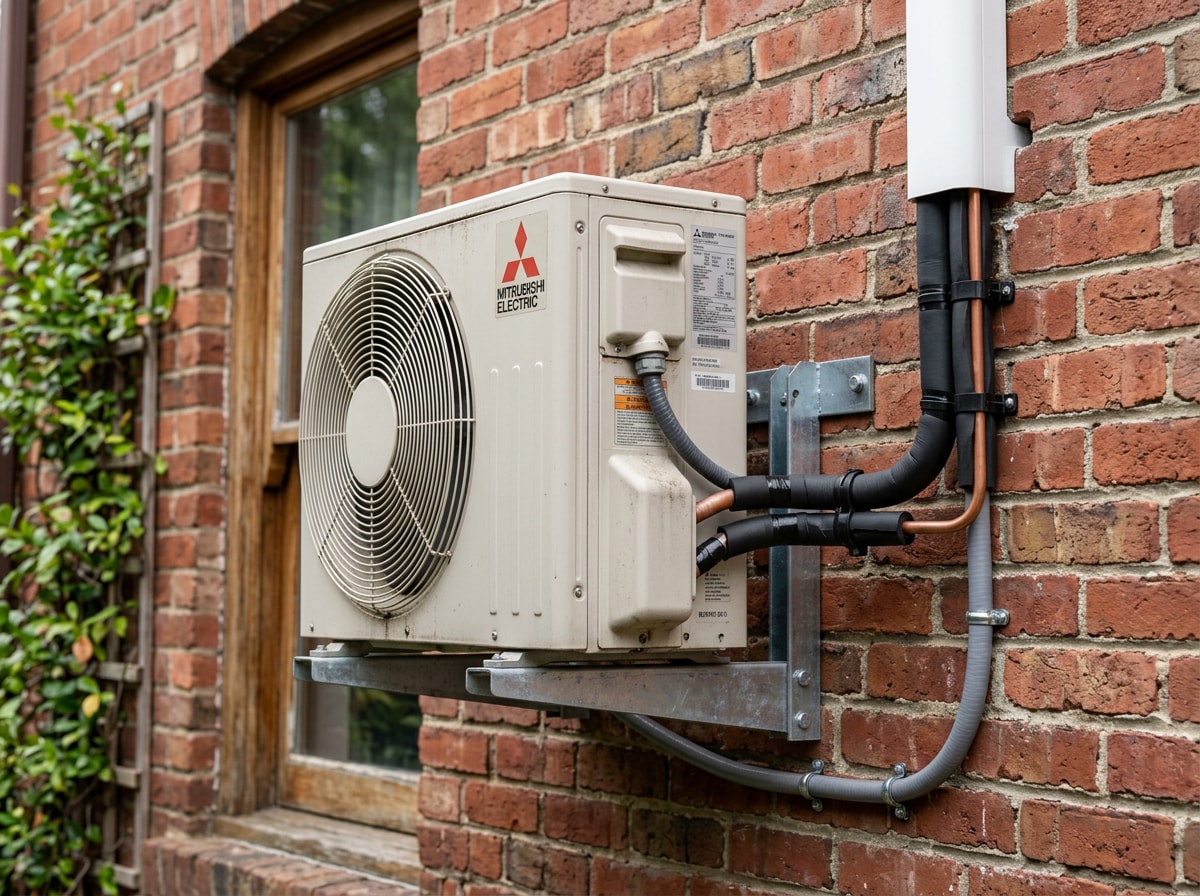
A ductless mini split pairs an indoor air handler, mounted on a wall or ceiling, with an outdoor condenser. Slim refrigerant lines run between them through a small wall opening. No ductwork is involved anywhere in the process.
Because it runs as a heat pump, a single mini split heat and ac unit both cools in summer and heats in winter. That makes it a genuine year-round comfort system, not just an air conditioner with a backup heat strip.
How a Mini Split Actually Works
Refrigerant circulates between the indoor head and outdoor condenser, absorbing heat from one space and releasing it in the other. A reversing valve flips that flow on command: pulling warmth indoors in winter, pushing it back outside in summer. The result is zoned comfort for individual rooms instead of one thermostat fighting for the whole house.
One technical detail worth knowing for 2026 buyers: new mini splits sold this year use low-GWP R-454B or R-32 refrigerant instead of the older R-410A. The switch adds modestly to equipment cost but is now the industry standard, not an upsell.
What Does Mini Split Heat and AC Cost in Greensboro, NC?
Pricing swings more than most homeowners expect, driven mostly by zone count and the complexity of the install site. Here's what local data shows for the Greensboro market in 2026.
| System Type | Typical Installed Cost in Greensboro |
|---|---|
| Single-zone mini split | $2,000 to $5,000 |
| Multi-zone mini split (whole-home) | up to $11,610 |
| Central air replacement (for comparison) | $3,500 to $7,500 |
A ductless mini-split system in Greensboro runs $2,000 to $5,000, while a central split system costs $3,500 to $7,500 . On the higher end, a full multi-zone setup in a 2,000-square-foot Greensboro home can run up to $11,610 for a multi-zone mini-split system .
Zone count matters more than brand or efficiency rating when it comes to final price. Each additional indoor head adds both equipment and labor cost, so a multi-zone system typically runs about 2.5 to 3 times the cost of a single-zone system .
Why Choose Mini Split Heat and AC for Your Greensboro Home
Many Greensboro homes, especially older bungalows, converted attics, sunrooms, and garage conversions, weren't built with ductwork in mind. A mini split solves that without the cost of tearing into walls to add ducts.
The Piedmont climate adds a second reason to go ductless. Humid summers paired with mild, damp winters mean a system that handles moisture control and efficient heating pays off twice a year instead of once.
Incentives help too. Air-source heat pumps that carry the ENERGY STAR label are eligible for a federal tax credit up to $2,000, effective for products purchased and installed between January 1, 2023, and December 31, 2032 . Eligibility rules changed for 2025 forward, so confirm your specific unit qualifies through the ENERGY STAR air-source heat pump tax credit page before you budget the project.
Benefits of Ductless Mini Split Systems
Beyond Greensboro-specific advantages, ductless systems offer benefits that apply almost anywhere:
- Zoned comfort. Heat or cool only the rooms in use, cutting waste on empty bedrooms or rarely used additions.
- Flexible installation. Compact indoor and outdoor units fit spaces where traditional HVAC equipment won't.
- No duct losses. Traditional ductwork can account for
more than 30% of a home's energy use for space conditioning lost to leaks and poor insulation.
- Lower bills over time. Modern units carry high SEER2 ratings, delivering more heating and cooling per unit of electricity.
- Backed by DOE data. According to the
U.S. Department of Energy, ductless mini-split systems help reduce home energy usage by up to 30% compared to a ducted system heating or cooling the whole house . The DOE's heat pump savings overview breaks down how that savings adds up over a full season.
Mini Split Installation in Greensboro
Professional installation starts with a site assessment. A technician evaluates room size, insulation, and sun exposure to calculate the correct BTU capacity for each zone.
From there:
- The indoor air handler is mounted on a wall or ceiling bracket.
- The outdoor condenser is set on a pad or wall bracket with clearance for airflow.
- Refrigerant lines route through a small wall penetration, typically a 3-inch hole.
- Lines are sealed, the system is vacuum-tested, and refrigerant is charged to spec.
Getting the install right the first time matters. Incorrect refrigerant charge or undersized equipment can quietly sabotage efficiency and shorten the system's lifespan. Charging a mini split also legally requires a certified technician: EPA regulations under Section 608 of the Clean Air Act require that technicians who maintain, service, repair, or dispose of equipment that could release ozone-depleting refrigerants into the atmosphere must be certified . See the EPA's Section 608 technician certification requirements for the full rule.
One more install detail that catches homeowners off guard: not every home has spare electrical capacity. A dedicated 240V circuit is only needed if your panel doesn't already have one available that meets code , so ask your installer to check this during the initial visit, not after the equipment arrives.
That's why ductless install work should always go through a licensed HVAC contractor rather than a DIY kit. Explore our air conditioning installation services or heat pump replacement services to see what's included, or get a free estimate before you commit to a system size.
Mini Split Repair: Signs You Need Service
Even a well-installed system eventually needs attention. Watch for:
- Unusual clicking or buzzing noises from either unit
- Weak or uneven airflow from the indoor head
- Visible ice forming on the indoor coil
- Water pooling near the indoor unit
- Error codes on the remote or display
- An unexplained jump in your electric bill
Common repair calls involve refrigerant leaks, electrical faults, clogged condensate drains, or a failing compressor. Refrigerant work specifically requires a certified technician, since recovering or recharging refrigerant without EPA 608 certification is illegal, not just inadvisable.
Catching issues early through routine service prevents a $200 repair from becoming an $800 compressor replacement. If your unit is acting up, our mini split repair team can diagnose it quickly, and our heat pump repair technicians handle the heating side of the same equipment.
Mini Split Maintenance Checklist
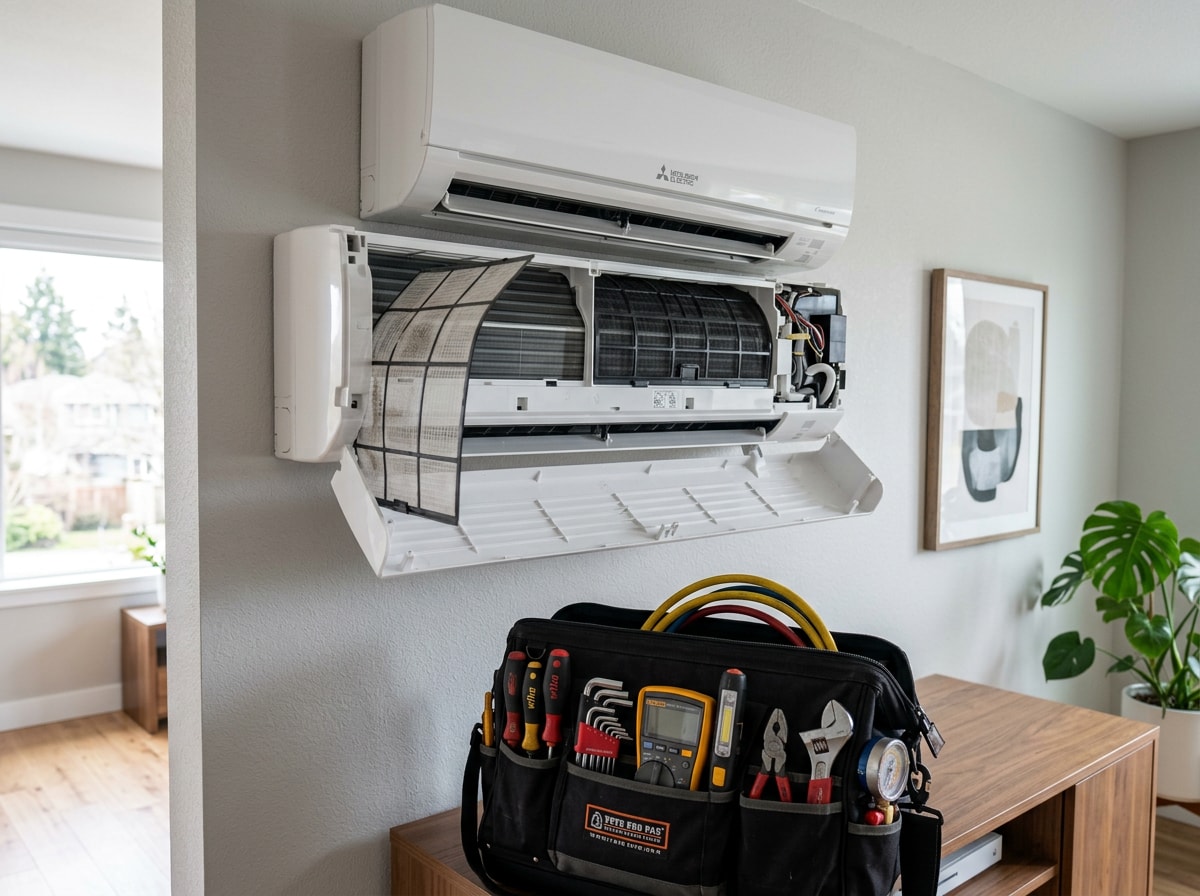
Routine upkeep protects the efficiency and lifespan gains covered above. A consistent maintenance routine looks like this:
- Rinse or replace the indoor filter every two to four weeks during heavy-use months
- Keep the outdoor condenser clear of leaves, pollen, and debris
- Check that condensate drains freely with no pooling near the indoor unit
- Schedule one annual professional tune-up to check refrigerant levels, clean coils, and inspect electrical connections
Skipping filter cleaning is the single most common cause of weak airflow complaints, and it's also the easiest one to fix yourself. Ask about our seasonal maintenance plans for ongoing care that catches small wear issues before they turn into costly repairs.
Mini Split vs. Central Air: Which Fits Your Home?
| Factor | Mini Split | Central Air |
|---|---|---|
| Ductwork required | None | Yes, existing or new |
| Best for | Additions, older homes, single rooms | Whole-house systems with existing ducts |
| Zoning | Built-in, room by room | Requires added zoning dampers |
| Typical Greensboro install cost | $2,000 to $11,610 | $3,500 to $7,500 |
| Energy loss from ducts | None | Up to 30% in poorly sealed systems |
A single-zone mini split usually costs less than tearing into walls or ceilings to extend an existing duct run, especially in additions or converted garages without ductwork already in place. Whole-house comfort on a home with several rooms already on a working duct system tends to favor a central system instead. Price both before deciding, and if you're weighing a full ductless retrofit against a central upgrade, our HVAC system replacement guide walks through that comparison in more depth.
For a closer look at how ductless systems perform specifically in Triad homes, see our ductless heating and cooling system guide for Kernersville, which covers sizing and installation in more detail for homes just northeast of Greensboro.
FAQ
How long do mini splits last?
Most mini split systems run 12 to 20 years, with lifespan depending heavily on installation quality and how consistently the system gets maintenance. Well-maintained units tend toward the higher end of that range.
Can I install a mini split myself?
DIY precharged kits exist, but professional installation is strongly recommended. EPA Section 608 certification is legally required to add or remove refrigerant from a mini split's line set, which rules out most true DIY installs for anyone without that credential.
How much does mini split heat and ac cost in Greensboro, NC?
A single-zone system typically runs $2,000 to $5,000 installed. Multi-zone whole-home setups can run up to $11,610 depending on zone count and installation complexity.
How often should I service a ductless mini split?
Plan on one annual tune-up from a licensed technician, with filter cleaning every two to four weeks during peak cooling or heating season.
Can a mini split go in any room?
Most rooms work, but installers need adequate wall space for the indoor unit and a nearby exterior wall or path for the line set to reach the outdoor condenser. A quick site visit confirms feasibility before you commit.
Does a mini split handle cold Greensboro winters well?
Standard units perform well into the 20s and 30s. For homes that see frequent hard freezes, ENERGY STAR Cold Climate certified models are built with more advanced compressors for stronger low-temperature output, so ask your installer whether that tier makes sense for your site.
Does my home need an electrical panel upgrade for a mini split?
Only if your existing panel doesn't already have an available dedicated 240V circuit that meets current code. Most homes with a panel updated in the last 20 years already have the capacity.
Ready to compare options for your home? Request a free estimate from our team, browse our full HVAC contractor services, or visit our Greensboro service area page to see recent local work. You can also check out our homepage for the full range of heating, cooling, and air quality services we provide across the Piedmont Triad.