An electric boiler for radiant heat in Archdale, NC gives homeowners a quiet, no-gas-line way to add floor or baseboard warmth to an existing house. This guide covers real 2026 cost ranges, how electric stacks up against gas, sizing basics, and when electric isn't the right call for a Piedmont Triad home.
What Is an Electric Boiler for Radiant Heat?
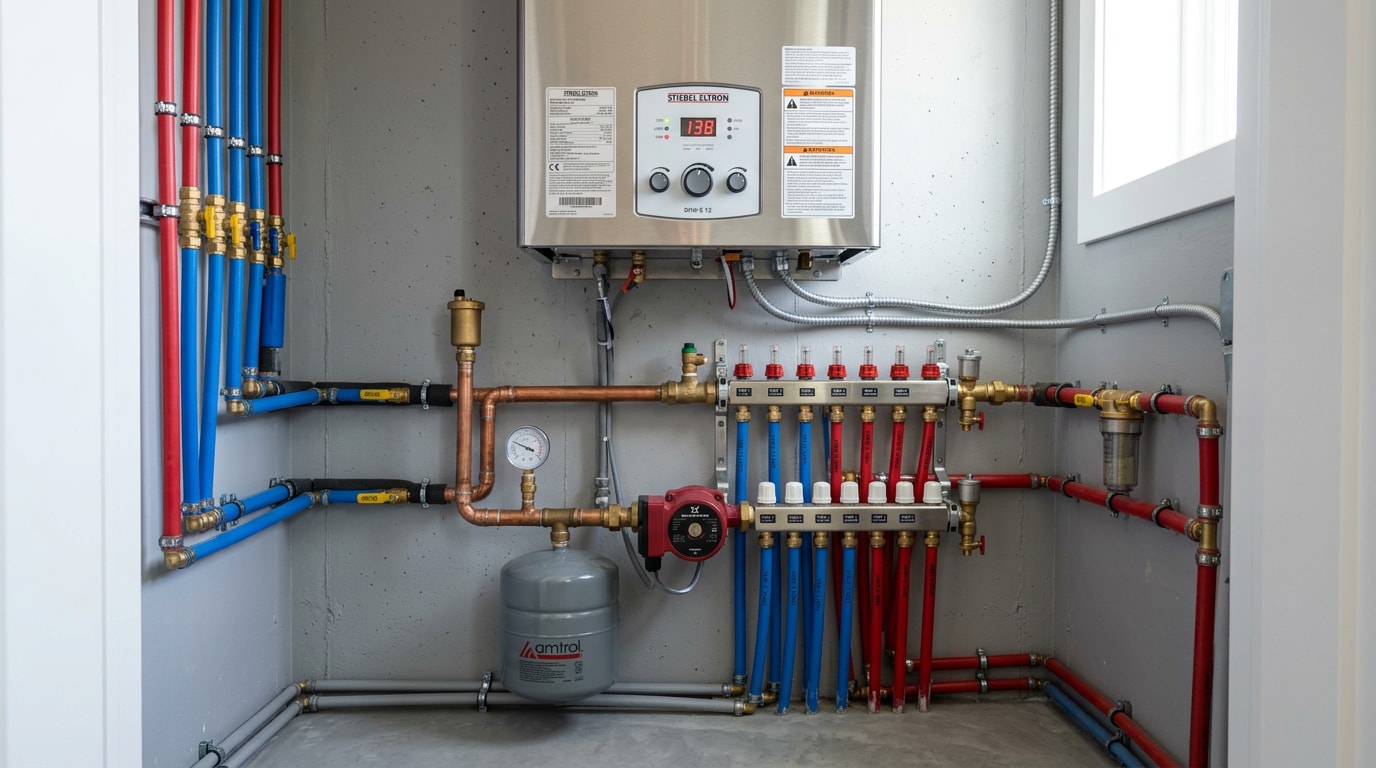
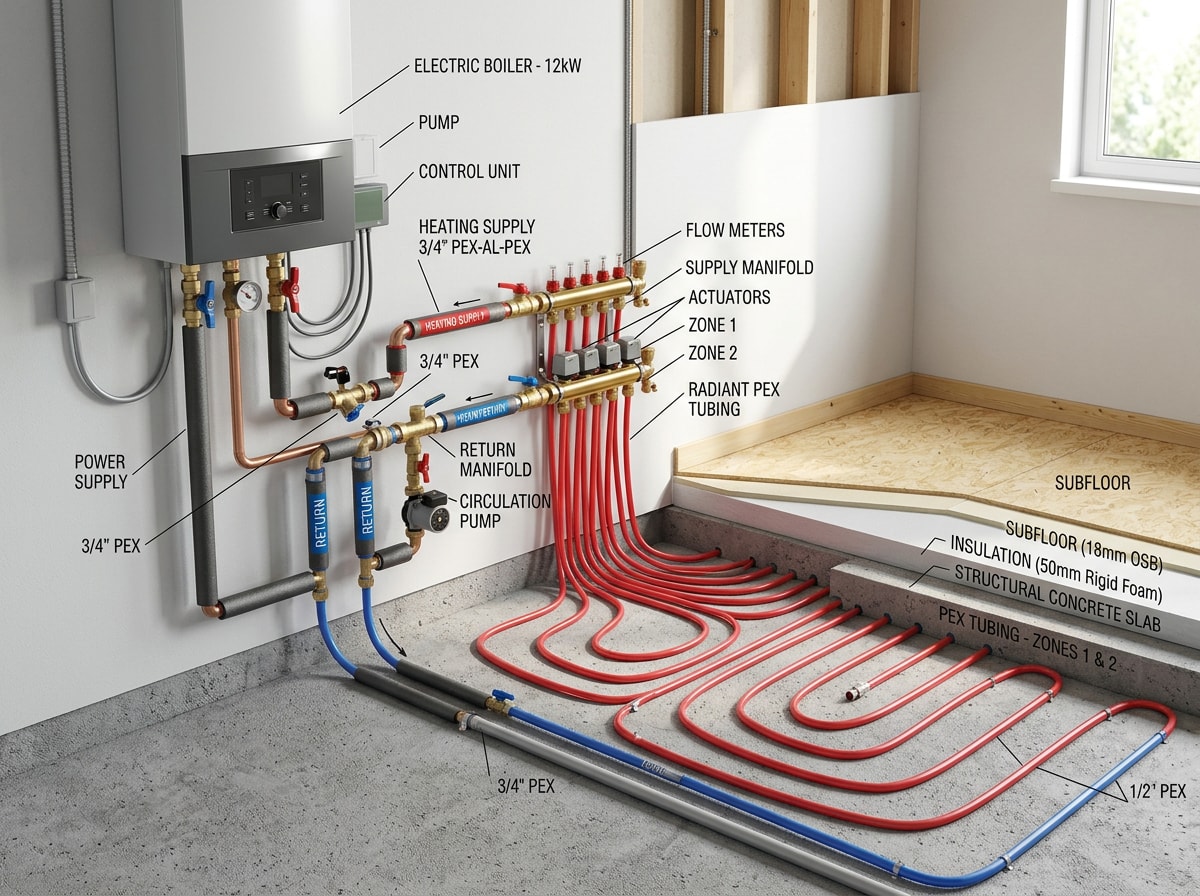
An electric boiler is a compact unit that heats water with an internal resistance element instead of burning gas or oil. That heated water circulates through PEX tubing, baseboard loops, or wall panels to deliver steady warmth — this is the core of hydronic heating.
There's no flame, flue, or exhaust byproduct to manage. A circulator pump simply pushes the hot water through the home's radiant loops after the element heats it.
"Electric radiant heat" can also mean something different: resistance mats or cables embedded directly in the floor, with no water or boiler involved at all. Mixing up the two leads to confusion when homeowners start pricing systems, so it's worth confirming which type a quote actually covers before comparing numbers.
For homes that need the mechanical side addressed first, our HVAC system replacement team can evaluate whether an existing setup is even ready for a boiler retrofit.
Electric Boiler Cost in Archdale, NC: What to Expect in 2026
Here's the short version before the detailed breakdown:
- Electric boiler units and install typically run $3,000–$8,000 for a single-zone residential system, depending on kW output and existing plumbing.
- Skipping the gas line and venting keeps install costs lower than most gas boiler retrofits.
- Operating cost depends almost entirely on your electricity rate and how well-insulated the home is.
Monthly heating cost is the number most homeowners actually want, so treat the figures below as planning ranges, not quotes.
| Factor | Electric Boiler | Gas Boiler |
|---|---|---|
| Typical install cost | $3,000–$8,000 (no venting/gas line) | $4,000–$10,000 |
| Efficiency rating | ~99–100% | ~90–95% |
| Est. monthly heating cost (winter) | Often $150–$250 | Often $100–$180 |
Actual numbers shift with home size, insulation, thermostat habits, and your specific Duke Energy rate schedule.
Electric vs. Gas Boiler: Which Costs Less to Run?
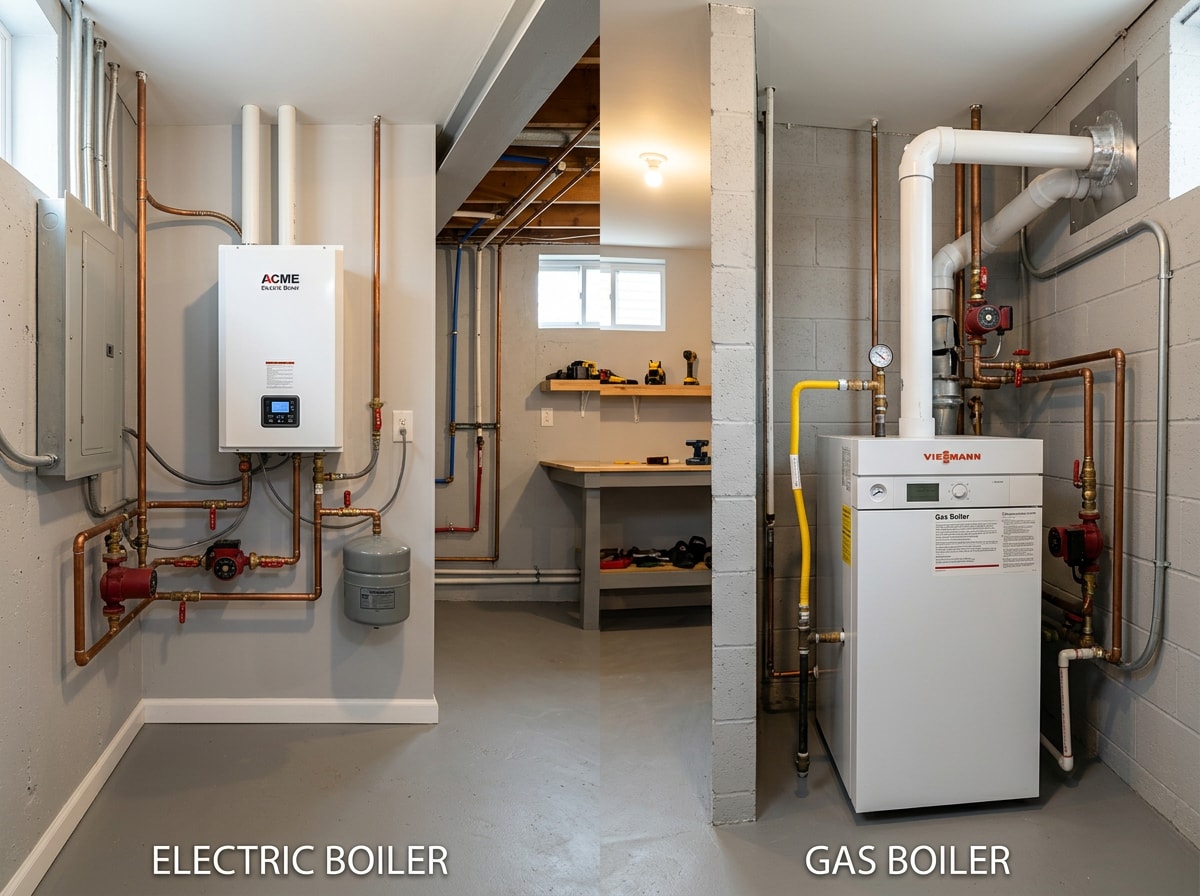
Electric boilers convert nearly 100% of the electricity they use into heat, since there's no flue loss the way there is with combustion. Modern condensing gas boilers run close behind at roughly 90–95%, so the efficiency gap is smaller than it used to be.
Where the math actually diverges is fuel price. North Carolina's average residential electricity rate sits at 11.65 cents per kWh, which ranks the state 24th nationally and keeps electric heating more competitive here than in higher-rate states. Natural gas pricing has been more volatile over the past year, which is part of why gas boilers don't always beat electric on total cost the way they once did.
Archdale sits in Duke Energy Carolinas territory rather than Duke Energy Progress, and DEC's generation mix has historically kept its residential rates a bit lower than its sister utility — a detail that matters more for an all-electric heating system than it does for a gas furnace with a small electric blower.
Why Homeowners Choose Electric Boilers for Radiant Heat
The benefits generally fall into three buckets: efficiency, air quality, and simpler installation.
Efficiency and Quiet Operation
There's no burner cycling on and off, so operation tends to be noticeably quieter than a gas unit. Combined with near-100% efficiency, that makes electric boilers a popular choice for additions, converted garages, and sunrooms where noise matters.
Clean, Emission-Free Heat
Because there's no on-site combustion, electric boilers produce zero indoor exhaust and eliminate carbon monoxide risk entirely. The U.S. Department of Energy notes that radiant systems in general lose no energy through ducts the way forced-air systems do, which is a separate efficiency advantage on top of the fuel-source question.
Compact, Simple Retrofit Installation
Skipping the flue pipe, gas line, and combustion-air venting makes electric boilers smaller and easier to fit into tight mechanical closets. In our service calls across older Archdale neighborhoods, homes that never had gas service are consistently the ones where electric boilers make the most sense — running a new gas line often costs more than the heating equipment itself.
Sizing an Electric Boiler for Radiant Heat
Electric boilers are sized by kilowatt (kW) output, which determines how many zones or square feet the unit can comfortably serve.
- A single zone or smaller home may only need a 9–15 kW unit.
- Larger or multi-zone homes require higher output, sometimes 20 kW or more.
- Combination units can supply both space heating and domestic hot water, though many installers still recommend keeping those systems separate for simpler service down the road.
An HVAC contractor should calculate sizing based on square footage, insulation, and window exposure rather than a flat per-square-foot rule of thumb.
When an Electric Boiler Isn't the Right Fit
Electric boilers aren't the right choice for every home.
- High electricity usage homes. Larger homes with heavy heat demand may need an electrical service upgrade before a boiler can even be installed.
- No backup heat source. The entire system depends on electricity, so a power outage means no heat unless there's a generator or secondary system in place.
- Homes already on gas with good infrastructure. If gas lines and venting already exist, the install-cost advantage of electric shrinks considerably.
Planning for Archdale's Climate and Local Rates
Archdale sits in a mixed-humid climate zone with moderate winters, which keeps heating loads lower than in colder states and makes electric resistance heating more cost-competitive here than it would be further north. That said, utility pricing still matters more than climate for an all-electric system.
Before committing to a system, it's worth getting a read on current Duke Energy residential rate activity, since rate adjustments directly affect what an electric boiler costs to run month to month. Homeowners can also check our Archdale, NC service area page to confirm local installation and maintenance support before scheduling anything.
If you're ready to compare options for your specific home, get a free estimate and we'll walk through sizing, cost, and whether electric or gas makes more sense for your layout.
FAQ
What Are the Signs You Need a New Boiler?
Common warning signs include uneven or inadequate heat, visible leaks, an unresponsive thermostat, banging or whistling noises, and a unit older than 15–20 years. Any one of these is reason enough for a professional inspection before the system fails outright. Keeping up with seasonal heating maintenance catches most of these early, and our furnace maintenance guide for High Point homeowners covers the same warning signs for fuel-burning equipment.
Can an Energy-Efficient Boiler Save on Utility Bills?
Yes. Replacing an aging, inefficient unit with a modern electric boiler can meaningfully lower utility bills, since electric boilers convert nearly all their energy into usable heat with no flue loss.
Is an Electric Boiler Worth It for Radiant Heat?
It depends mainly on home size and your electric rate. Smaller, well-insulated homes in moderate climates like Archdale's often see strong value from electric, while larger homes with high heat demand may do better with gas.
How Much Does It Cost to Run an Electric Boiler for Radiant Heat per Month?
Plan on roughly $150–$250 per month during peak winter use for a typical Archdale-area home, though actual costs shift with home size, insulation quality, and thermostat settings.
Is Electric or Gas Better for Radiant Heat?
Neither is universally better. Electric tends to win on efficiency and installation simplicity, while gas often wins on operating cost in areas with higher electricity rates — which isn't typically the case in North Carolina.
Can an Electric Boiler Also Provide Hot Water?
Some combination units handle both space heating and domestic hot water, but many installers recommend a separate water heater instead. Combining the two usually costs more in plumbing than it saves in equipment.
What Size Electric Boiler Do I Need for Radiant Floor Heat?
Most single-zone homes need 9–15 kW, while larger or multi-zone homes may require 20 kW or more. A proper sizing calculation accounts for square footage, insulation, and window exposure, not just floor area alone.
Ready to find out what an electric boiler would actually cost for your home? Contact us for a free estimate, or visit our homepage to see our full range of heating services.