Air conditioning freon in Kernersville, NC doesn't run low on its own — if your system needs more, a leak is hiding somewhere in the lines. A hot, sticky Piedmont Triad afternoon has a way of exposing that leak fast, usually right when you need cool air the most. Here's how to spot the warning signs, understand what's actually causing the drop, and know what repairs should cost before you call anyone out.
Signs Your AC Is Low on Freon
Run through this checklist before you pick up the phone. These five symptoms show up most often when refrigerant levels drop, and catching them early can prevent lasting damage to your compressor, which is the single most expensive part of your system to replace.
- Longer cooling cycles. The system runs and runs without ever hitting the thermostat setpoint.
- Warm or lukewarm air from the vents instead of cold air.
- Ice or frost on the refrigerant line or the indoor coil.
- Hissing or bubbling sounds near the indoor or outdoor unit.
- Unexplained spikes in your power bill during normal-use months.
Two or more of these together is a strong signal. One alone could have a different cause.
AC Takes Longer to Cool Your Home
With less refrigerant circulating, the system can't absorb heat as efficiently, so it keeps running to compensate. That said, long cooling cycles aren't proof on their own — a dirty filter, an aging unit, or equipment that was undersized for your home can cause the same symptom. If your filter is clean and the unit is properly sized, low refrigerant moves to the top of the suspect list.
Warm Air Blowing From the Vents
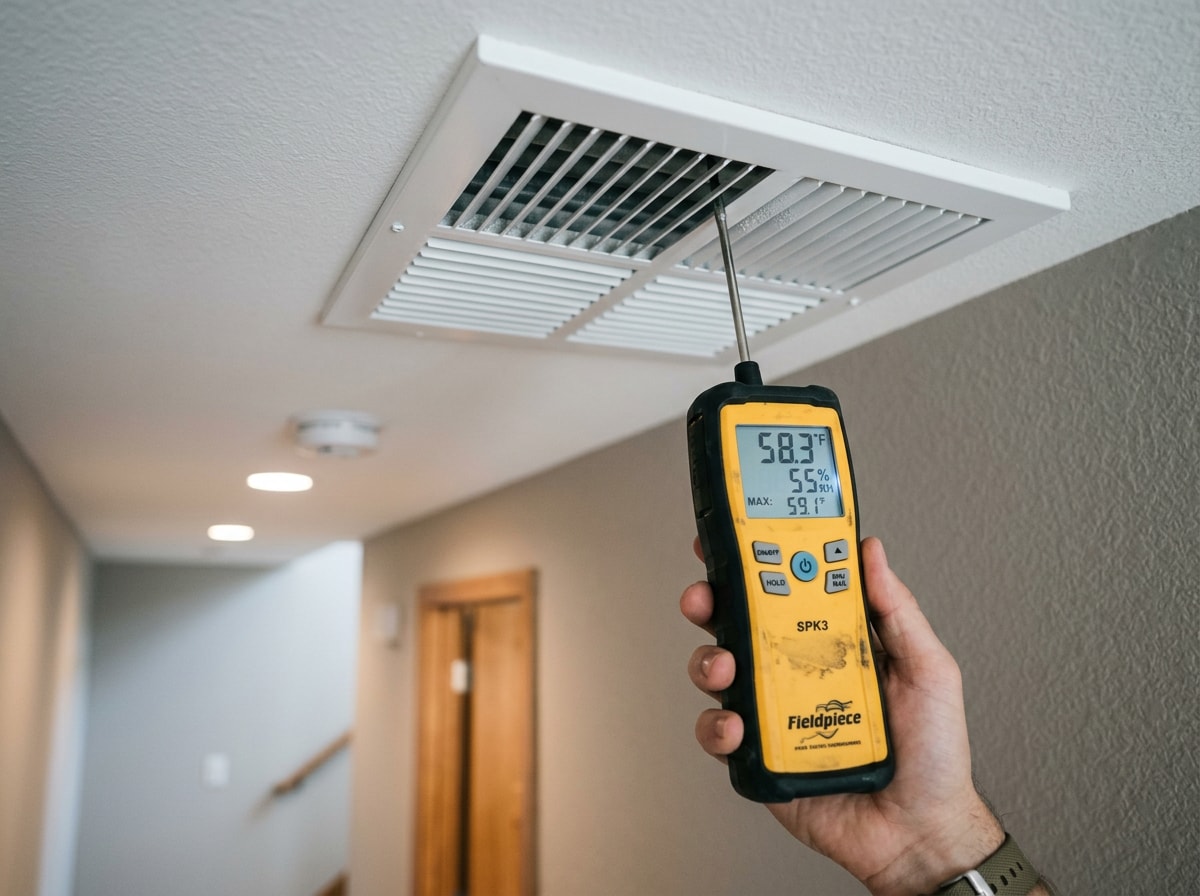
When refrigerant runs low, the evaporator coil can't absorb enough heat from the air passing over it, so the air coming out of your vents feels warm instead of cold. You can do a quick DIY check: hold a thermometer at a supply vent for a few minutes. Air that isn't at least 15 to 20 degrees cooler than your return air suggests weak airflow and a potential refrigerant problem.
Ice Buildup on the Refrigerant Line
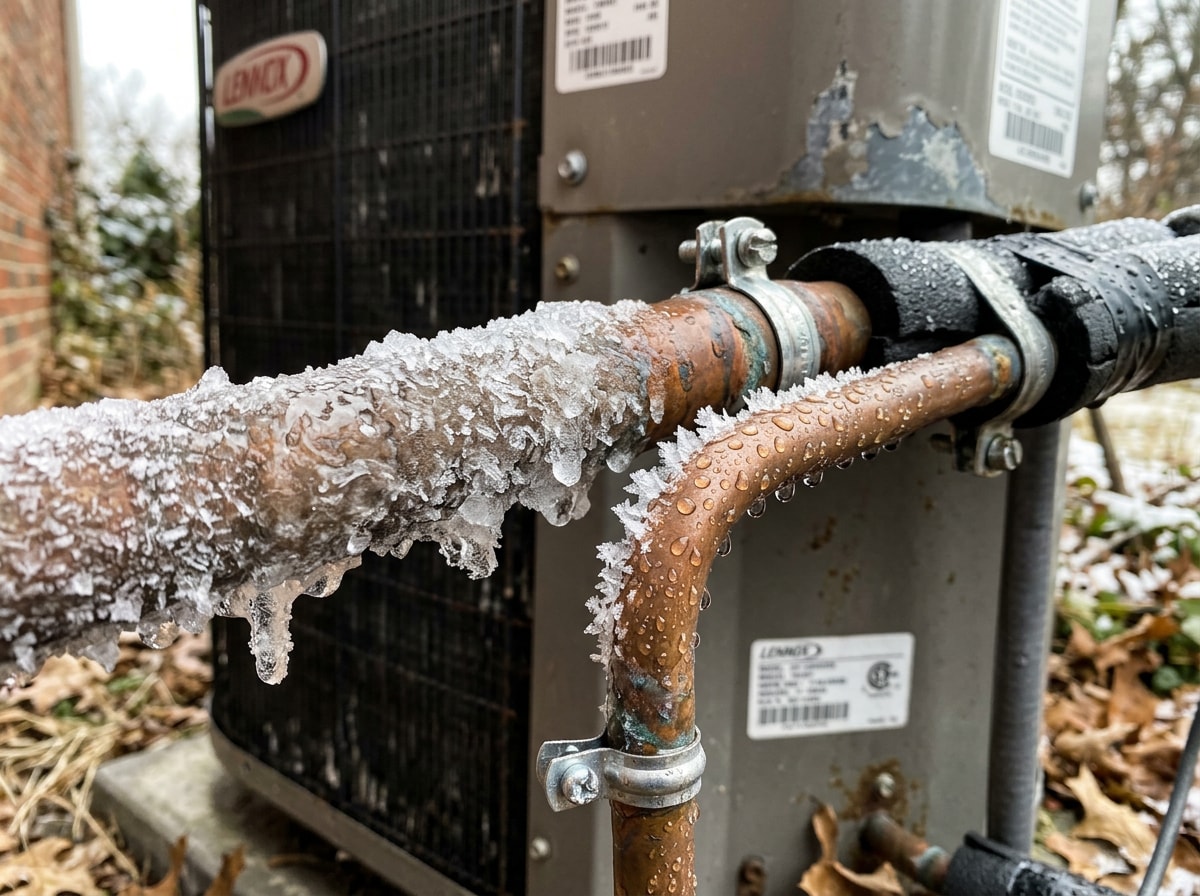
Low refrigerant pressure causes the evaporator coil and surrounding lines to drop below freezing, pulling moisture straight out of the air and turning it into frost. If you spot ice on your line, don't wait it out. Turn the system off and don't chip the ice away yourself — running a frozen evaporator coil can flood the compressor with liquid refrigerant and cause expensive internal damage. Call a licensed technician once the ice has fully melted.
Hissing or Bubbling Sounds
A hissing noise usually points to gas escaping through a small crack or pinhole in the line. A bubbling or gurgling sound is slightly different — it often means liquid refrigerant is leaking out while air gets pulled into the line. Either way, these sounds mean there's an active leak, not just a one-time low charge. Topping off refrigerant without finding and sealing the leak means the problem comes back within months.
Utility Bills Are Higher Than Usual
A low-refrigerant system has to run longer and work harder to reach your thermostat's setpoint, and that extra runtime shows up directly on your power bill. Homeowners often blame the weather instead of the equipment. ENERGY STAR's own maintenance guidance notes that checking a central air conditioner's refrigerant level and adjusting if necessary matters because too much or too little refrigerant will make the system less efficient, increasing energy costs and reducing the life of the equipment .
What Causes Low Refrigerant Levels?
Since refrigerant circulates in a sealed loop, a properly functioning AC should never need a routine "refill." Low levels almost always trace back to a leak somewhere in the system. The most common causes include corroded refrigerant lines, cracked evaporator coils, damaged service valves, and factory installation defects.
Corrosion is usually the biggest culprit. Copper refrigerant lines can develop tiny pinhole leaks over years of exposure to humidity and airborne chemicals — a process sometimes called formic acid corrosion, where trace organic compounds slowly eat through the copper from the inside out. Service valve caps and gaskets also dry out and crack with age, especially on older systems. If you want a deeper walkthrough of related airflow and cooling complaints, our AC troubleshooting guide for Thomasville homeowners covers several of the same underlying mechanical issues.
Kernersville's long, humid cooling season doesn't help. A system already short on refrigerant has to work harder to pull moisture and heat out of thick summer air, which accelerates wear on every connection point in the line set. Routine AC maintenance catches small corrosion issues and worn valve seals before they become full leaks.
Still Running R-22? Here's What Changed
If your system is more than 15 years old, there's a real chance it uses R-22, the refrigerant most people still call "Freon" even though that's a trademarked brand name. The U.S. EPA ended new production and import of HCFC-22 on January 1, 2020, so after 2020, only recycled, reclaimed, or previously produced HCFC-22 can be used to service existing equipment . That shrinking supply is the main reason R-22 recharges now cost far more than they did a decade ago.
There's a newer rule worth clearing up, too. Starting in 2026, the EPA lowered a refrigerant leak-repair reporting threshold from 50 pounds down to 15 pounds under the AIM Act. It sounds like it could affect home air conditioners, but it doesn't: appliances used in the residential and light commercial air conditioning and heat pumps subsector are not included in the leak repair provisions . In plain terms, this change targets large commercial and industrial equipment, not the split system cooling your Kernersville house.
What hasn't changed is the EPA's technician certification rule. Refrigerant handling isn't a DIY job, and it isn't optional paperwork for contractors either. EPA regulations under Section 608 of the Clean Air Act require that technicians who maintain, service, repair, or dispose of equipment that could release ozone depleting refrigerants into the atmosphere must be certified . Any technician who touches your refrigerant lines, including on a modern R-410A system, should hold that credential.
What It Costs to Fix Low Freon in Kernersville
Pricing depends heavily on refrigerant type, leak location, and how much has to be recharged. These are typical ranges homeowners in the area see; your technician should give you an exact number after diagnosis.
| Service | R-410A Systems | R-22 Systems |
|---|---|---|
| Per-pound recharge | $100 – $200 | $400 – $600+ |
| Leak detection and repair | $200 – $1,500 | $200 – $1,500 |
| Full system recharge (3–5 lbs) | $300 – $800 | $1,500 – $3,000+ |
If your R-22 system needs a major repair or a near-full recharge, it's often worth comparing that cost against replacing the whole system instead of continuing to feed an aging unit increasingly expensive refrigerant. For a system still under warranty or in otherwise good shape, a straightforward AC repair visit is usually the more cost-effective path.
What to Do If You Suspect Low Freon
1. Confirm the Signs
Run through the checklist again: warm or weak airflow, longer cooling cycles, ice on the line set, hissing or bubbling, and unexplained bill spikes. Two or more together justifies a service call.
2. Don't Handle Refrigerant Yourself
Mishandling refrigerant can cause chemical burns, frostbite from pressurized leaks, or illegal venting under federal law. EPA certification exists specifically because this isn't a job for trial and error.
3. Call a Licensed Technician
A proper visit includes electronic leak detection, sealing or replacing the damaged component, and recharging the system to the manufacturer's exact factory spec — not just adding refrigerant until symptoms temporarily disappear. We've handled this exact scenario across Kernersville and the surrounding Triad, and the systems that get fixed right the first time are the ones where the leak gets found before the recharge, not after.
If you're ready to get a technician out to look at your system, you can get a free estimate or start with our homepage to see the full range of cooling services we offer.
FAQ
How Do I Know If My AC Needs Freon?
Your AC likely needs refrigerant if it blows warm or weak air, takes longer than usual to cool your home, has ice on the refrigerant line, makes hissing or bubbling sounds, or has pushed your energy bills noticeably higher. Two or more of these signs together is a strong indicator.
How Much Does It Cost to Add Freon to an AC Unit?
R-410A recharges typically run $100 to $200 per pound, while R-22 recharges often cost $400 to $600 or more per pound due to shrinking supply. The total job also depends on leak repair costs, which can add several hundred dollars more.
Is R-22 Freon Still Available?
Yes, but only from reclaimed and recycled supply. After 2020, only recycled, reclaimed, or previously produced HCFC-22 can be used to service existing equipment , which is why prices keep climbing.
Can I Add Freon to My AC Myself?
No. Handling refrigerant without EPA Section 608 certification is against federal law, and the equipment and training required to do it safely aren't something most homeowners have on hand.
What's the Difference Between R-22 and R-410A?
R-22 is the older refrigerant being phased out due to its ozone-depleting properties, while R-410A is the more common replacement used in newer systems. R-410A is generally cheaper to recharge and more widely available from suppliers.
Does the New 2026 EPA Refrigerant Rule Affect My Home AC?
No. The 2026 threshold change applies to larger commercial and industrial appliances. Appliances used in the residential and light commercial air conditioning and heat pumps subsector are not included in the leak repair provisions .