The best temperature for AC in Greensboro, NC is generally 75°F to 78°F while you're home and awake, but our humid Piedmont summers push many households toward the lower end of that range. Greensboro's July afternoons average near 89°F with highs that regularly climb into the mid-90s, and humidity rarely drops below 65% during peak season. Below is the exact setting breakdown for home, sleep, and away, plus one detail about the "78-degree rule" that most thermostat guides get wrong.
Best AC Temperature for Greensboro Homes (While You're Home)
According to energy.gov, part of the U.S. Department of Energy, the recommended thermostat setting during the summer is 75-78°F during the day and when you're home. That's a reasonable national baseline, but Greensboro's climate adds a wrinkle. Greensboro has a humid subtropical climate where the hottest month is July, with an average daily high near 89°F.
With outdoor air that hot and that sticky, 78°F often feels noticeably warmer indoors here than it would in a drier climate. Most Piedmont Triad homeowners land closer to 75–76°F during July and August, then ease back toward 78°F in milder months like May, June, and September.
| Time of Day / Situation | Recommended Setting |
|---|---|
| Home and awake | 75°F–78°F |
| Sleeping | 72°F–76°F |
| Away less than 24 hours | 82°F–85°F |
| Away 3+ days (vacation) | 85°F–88°F |
If your system struggles to hit these numbers even when it's running constantly, that's usually a sign of an aging or undersized unit rather than a bad thermostat setting. Our air conditioning repair team can check whether the equipment itself is the bottleneck.
Thermostat Setting While Sleeping
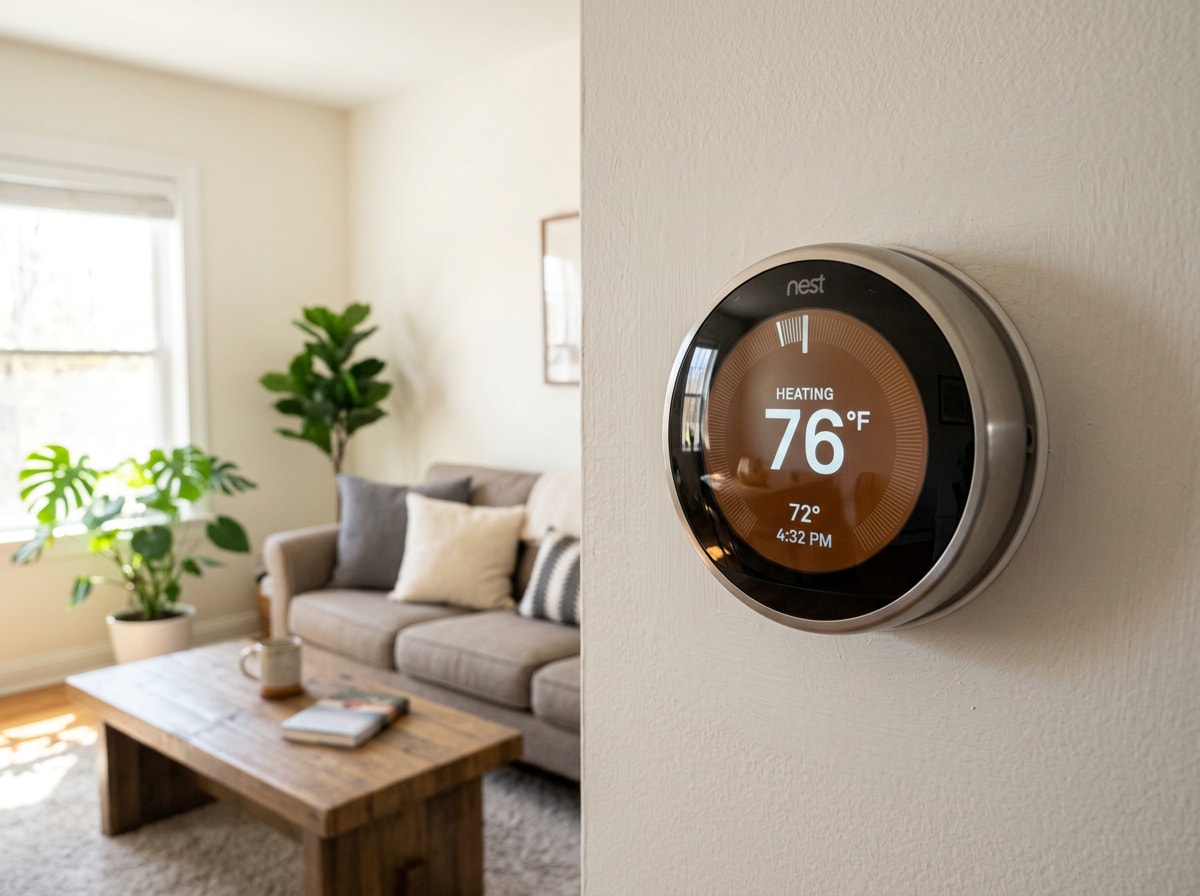
Most households sleep better a few degrees cooler than their daytime setting, typically 72°F to 76°F. A bedroom at night isn't absorbing heat from cooking, sunlight through windows, or foot traffic, so the AC doesn't have to work as hard to hold a lower number. A smart or programmable thermostat can shift this automatically so no one has to remember to adjust it before bed.
Thermostat Setting While Away From Home
Here's where most generic advice oversimplifies things. The EPA has clarified that ENERGY STAR isn't actually recommending a thermostat be set to any specific temperature during the cooling season; it's recommending owners increase their air conditioning temperature setting by 7 degrees when homes are unoccupied and by 4 degrees when occupants are asleep. In other words, the "78/82/85" numbers everyone repeats are just an example built on top of that relative formula, not a universal rule.
For a Greensboro home, that usually plays out as:
- Away for a workday: raise the setting 7 degrees above your normal comfort setting (often landing around 82°F–85°F).
- Overnight: raise it about 4 degrees from your daytime number.
- Vacation (3+ days): 85°F–88°F keeps humidity in check without cooling an empty house.
Don't shut the system off completely during a long Greensboro summer. Humidity builds fast indoors, and pulling both heat and moisture back out later usually costs more than the modest setback would have. A programmable or smart thermostat automates this without manual adjustments every time you leave, and if you're running a ductless system in a room addition or converted space, our mini split repair service can help make sure that unit holds its setback properly too. Our Greensboro mini split guide covers setup details specific to ductless systems in this climate.
Why Humidity Changes the Math in Greensboro
July is actually the least humid month in Greensboro, with an average relative humidity of 70% , which tells you how sticky the rest of the cooling season gets. Some summers run hotter than the average suggests. In July 2023, Greensboro hit a monthly high of 95°F, and the month logged 14 days at or above 90°F. That kind of stretch is exactly when the gap between "comfortable" and "78 and done" shows up the most.
High indoor humidity does more than make a room feel warmer than the thermostat reading suggests. The EPA recommends keeping indoor humidity below 60 percent, ideally between 30 and 50 percent, to limit mold growth. A home that sits warm and damp for too long during a Greensboro heat wave isn't just uncomfortable, it's a mold risk. If your AC runs constantly but humidity still feels high, a supplemental dehumidifier or a hvac system replacement for an undersized unit may be worth a look.
What ENERGY STAR Actually Recommends
This is the part most "best AC temperature" articles skip. ENERGY STAR's own sales training materials tell retailers to set the thermostat 7 degrees higher when you're away and 4 degrees higher when you're asleep , measured from whatever comfort setting you've already chosen, not from a fixed 78°F. So a Greensboro household that's comfortable at 76°F should set 80°F while asleep and 83°F while away, not jump straight to the national headline numbers built around a 78°F baseline household.
The Department of Energy's own programmable thermostat guidance uses a starting table of under 70°F for heat and over 78°F for cooling during wake and evening hours, then an additional setback of at least 7 to 8 degrees during the day and sleep periods. That's a framework, not a rule carved in stone, and it's one reason thermostat settings in a humid Piedmont summer can reasonably sit a degree or two off what a blanket "78°F" guide tells you.
Tips for Staying Comfortable Without Cranking the Dial
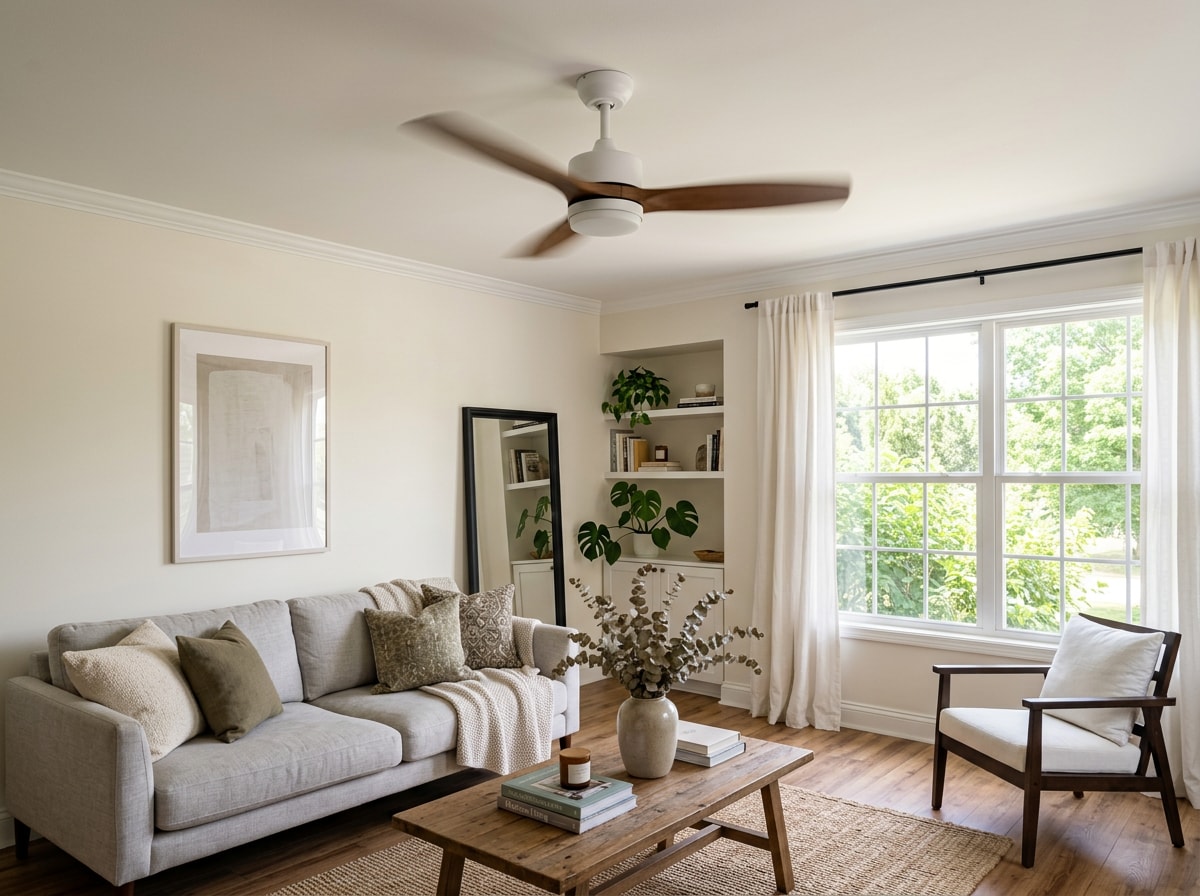
A ceiling fan running counterclockwise creates a wind-chill effect that lets a room feel comfortable one or two degrees warmer than the thermostat reading, without touching the dial. Keep the 20-degree rule in mind on extreme-heat days too: most residential systems can't efficiently pull a home more than about 20 degrees below the outdoor temperature.
Thermostat placement matters as well. Don't position heat-producing devices like high-wattage lamps and TVs beneath a wall-mounted thermostat, since heat rising from the equipment can cause the thermostat to read a temperature higher than the true room temperature and lead to overcooling. Direct sunlight and drafty doorways cause the same problem in reverse.
Common Mistakes That Waste Cooling Dollars
- Cranking the thermostat way down to "cool faster." The system runs at the same speed regardless of the setpoint; setting it 10 degrees lower just means it runs longer, not harder or faster.
- Over-cooling, which can trigger short cycling or a frozen evaporator coil. Both strain components over time and shorten equipment life.
- Ignoring a system that can't hold its setpoint. If your AC runs nonstop in July and still can't reach 76°F, that's a repair or sizing issue, not a thermostat setting issue.
If your system shows any of these signs, our AC repair and maintenance team can diagnose the cause before it turns into a bigger repair. Homeowners weighing a full system upgrade can also compare options through our air conditioning installation page.
For homeowners anywhere in the Piedmont Triad, Repair Solutions HVAC services thermostats, AC units, and ductless systems throughout Greensboro and the surrounding communities. If your AC can't hold the settings in the table above, get a free estimate before the next heat wave hits.
FAQ
Is it cheaper to leave my AC at one temperature all day?
Generally, yes. Letting a Greensboro home heat up and absorb humidity during the day, then trying to recover both all at once, usually costs more energy than holding a steady setback temperature throughout the day.
Should I use a dehumidifier alongside my AC?
A supplemental dehumidifier helps when indoor air still feels sticky even with the AC running, which is common in homes with higher occupancy or less insulation. If your AC alone keeps humidity comfortable, an extra unit usually isn't necessary.
Is 72 degrees too cold for AC in the summer?
72°F feels comfortable to many people, but it sits below the common 75–78°F comfort range and will increase cooling costs. Every degree lower than your baseline setting means the system runs longer to maintain it, so 72°F suits households prioritizing comfort over savings.
What's the best AC setting for extreme heat days in Greensboro?
Stick with the 20-degree rule: don't expect your AC to pull the indoor temperature more than about 20 degrees below the outdoor reading. On a 95°F day, a 75°F indoor target is realistic; pushing much lower isn't.
Does setting the thermostat lower cool the house faster?
No. The system runs at one speed regardless of the setpoint, so setting it drastically lower only makes it run longer, not faster. It also raises the risk of overcooling and higher bills.
What temperature should I set my AC to if I have pets at home?
Most pets do fine within the same 78°F–82°F range recommended for an empty house during the day. Avoid going much above 82°F for extended periods if pets are indoors without supervision.