The most efficient heating system for a Brown Summit, NC home in 2026 isn't the same equipment that wins in Minnesota or Maine. Our mild Piedmont winters change which system actually pays for itself, especially now that the federal tax credit that used to offset heat pump costs has expired. This guide breaks down AFUE, HSPF2, and COP ratings, compares every system type sold today, and tells you which one fits your house, your budget, and whatever gas line or lot size you already have.
What Makes a Heating System "Efficient"? (AFUE, HSPF2 & COP Explained)
"Efficient" means something different depending on whether a system burns fuel or moves heat electrically. Combustion equipment like furnaces and boilers is rated by AFUE, while electric heat pumps use HSPF2 and coefficient of performance. Understanding these metrics first makes the system comparison below much easier to use.
AFUE rating (Annual Fuel Utilization Efficiency) measures what percentage of fuel actually becomes usable heat. A furnace rated 95% AFUE turns 95 cents of every fuel dollar into heat; the rest escapes as exhaust. Standard furnaces today run from roughly 80% to 98% AFUE.
Heat pumps are rated differently because they don't create heat from fuel, they move existing heat from the air or ground. HSPF2 measures seasonal heating output versus electricity used, while coefficient of performance (COP) measures the same ratio at a single outdoor temperature. A COP of 3 means the system delivers three units of heat for every unit of electricity it consumes.
Across both measures, the rule is simple: higher AFUE or COP always means more usable heat per dollar spent, whether that dollar buys gas or electricity. Current ENERGY STAR certified split-system heat pumps must meet minimum thresholds that are considerably higher than older equipment on the market. On February 2, 2026, ENERGY STAR finalized a revision to its air-source heat pump eligibility criteria, setting split-system minimums of SEER2 ≥ 15.2, EER2 ≥ 11.0, and HSPF2 ≥ 7.8. For the full criteria list and certified product search tool, see the ENERGY STAR heat pump key product criteria page.
Which system wins depends on climate, fuel costs, and home setup, all covered in detail below. If you want a professional read on your specific home before comparing spec sheets, our heating contractor team can walk the house with you.
Types of Efficient Heating Systems Compared
With the metrics out of the way, here's how the actual equipment options stack up. Five system types dominate the market today, and in a Piedmont Triad climate, with its moderate winters and humid summers, some pull noticeably ahead of others on real-world efficiency.
Geothermal Heat Pumps
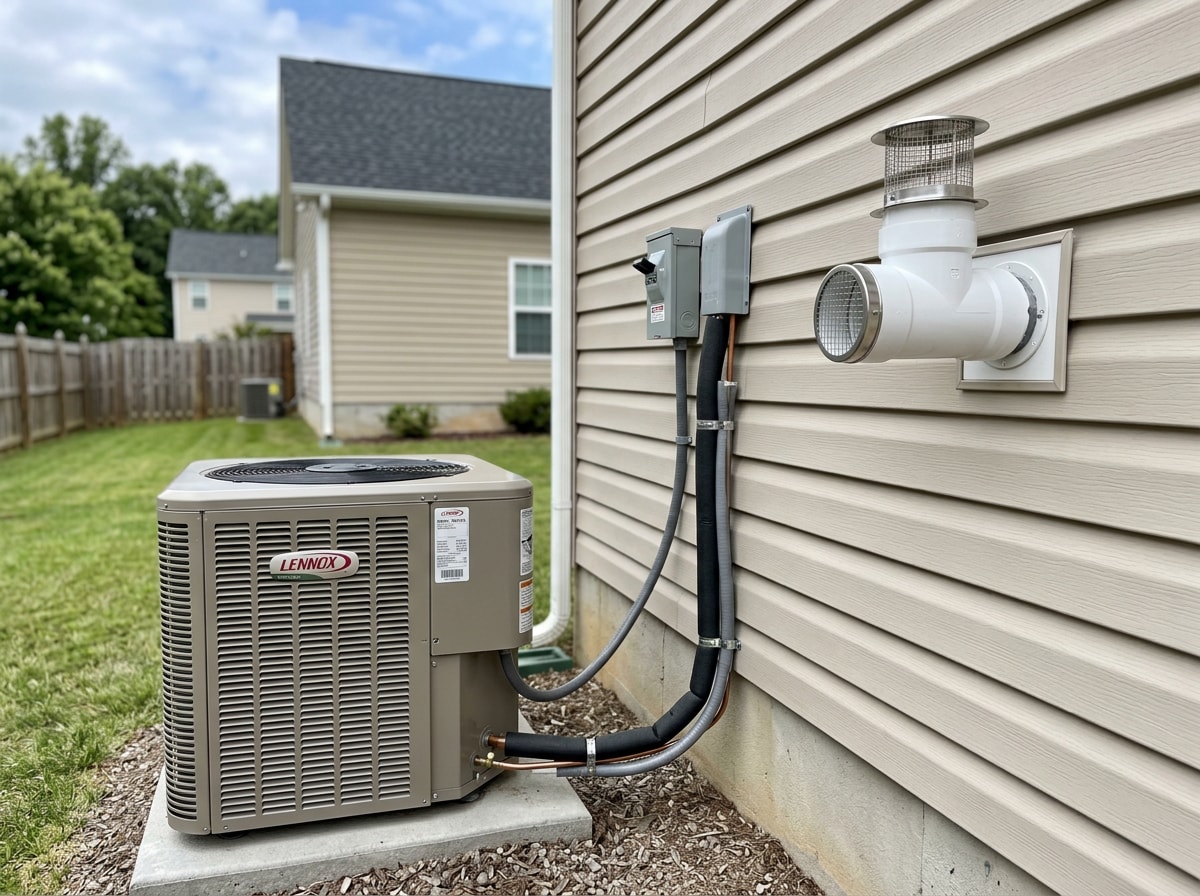
Geothermal heat pumps, also called ground-source heat pumps, pull steady underground temperatures into the home rather than relying on fluctuating outdoor air. Geothermal heat pumps operate similarly to the far more common air-source heat pump, but they are substantially more energy-efficient because they take advantage of relatively consistent ground temperatures, reducing energy consumption by approximately 25% to 50% compared to air-source heat pump systems and reaching efficiencies of 300% to 600% on the coldest winter nights. That's the highest ceiling of any system covered here.
Equipment life also runs long. Relative to air-source heat pumps, geothermal systems are quieter, last longer, need little maintenance, and do not depend on outside air temperature. The tradeoff is upfront cost: installation usually runs well above conventional systems because it involves burying a loop field.
That's actually a reasonable fit for parts of Brown Summit. Many properties here sit on larger, semi-rural lots with enough yard space for horizontal ground loops, which cost less to install than the vertical bores required on tighter suburban lots. Soil composition and available acreage should factor into any geothermal quote before committing.
For a plain-language overview of how these systems work and where they make the most sense, the Department of Energy's consumer guide to geothermal heat pumps is a solid starting point. If you're weighing geothermal against a standard heat pump replacement, our heat pump replacement team can price both side by side for your property.
Cold-Climate Air-Source Heat Pumps
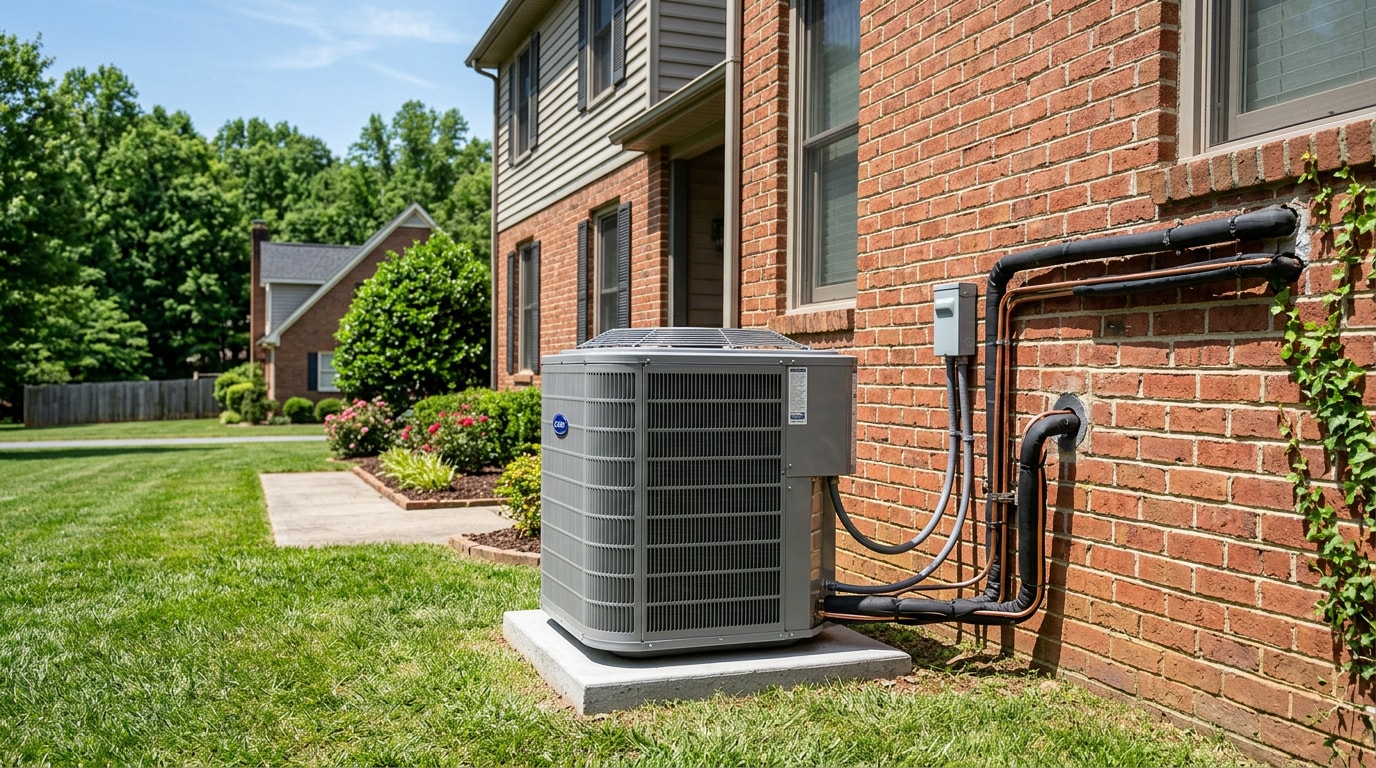
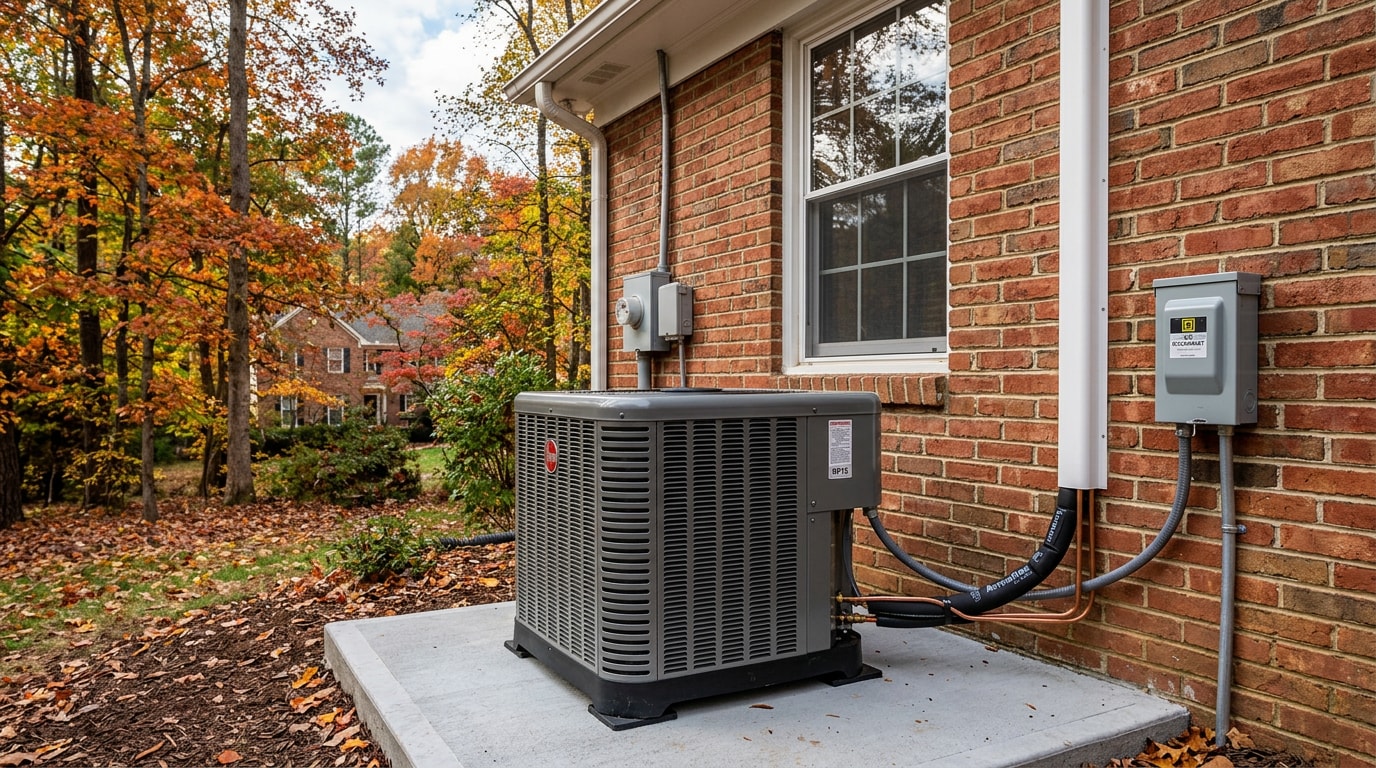
An air-source heat pump moves heat rather than generating it, which is why it can deliver more energy out than it draws in electricity. Standard models handle Brown Summit's winters easily, while cold-climate heat pump versions add technology that maintains output even well below freezing, useful insurance, though rarely a necessity here.
The simplest buying shortcut is looking for ENERGY STAR certified equipment, which guarantees the unit meets current efficiency thresholds without needing to compare spec sheets line by line. In the systems our technicians install across Guilford County, pairing a modern heat pump with a heat-pump-compatible smart thermostat is usually what separates an average electric bill from a genuinely low one, more than the brand on the outdoor unit.
If your current heat pump is struggling to keep up or is pushing past the 10-to-15-year mark, our heat pump repair and heat pump replacement teams can tell you honestly which way to go.
Mini-Split / Ductless Heat Pumps
A ductless mini-split is an air-source heat pump without the ductwork, which matters more than it sounds like. In a typical home, about 20 to 30 percent of the air that moves through the duct system is lost due to leaks, holes, and poorly installed ducts , a loss mini-splits skip entirely by delivering conditioned air directly into the room.
Top units carry SEER ratings up to 30, among the highest available in residential equipment. Each indoor head also functions as its own zone, so zoned heating lets you heat occupied rooms and skip empty ones, a real advantage for additions, converted garages, or homes without existing ductwork.
For a deeper look at installation and running costs in a comparable Piedmont Triad climate, see our ductless heating and cooling system guide. Homeowners with an existing ductless system that's lost cooling or heating power can also check our mini split repair services.
High-Efficiency (Condensing) Furnace
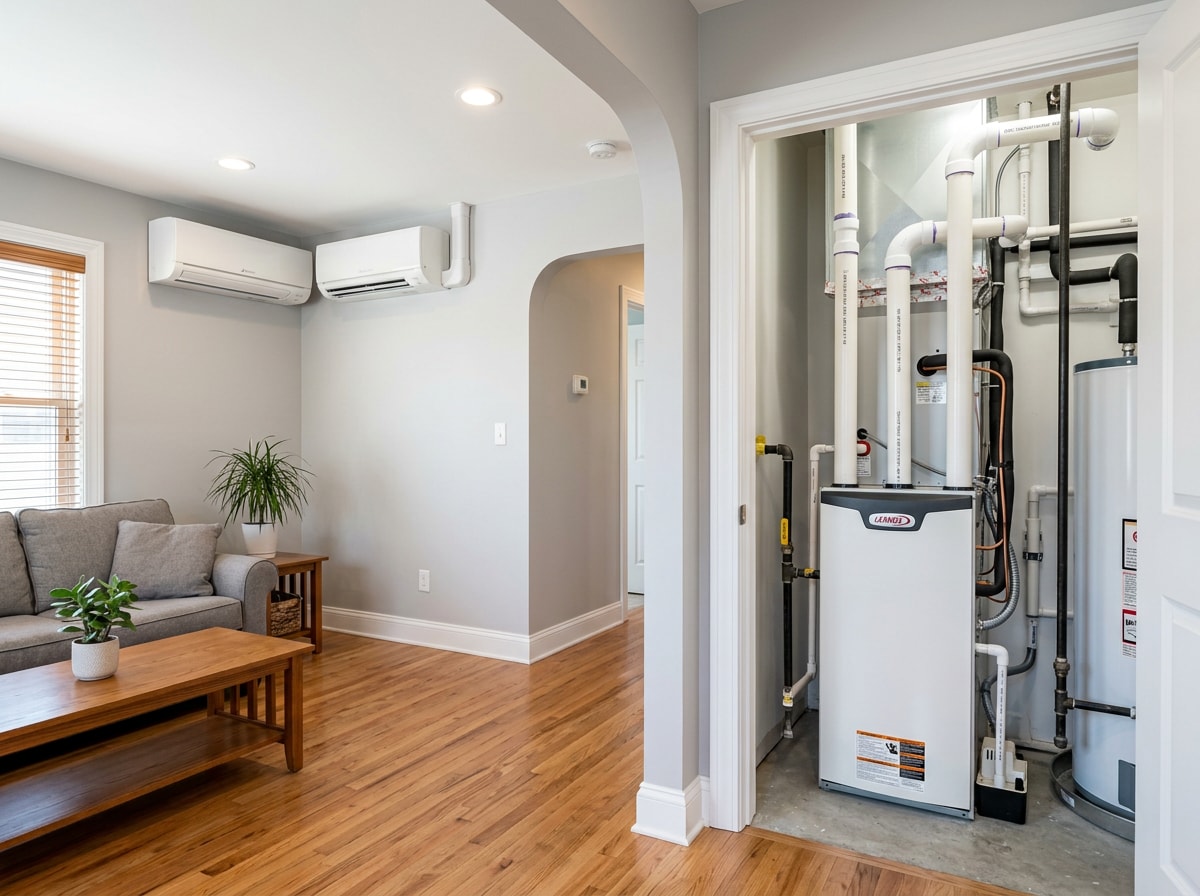
A condensing gas furnace extracts extra heat from exhaust gases that older models simply vented outside, pushing AFUE ratings up to 98%. A secondary heat exchanger condenses water vapor out of the exhaust stream, capturing heat most furnaces waste, then a variable-speed blower distributes it evenly through the home.
A natural gas furnace of this caliber remains one of the more affordable high-efficiency options to install, particularly where gas service already exists. Condensing models can run slightly louder at startup than top-tier heat pumps, though modern cabinets and variable-speed blowers have narrowed that gap considerably.
Homeowners replacing an aging unit can compare current pricing and efficiency tiers through our gas furnace replacement services.
Boiler
A boiler heating system circulates hot water or steam through radiators or in-floor piping instead of pushing heated air through ducts, with top models reaching AFUE ratings close to 100%. This hydronic heating approach delivers steady, even warmth many owners describe as more comfortable than forced air.
The tradeoff is footprint and retrofit cost. A boiler needs radiators or pipe runs throughout the home, which is a bigger undertaking in homes built around ductwork. It's a strong niche option, particularly paired with radiant floor heat; see our electric boiler for radiant heat guide for real install and cost numbers from a nearby Piedmont Triad project. For most Brown Summit homes without existing hydronic infrastructure, though, it's a bigger lift than switching furnace or heat pump equipment.
Home Heating Systems Compared (Efficiency, Cost & Best Fit)
Seeing the numbers side by side makes the tradeoffs clearer than reading them in isolation. Below is how each system stacks up for a typical Brown Summit, NC home, factoring in the area's mild winters and moderate humidity rather than a harsher climate.
| System | Efficiency Rating | Typical Installed Cost | Best Fit for Brown Summit |
|---|---|---|---|
| Geothermal heat pump | COP 3.5–5+ | Highest of all options | Larger lots with room for ground loops; long-term owners |
| Cold-climate air-source heat pump | HSPF2 7.8+ | Mid-range | Most homes; handles mild winters well |
| Ductless mini-split | SEER up to 30 | Mid-range per zone | Additions, no existing ductwork, room-by-room control |
| Condensing gas furnace | AFUE up to 98% | Lower to mid-range | Homes with existing gas service and ductwork |
| Boiler | AFUE up to 100% | Mid to high (retrofit-dependent) | Homes already using hydronic/radiator heat |
This comparison is directional. Actual installed cost and operating-cost savings depend on home size, insulation, existing ductwork, and local electricity or gas rates, so an in-home assessment is the only way to pin down firm numbers for your Brown Summit property.
Weighing cost against efficiency usually comes down to how long you plan to stay in the home: higher upfront cost systems like geothermal pay back over more years, while furnaces and standard heat pumps recover their cost faster but plateau at a lower efficiency ceiling.
Heads-Up for 2026: The Federal Heat Pump Tax Credit Is Gone
This is the part a lot of local guides still get wrong. Under the One Big Beautiful Bill Act, the 25C Energy Efficient Home Improvement Credit will not be allowed for any property placed in service after December 31, 2025. That credit used to cover up to $2,000 of a qualifying heat pump installation, and it's no longer available for 2026 projects.
That doesn't mean there's nothing left. North Carolina still administers Home Electrification and Appliance Rebates for qualifying households. The state program lists rebates up to $8,000 for an ENERGY STAR-certified electric heat pump and up to $1,750 for a heat pump water heater. Income limits and program rules apply, so check current eligibility on the NC Energy Saver rebate page before budgeting around it.
Practically, this shifts the math slightly toward systems with lower upfront cost and faster payback if a rebate isn't guaranteed, and it's one more reason to get a written estimate instead of planning around a tax credit that no longer exists.
How to Choose the Right Heating System for Your Home
Knowing which system is most efficient in general is only half the decision, the other half is which is most efficient for your specific house. Climate is the first filter, since it changes which equipment actually performs best in practice.
Local Climate
Brown Summit's mixed-humid, mild-winter climate favors systems that don't need to work against extreme cold for months at a time. This is exactly the scenario where heat pump performance shines, since the technology stays efficient across the temperature range the area actually experiences.
A furnace-only setup, by contrast, can be overbuilt for mild winters like these, sized and priced for conditions the region rarely sees. For moderate-climate heating needs, an air-source heat pump often delivers comparable comfort at a lower operating cost than combustion-only equipment.
Maintenance Keeps Efficiency Where It Started
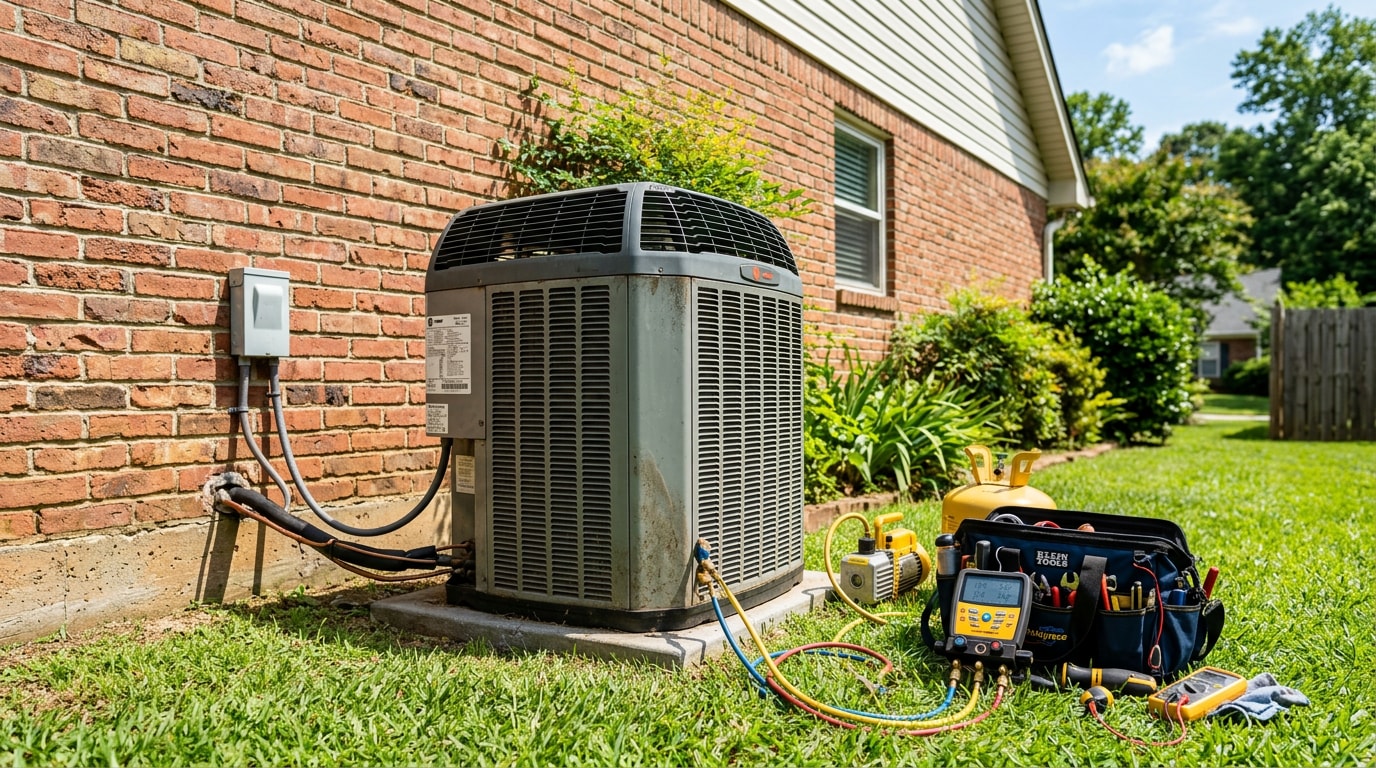
Every system on this list loses efficiency without upkeep: dirty coils, low refrigerant, and clogged filters all push real-world performance below the rated number on the spec sheet. Scheduling seasonal heating maintenance once a year is the cheapest way to keep whichever system you choose running at the efficiency you paid for.
When you're ready to compare options for your specific home, get a free estimate from our team, we'll walk the house, check your ductwork, and price the systems that actually make sense for your budget and square footage.
FAQ
What is the most efficient heating system for a house?
A properly sized and installed air-source heat pump is the most efficient heating system for most homes, with geothermal heat pumps representing the highest efficiency ceiling available. The right choice still depends on climate, home size, and budget, see the comparison table above for a side-by-side breakdown.
Is a heat pump or furnace more efficient in North Carolina?
In North Carolina's mild-winter climate, a heat pump is typically more efficient than a furnace because it moves heat rather than burning fuel to create it. Furnaces still make sense where gas service already exists or ductwork favors combustion heating, but for pure efficiency, heat pumps generally win.
How much can a heat pump save on heating bills?
Compared to electric resistance heat, a modern heat pump can cut heating energy use substantially. Replacing an aging, inefficient furnace often yields meaningful savings too, though actual results vary with insulation, home size, and local energy rates. An HVAC system replacement quote is the fastest way to get numbers specific to your home.
Are heat pumps efficient in cold weather?
Standard heat pumps lose some efficiency in sustained deep-freeze temperatures, while cold-climate heat pump models maintain strong output well below freezing. Brown Summit's winters rarely reach the temperatures where this becomes a real concern, so most homes here see consistent performance from standard equipment.
What's the cheapest heating system to run in Brown Summit, NC?
For most homes with existing ductwork, a cold-climate air-source heat pump typically has the lowest combined upfront-and-operating cost in this climate, since it avoids both high geothermal installation costs and the higher per-unit fuel cost of resistance electric heat. Homes already on natural gas with a modern condensing furnace are usually close behind. If a system is breaking down or underperforming now, an emergency heating service call can confirm whether repair or replacement is the cheaper path forward.
Ready to see which system fits your home and budget? Visit our homepage or get a free estimate and we'll help you compare real numbers, not just spec sheets.