Car air conditioning in Winston-Salem, NC tends to fail at the worst possible moment, usually mid-July, stopped at a light near Hanes Mall with the humidity sitting near 90 percent. Most of the time the cause is predictable once you know what to look for. This guide breaks down why Triad vehicles lose their cool, what a real repair involves, and how to avoid paying twice for the same problem.
Signs Your Car's Air Conditioning Needs Attention in Winston-Salem, NC
A healthy AC system cools fast and stays consistent, even in stop-and-go traffic on Peters Creek Parkway. Watch for these warning signs before the system fails completely:
- Air that's cool but never actually cold
- Airflow that feels weak even on the highest fan setting
- Cooling that cycles between cold and warm on its own
- A musty or sour smell when the AC first kicks on
- A clicking, squealing, or rattling noise when the compressor engages
- Longer cooldown times than you remember from last summer
Catching any of these early almost always costs less than waiting for total failure.
What's Really Causing the Problem
Nearly every car AC complaint in the Triad traces back to one of four issues. Knowing which one you're dealing with changes the entire repair conversation.
Refrigerant Leaks
A sealed AC system shouldn't lose refrigerant on its own. When cooling fades gradually over weeks or months, a small leak at a hose, O-ring, or fitting is almost always the reason.
Compressor Failure
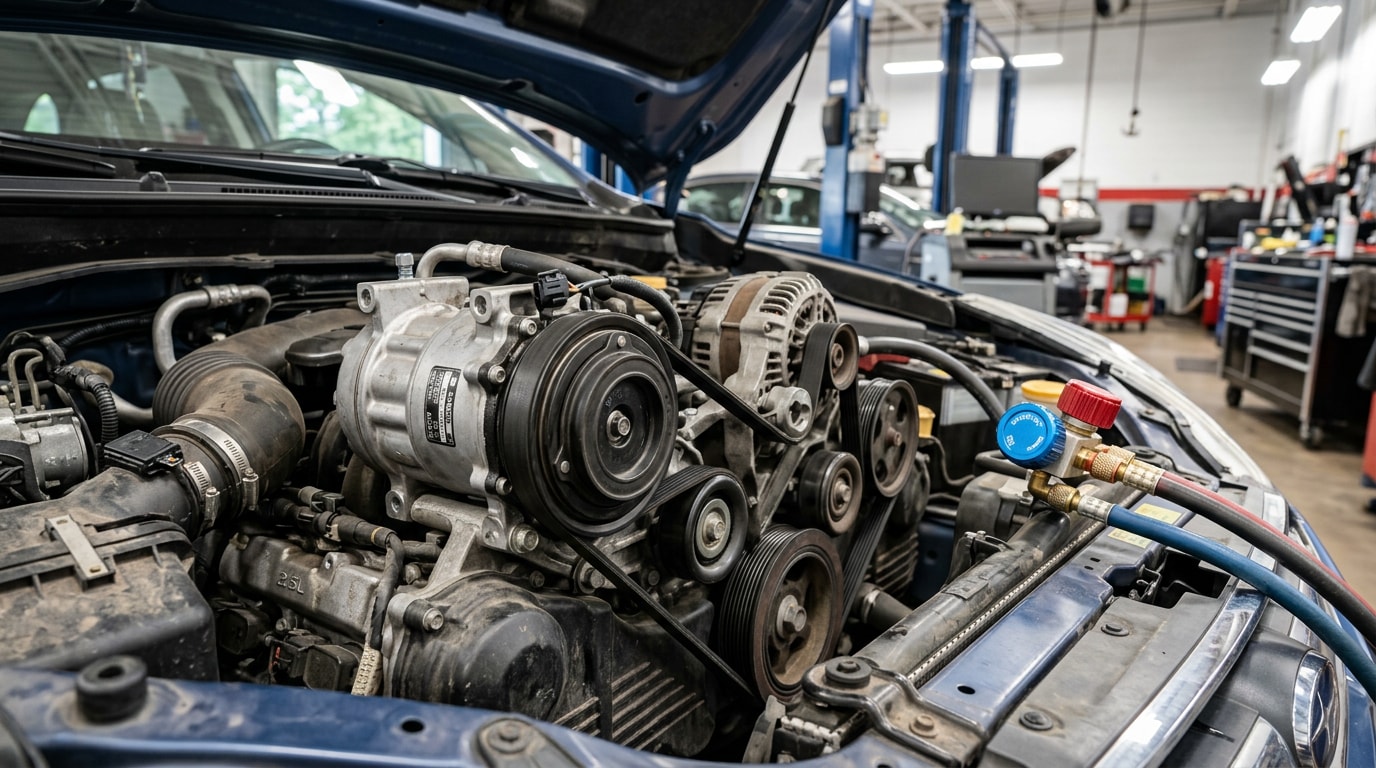
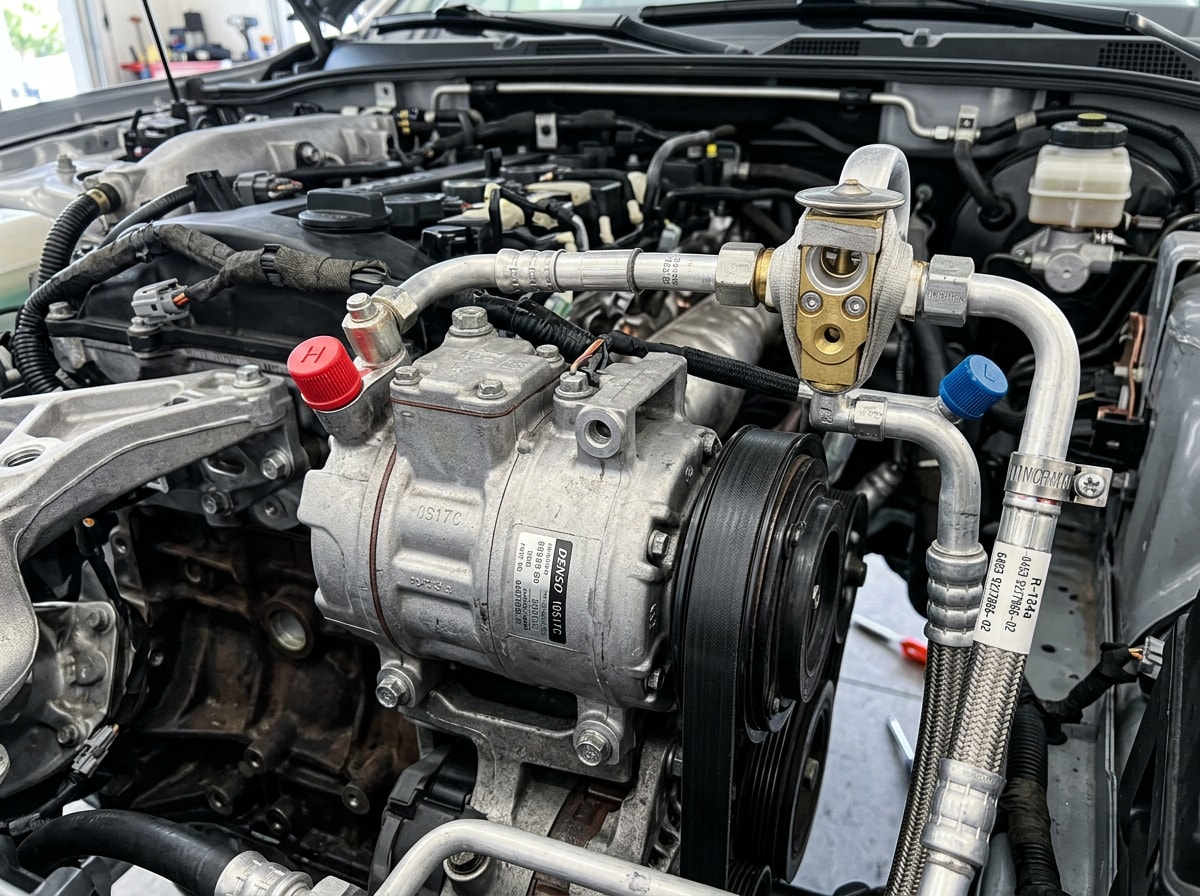
The compressor pressurizes refrigerant and pushes it through the system, and it's driven by the same serpentine belt that runs your alternator. A cracked, seized, or noisy compressor is one of the most expensive repairs in the whole system, and it's rarely a DIY job.
Thermal Expansion Valve or Orifice Tube Issues
This small component regulates how much refrigerant reaches the evaporator. When it sticks or clogs, moisture can get trapped inside the system, which damages other parts over time and makes the fix more involved than it first appears.
Electrical Faults
A bad pressure switch, blown fuse, or failed relay can shut the compressor off entirely, even when refrigerant levels are fine. This is the category DIY recharge kits can't fix, no matter how many cans you add.
AC Refrigerant Recharge: Why a DIY Kit Often Backfires
A drugstore recharge can might restore cold air for a few weeks, but it does nothing to find or fix the leak causing the problem. Worse, overcharging the system with a home kit is a common way to damage a healthy compressor.
A proper recharge starts with UV dye and electronic leak detection to find the exact source. From there, a technician evacuates the system fully and recharges it to the manufacturer's spec rather than just topping it off.
It's also worth knowing that handling automotive refrigerant for pay isn't a free-for-all. Technicians who repair or service motor vehicle air conditioners must be trained and certified by an EPA-approved Section 609 technician training and certification program. That requirement exists because refrigerant mishandling has real environmental consequences, not just a comfort problem.
R-134a vs. R-1234yf: What's in Your Car
Older vehicles run on R-134a. Most vehicles from the last decade or so use R-1234yf instead, and the two aren't interchangeable in the same system.
| Refrigerant | Common In | Global Warming Potential | Notes |
|---|---|---|---|
| R-134a | Most vehicles before roughly 2014 | About 1,430 | Legacy refrigerant, supply has been shrinking |
| R-1234yf | Most new vehicles since the mid-2010s | About 4 | EPA-approved lower-impact replacement for R-134a |
The newer refrigerant has a GWP of only 4, versus over 1,400 for R-134a, and the switch eliminates about 4% of automobile greenhouse gases. A shop needs to know which refrigerant your vehicle takes before touching the system, since the fittings and oil types differ between the two.
How to Choose a Qualified Car AC Shop in Winston-Salem
Not every shop that advertises AC work is actually set up to do it right. A few quick questions before you book can save you a comeback visit:
- Does the technician hold EPA Section 609 certification for refrigerant handling?
- Does the shop use electronic leak detection, not just a pressure gauge?
- Will they quote the repair after diagnosis, not before?
- Do they evacuate and recharge to factory spec rather than a generic top-off?
Two national resources are worth bookmarking if you want a second opinion on recommended service intervals. The Car Care Council is a non-profit organization dedicated to educating motorists about the importance of regular vehicle care, maintenance and repair through its "Be Car Care Aware" consumer education campaign. For more technical background on how shops are trained, the Mobile Air Conditioning Society (MACS) Worldwide has been the advocate for service and repair owners, distributors, manufacturers and educators making their living in the total vehicle climate and thermal management industry since 1981.
Car AC Service vs. Repair: What's Included
These two visits aren't the same thing, and shops that blur the line are usually trying to upsell you.
- AC service (preventive): inspection, belt and hose check, leak check, refrigerant top-off if levels are within spec
- AC repair (reactive): diagnosing a specific failure (leak, compressor, valve, electrical) and replacing the failed part
If a "service" turns into a recharge every few months, that's not maintenance. That's an unrepaired leak.
When the Trouble Is at Home, Not on the Road
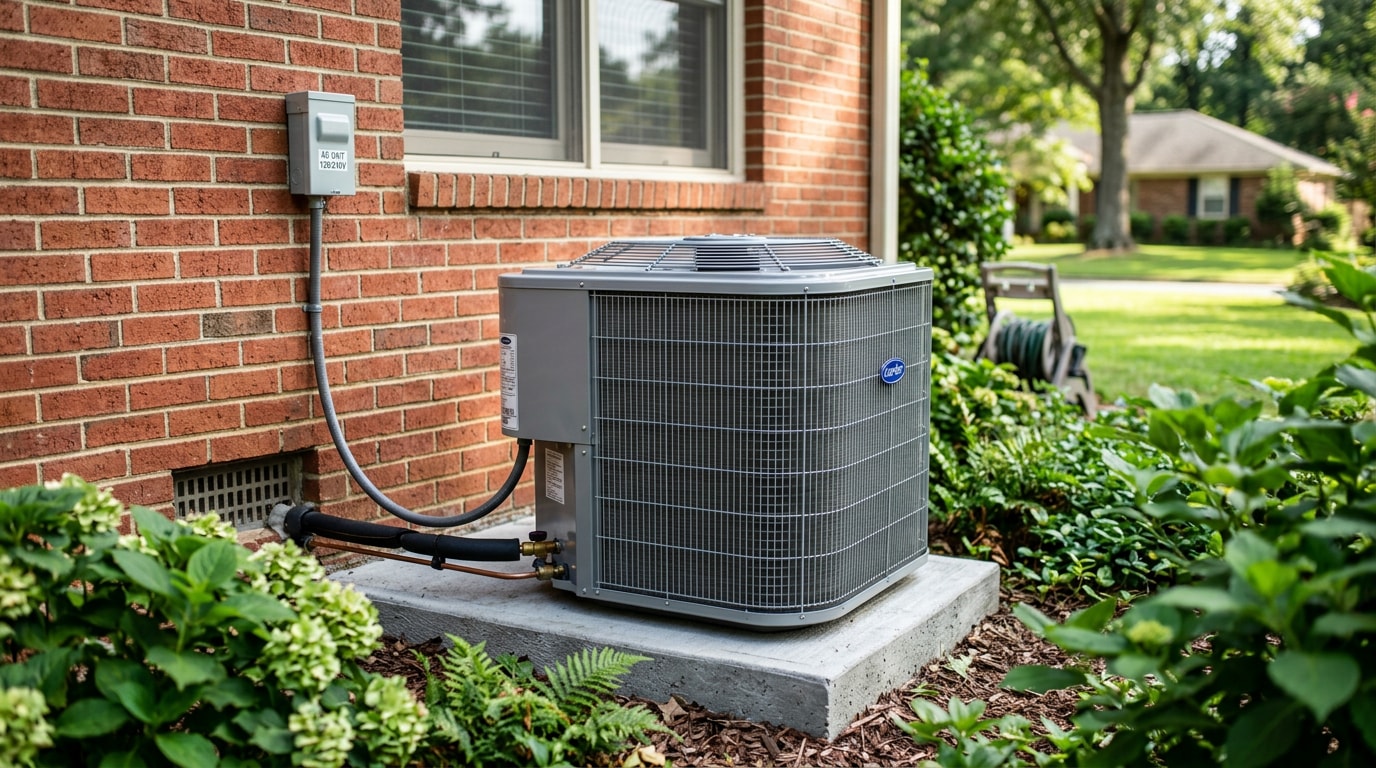
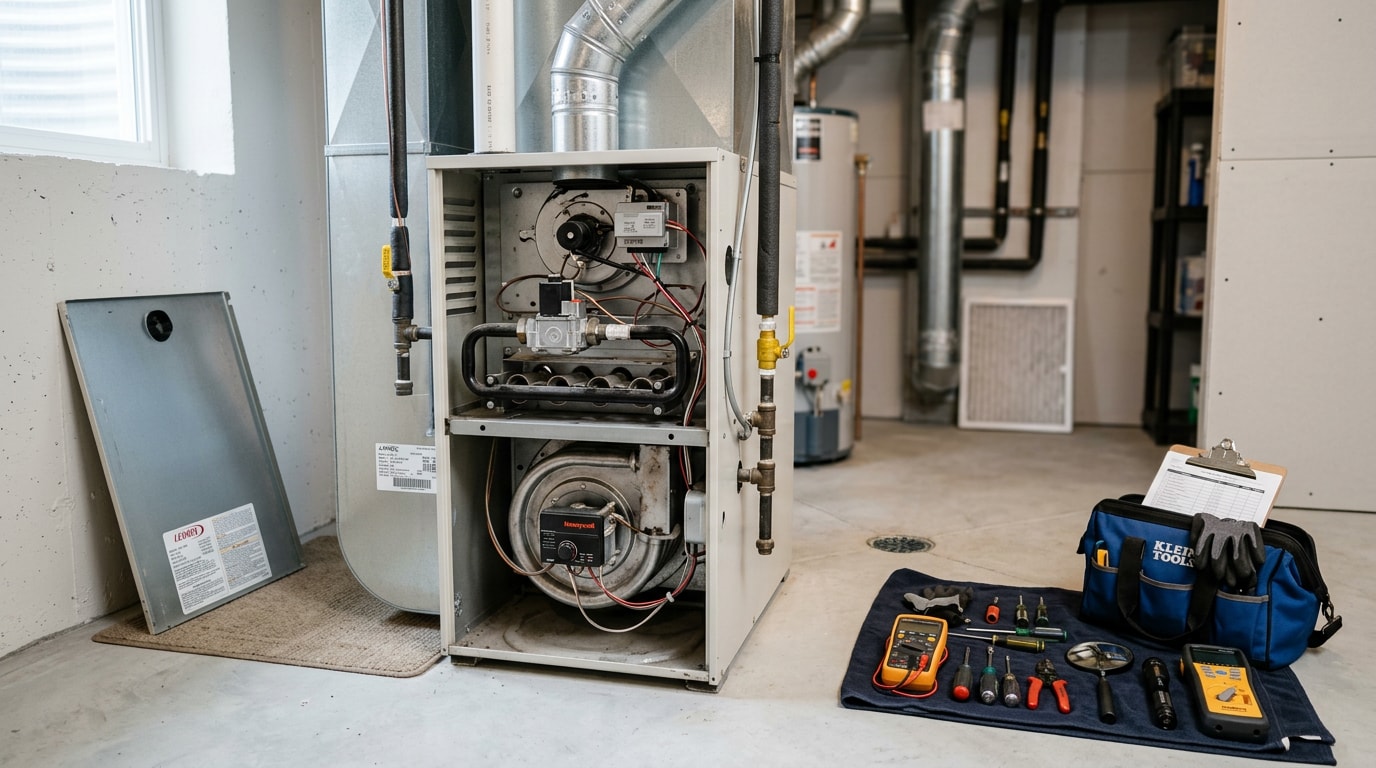
A car's AC and a home's AC run on the same basic science: a compressor, a refrigerant, and a cycle that moves heat out of a space. The diagnostic logic carries over even though the hardware looks different.
If it's actually your house that's struggling to cool down this summer, that's where Repair Solutions comes in. Our technicians handle air conditioning repair and full HVAC contractor services across Winston-Salem, NC and the surrounding Piedmont Triad. If you're also weighing whether to repair or replace an aging home system, our 1 Ton AC in Winston-Salem, NC guide walks through sizing, cost, and the repair-or-replace decision in more detail.
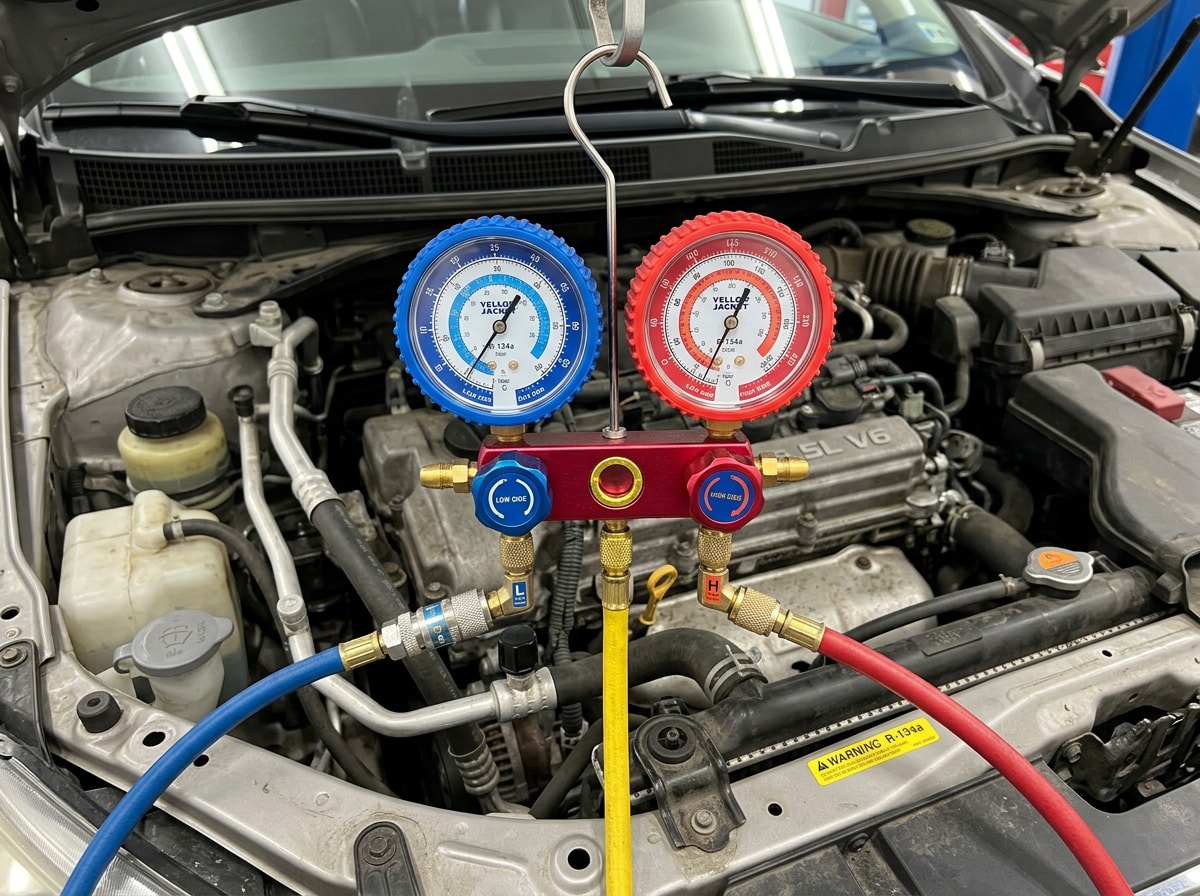
We see refrigerant pressure gauges on both home systems and customer vehicles parked in the same driveway, and the questions we ask are nearly identical: where's the leak, is the compressor cycling correctly, and is the system actually sealed. If your home comfort system needs that same kind of attention, get a free estimate and we'll walk you through what's going on before any work starts.
FAQ
Why is my car AC blowing warm or hot air?
Warm air almost always means a refrigerant leak has dropped system pressure below what's needed to cool. A recharge alone won't fix it long-term until the leak itself is found and sealed.
What causes a car air conditioner to stop working completely?
Total failure usually points to a seized compressor, a blown electrical fuse or relay, or a refrigerant level so low the system's safety switch won't let the compressor engage at all. A diagnostic check narrows it down quickly.
How do I know if I need an A/C recharge?
Weak airflow, warm vents, or cooling that cycles between cold and warm are the classic signs. A technician should still confirm there isn't a leak or electrical issue before recharging, since a recharge on a leaking system won't last.
How often should refrigerant (Freon) be changed?
Refrigerant isn't a scheduled-replacement fluid like motor oil. A properly sealed system shouldn't lose refrigerant at all, so new refrigerant is only needed when there's a confirmed leak.
What does A/C service include?
A/C service typically means checking system performance, inspecting refrigerant levels, and recharging the system if needed to help restore proper cooling.
Is R-1234yf the same as R-134a?
No. They do the same job, but R-1234yf has a far lower global warming potential, uses different fittings, and isn't an approved drop-in replacement for a system designed around R-134a.
Can I recharge my car's AC myself?
You can buy a DIY kit, but it won't find or fix a leak, and overcharging a system with one is a common way to damage a healthy compressor. It's a short-term patch at best.