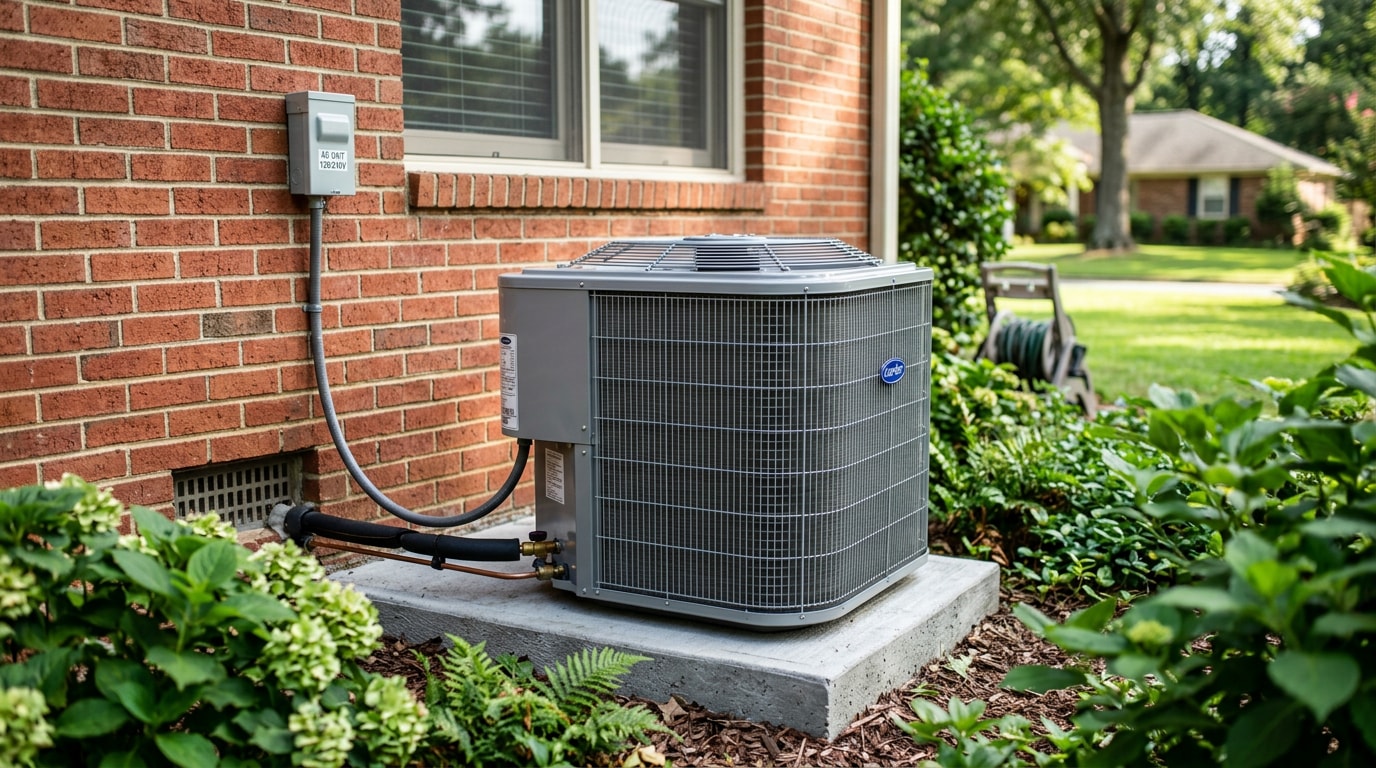
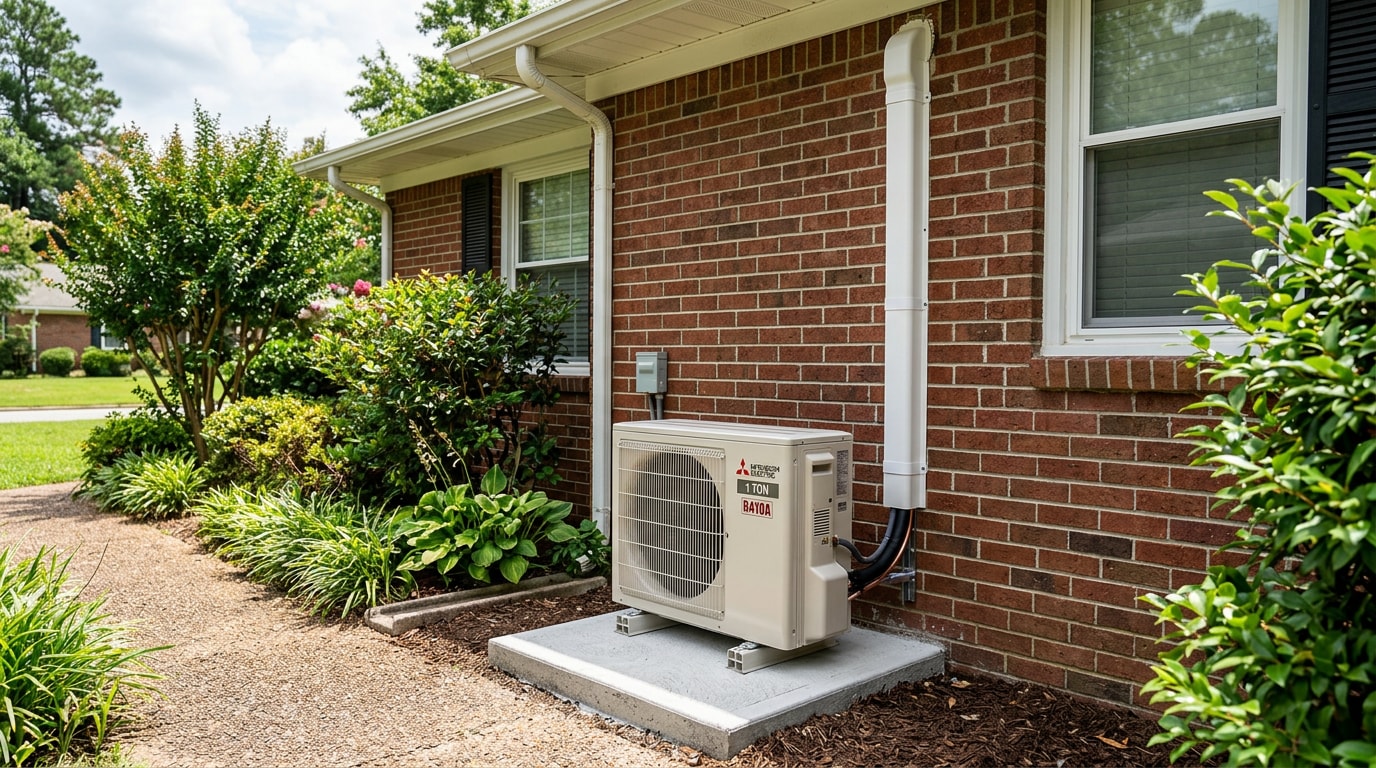
A 1 ton AC in Winston-Salem, NC typically costs $2,000 to $4,500 installed once you factor in labor, electrical work, and permits, since true 1-ton equipment means a window unit or ductless mini-split, not a standard central system. Before you sign a quote, you need to know whether 1 ton actually fits your space, how the 2026 refrigerant rules changed pricing, and whether your current unit is even worth repairing. This guide breaks down real cost ranges, the sizing math a contractor should be using, and the exact dollar rule that tells you when to stop repairing and start replacing.
How Much Does a 1-Ton AC Cost in Winston-Salem, NC?
Cost is almost always the first question, so here's the short version before the details: a 1-ton window unit runs a few hundred dollars installed, while a 1-ton ductless mini-split typically lands in the low-to-mid thousands once labor, electrical work, and materials are included.
| Equipment Type | Equipment Cost Only | Typical Installed Cost |
|---|---|---|
| 1-Ton Window AC | $350 – $700 | $450 – $900 |
| 1-Ton Ductless Mini-Split | $900 – $1,800 | $2,000 – $4,500 |
| 1-Ton Packaged/Light Commercial Unit | $1,200 – $2,200 | $3,000 – $5,500 |
These are starting points, not a quote. Site conditions, electrical panel capacity, and the number of indoor zones all move the number up or down.
Price Range for a 1-Ton Window or Mini-Split AC Unit
Here's a detail many shoppers miss: standard central split-system air conditioners don't come in a 1-ton size at all — that product line starts at 1.5 or 2.0 tons. A true 1-ton unit almost always means either a window AC or a ductless mini-split.
In our service calls across Forsyth County, the most common confusion we run into is a homeowner pricing a "1 ton split system AC unit" that simply isn't manufactured, because the equipment they actually need is a mini-split. Getting that distinction right before you call around for quotes saves a round of wasted conversations.
Major Cost Components in a 1-Ton Installation
A typical installation quote breaks into several line items:
- The unit itself (outdoor condenser and indoor head for mini-splits)
- Installation labor
- Electrical work and any required permits
- Line-set or ductwork materials
- Delivery and old-unit disposal fees
- An optional extended warranty
The total reflects more than the box on the wall. It includes skilled labor to mount and wire the system correctly, plus any upgrades needed to electrical circuits or refrigerant lines. Skipping any of these steps to save money upfront usually causes problems within the first year or two. If you want a line-item quote instead of a ballpark, our air conditioning installation team can walk through the specifics for your home.
How Your Winston-Salem Location Affects the Final Price
Local conditions shift a 1-ton quote in ways a national price guide can't capture. Forsyth County and City of Winston-Salem permit requirements add a modest but real line item for anything involving new electrical circuits. The Piedmont Triad's humid summers also push sizing decisions in a specific direction, since a unit that's slightly undersized for the local climate will run far more hours than the same unit would in a drier region.
Brand choice, existing duct condition, and local permit rules all play into final pricing whether you're in Winston-Salem, Kernersville, or Greensboro. If you're weighing a ductless system against other options, our ductless heating and cooling guide for Kernersville homeowners covers installation steps and pricing in more depth. For a sense of what's available near you, see our Winston-Salem service area page, or get a free estimate directly.
Is a 1-Ton AC the Right Size for Your Space?
Once pricing makes sense, the next question is whether 1 ton is even the correct capacity for the room or home you're cooling.
How Air Conditioner Sizing Works (BTUs, Tons, and Square Footage)
One ton of air conditioning capacity equals 12,000 BTUs (British Thermal Units) per hour of cooling output. That conversion traces back to the historic "refrigeration ton," the cooling effect produced by melting one short ton of ice in a day.
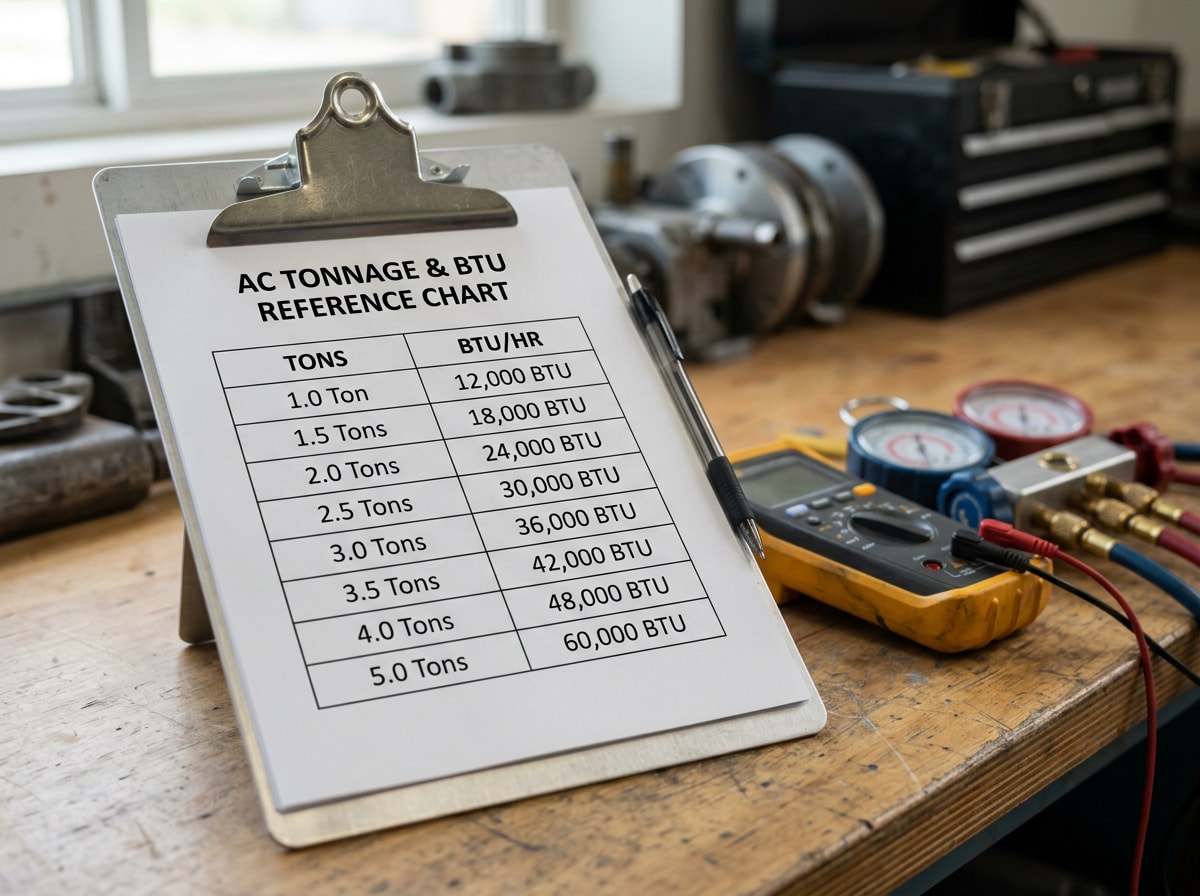
For room-sized equipment like the window units and mini-splits that actually come in 1-ton capacity, ENERGY STAR's own sizing chart puts 12,000 BTU/hour in the 450 to 550 square foot range, before adjustments for sun exposure, ceiling height, or how many people regularly use the space. That's a useful starting point for budgeting, but it's not a substitute for a proper load calculation. The ACCA Manual J standard is the industry benchmark contractors use to account for window placement, insulation levels, and local climate data, and many permit offices require it before signing off on new equipment.
What Happens If You Get Sizing Wrong
Getting the BTU-to-ton math wrong causes real comfort problems, not just a slightly higher bill:
- Oversized units cool the air quickly but shut off before pulling humidity out of the room, leaving the space cold but clammy.
- Undersized units run almost nonstop and still never quite catch up to the thermostat setting.
- Short-cycling from an oversized system also adds wear to the compressor, shortening the equipment's service life.
A contractor doing this correctly measures the actual space and runs the numbers rather than guessing off a chart.
What Else Changes Your 1-Ton AC Price in 2026?
Beyond location and equipment type, one factor surprises a lot of buyers who haven't shopped for an AC in several years.
Why Refrigerant Type Matters for Cost
New residential AC systems manufactured for 2025 and later use A2L refrigerants, primarily R-32 and R-454B, which replaced R-410A under a federal phase-down. According to the EPA's phasedown rules for hydrofluorocarbons, the shift is mandated by the American Innovation and Manufacturing (AIM) Act and reduces the industry's reliance on high global-warming-potential refrigerants over time.
This typically adds to new installation costs, mainly from factory-installed safety features like leak detection sensors and spark-resistant components required for the mildly flammable A2L classification. It isn't optional or a brand-specific upcharge — it's an industry-wide regulatory change affecting every new system, regardless of which contractor you hire. If your current system still runs on R-410A, it can usually still be serviced; what you can't do is mix an A2L refrigerant into an older R-410A system, since they require different equipment entirely.
Repair or Replace? The $5,000 Rule
Not every cooling problem means buying new equipment. Plenty of homeowners land on this question trying to decide whether a repair bill is worth paying at all.
The $5,000 Rule is simple math for deciding whether a repair is worth it: multiply the repair quote by your AC unit's age in years.
- If that number is over $5,000, replacement is generally the better financial move.
- If it's well under $5,000, repair is usually worth it.
For example, a 10-year-old unit with an $800 repair quote comes out to $8,000 — past the threshold, so replacement likely makes more sense. A 4-year-old unit with the same $800 repair comes out to $3,200, which usually favors fixing it.
There's a secondary signal worth weighing too. If the ductwork or line set connected to your system is old, damaged, or sized wrong for a newer unit, a full replacement project can run considerably higher than the equipment price alone suggests. Getting an air conditioning repair estimate before committing either way gives you real numbers to run through the rule instead of guessing. If the math points toward replacement, our HVAC system replacement team can scope the project and walk you through options.
Upfront Cost vs. Long-Term Savings: SEER2 Explained
Sticker price isn't the whole story once you start comparing systems side by side.
Every new AC carries a SEER2 rating, the efficiency standard that replaced the older SEER metric in recent years. A higher-SEER2 1-ton unit costs more to buy and install, but it uses less electricity to deliver the same cooling output, which lowers monthly bills over the system's service life.
Duke Energy, which serves most of the Winston-Salem area, offers rebates through its Smart $aver program for qualifying high-efficiency equipment — worth checking before you sign a contract, since available incentives and amounts change from year to year. For a unit that will run through hot Piedmont Triad summers for a decade or more, that efficiency gap compounds into real long-term savings, even though it means a bigger check today. Browse AC installation and replacement options or get a free estimate to compare SEER2 tiers against your budget.
FAQ
How Many Square Feet Will a 1-Ton AC Unit Cool?
A 1-ton air conditioner generally cools 450 to 550 square feet per ENERGY STAR's sizing chart, depending on insulation, ceiling height, and sun exposure. This figure is a rule-of-thumb starting point, not a replacement for a proper load calculation performed at your specific property.
Can a 1-Ton AC Cool Two Rooms?
A 1-ton air conditioner is built to handle the heat load of one enclosed space, typically 450 to 550 square feet. Spreading that capacity across two separate rooms usually means uneven cooling, since airflow and humidity control were calculated for a single zone.
What's the Difference Between a Standard Split System AC and a Mini-Split for a 1-Ton Unit?
No standard central split-system AC is manufactured at 1 ton — that lineup starts at 1.5 or 2.0 tons. A genuine 1-ton install almost always means a ductless mini-split system or a window unit.
How Much Does It Cost to Install a 1-Ton AC in Winston-Salem, NC?
Installed cost typically runs $450 to $900 for a window unit or $2,000 to $4,500 for a ductless mini-split, depending on electrical work, permits, and the number of indoor zones. Local permit fees and A2L refrigerant equipment requirements both add modest amounts on top of base pricing.
Do I Need a Permit for a 1-Ton AC Installation in Forsyth County?
Most installations involving new electrical circuits or line-set work require a permit through the City of Winston-Salem or Forsyth County, depending on your address. A licensed contractor handling your air conditioning installation should pull the permit as part of the job rather than leaving it to the homeowner.
Still deciding between repair, replacement, or a completely different system size? Contact Repair Solutions HVAC for a free, no-pressure estimate on your Winston-Salem home, or visit our homepage to see our full range of heating, cooling, and air quality services.