If your AC condenser is not turning on in Greensboro, NC, a quiet outdoor unit on a 90-degree Piedmont afternoon turns a minor annoyance into a real problem fast. Most no-start cases trace back to one of five fixable causes, and you can rule out half of them in under ten minutes. Below is the exact order a technician checks them, plus a clear line for when to stop troubleshooting and pick up the phone.
Quick Diagnosis: Match Your Symptom to the Cause
| What You Notice Outside | Most Likely Cause | DIY or Call a Pro |
|---|---|---|
| Complete silence, nothing happens | Tripped breaker, open disconnect, dead batteries | Check yourself first |
| Humming sound, unit won't start | Failed capacitor | Call a pro |
| Clicking or chattering, then nothing | Worn contactor | Call a pro |
| Fan sluggish or coated in debris | Blocked airflow | Clean it yourself |
| Indoor blower runs, outside unit is dead | Separate 240V circuit issue | Check breaker/disconnect first |
Common Reasons an AC Condenser Won't Turn On
An outdoor condenser that refuses to start almost always comes down to a power interruption, a thermostat that isn't signaling the system, blocked airflow, or a failed electrical part like a contactor or capacitor. Here's each cause broken down in the order a technician typically investigates them.
Power Issues: Tripped Breaker, Blown Fuse & Disconnect Switch
Residential condensers run on a dedicated 240-volt circuit, separate from the indoor air handler. That's why your blower can run fine indoors while the outdoor unit stays completely dead.
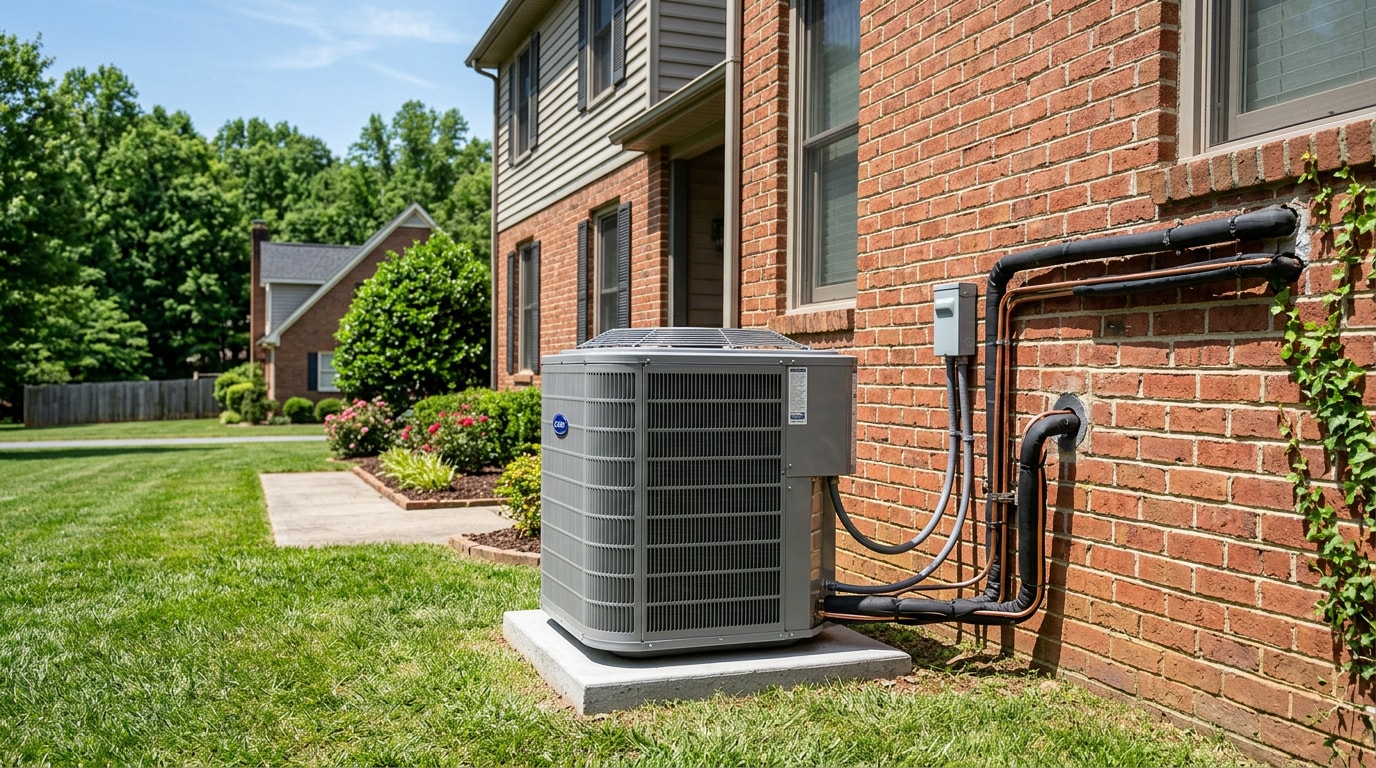
Start at your main electrical panel and look for a tripped breaker labeled for the AC or condenser. Then check the outdoor disconnect switch, a small gray box mounted near the unit, along with any pull-out fuse block inside it.
Greensboro's storm season is worth factoring in here. North Carolina experiences about 40 to 50 thunderstorm days per year , and voltage surges from those storms are a common reason breakers trip without warning across the Piedmont Triad.
If a breaker trips once, resetting it is reasonable. If it trips again immediately, stop resetting it. The Consumer Product Safety Commission lists fuses needing replacement or circuit breakers needing frequent resets as a warning sign of a deeper wiring hazard, not something to work around on your own.
Thermostat Troubles
Confirm the thermostat is set to "Cool" with the setpoint below the current room temperature. It sounds basic, but it's the single most overlooked cause of a no-start condenser.
Check the batteries next. Weak or dead batteries can cause the display to flicker, dim, or stop responding, which means no signal ever reaches the outdoor unit. A completely blank thermostat screen usually points back to a shared power issue rather than the thermostat itself.
Airflow Blockage Around the Condenser
A condenser surrounded by leaves, grass clippings, or overgrown shrubs can overheat and trip its own internal safety shutoff. This is one of the easiest problems to catch with a quick visual check.
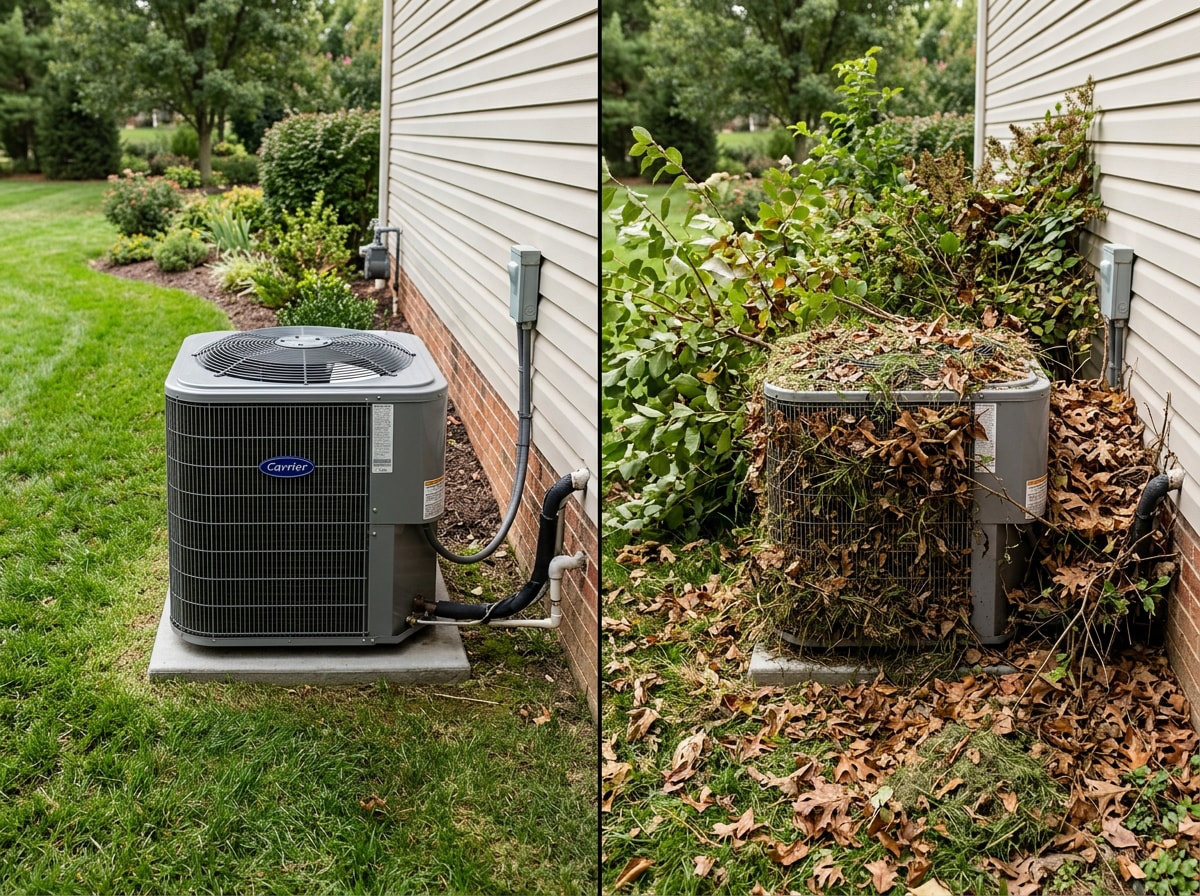
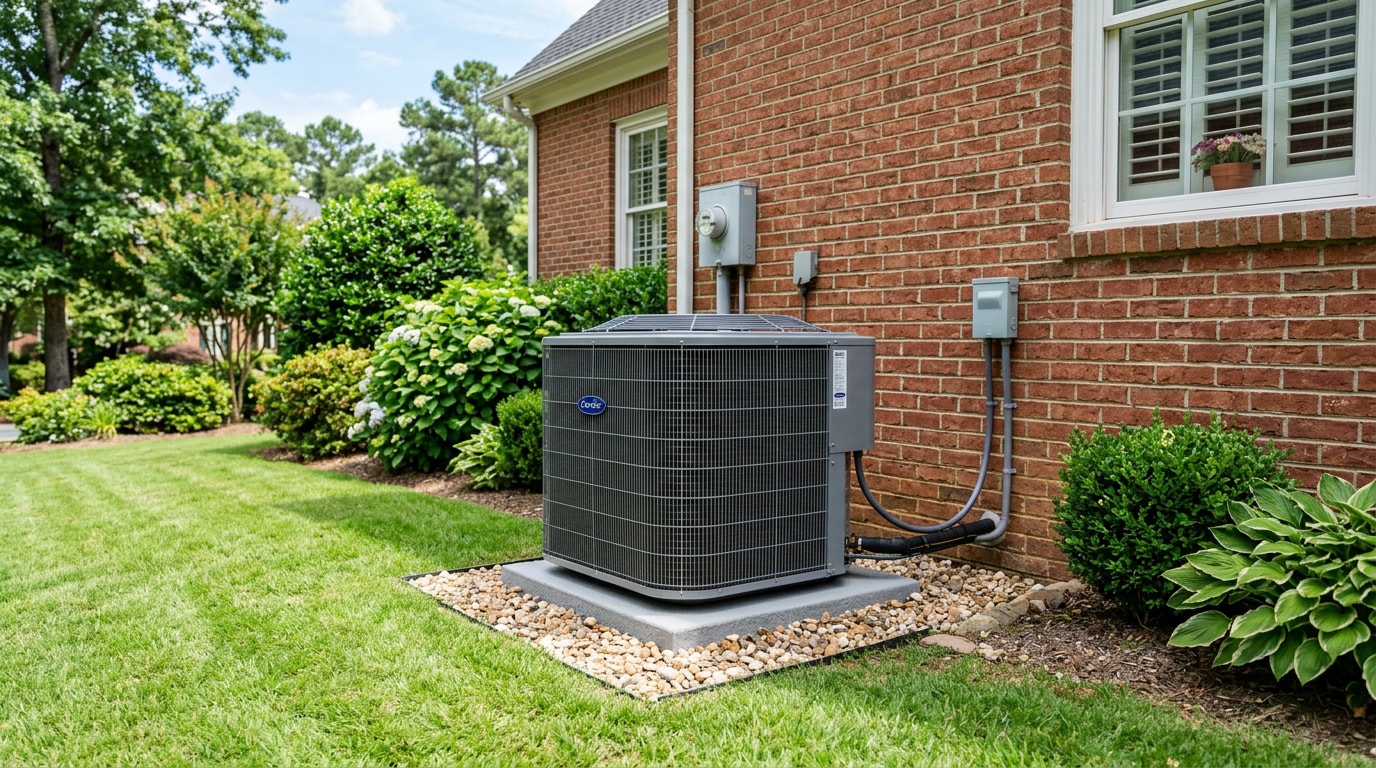
Dirty coils reduce the system's ability to cool your home and cause the system to run longer, increasing energy costs and reducing the life of the equipment , according to ENERGY STAR. Manufacturers generally recommend a couple of feet of clearance on all sides and several feet above the unit for proper airflow. If furniture, planters, or stacked yard debris have crept too close to the cabinet, moving them back may solve the problem immediately.
Worn Contactor
A contactor is the relay switch that sends power to the compressor and fan motor whenever the thermostat calls for cooling. When it fails, the condenser never engages, even though power is reaching the unit.
Signs of a worn contactor include:
- Pitted or burnt contact points
- A chattering or buzzing sound from the outdoor cabinet
- Insect nests physically blocking the switch from closing
Diagnosing and replacing a contactor involves working inside an energized electrical cabinet, so this is a repair for a licensed technician, not a weekend project.
Failed Capacitor
A failed capacitor is one of the most common reasons an AC condenser won't turn on, and it's usually easy to recognize by sound. A humming condenser that won't actually start, paired with electrical noise but no motion, points almost directly at this part.
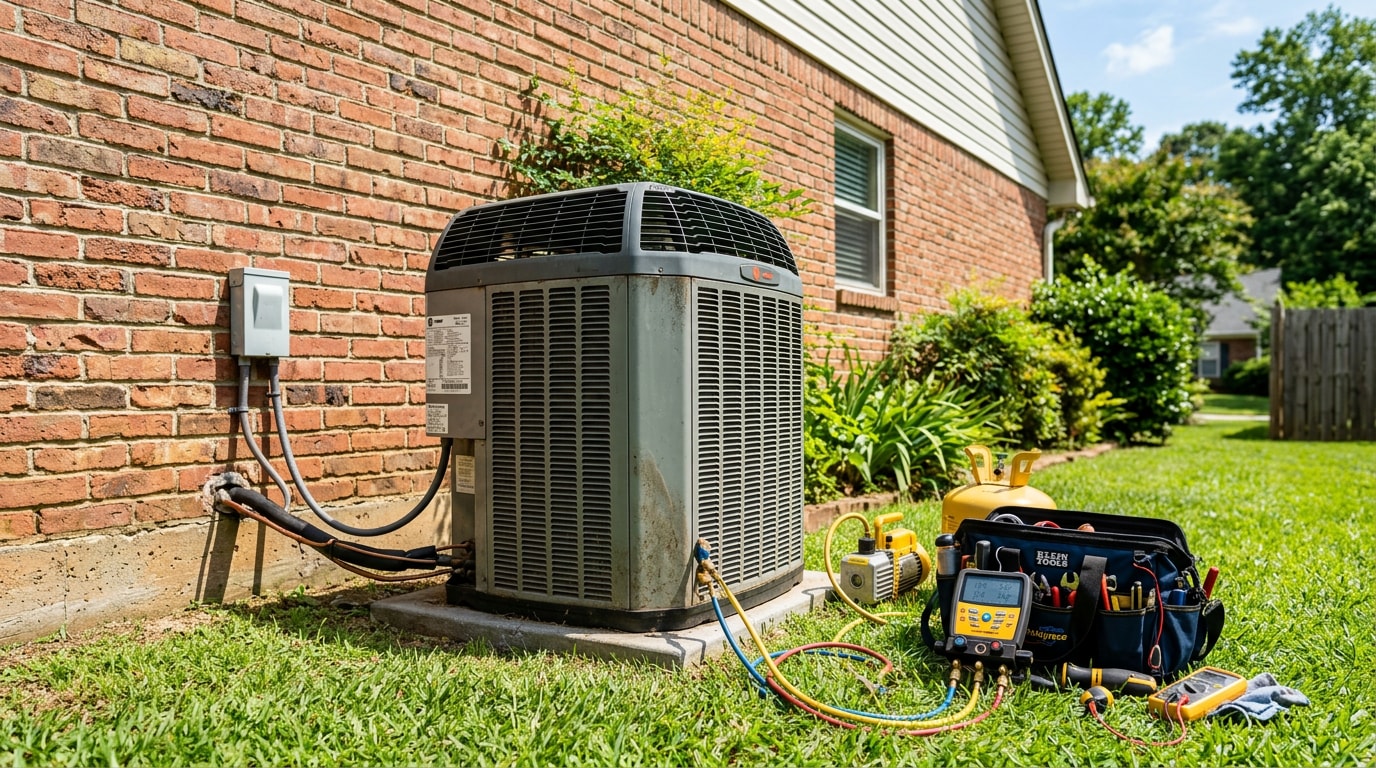
Capacitors store a high-voltage charge even after the system is powered off, which makes testing or replacing them genuinely dangerous without the right training and tools. In our service calls across Greensboro and the surrounding Triad, a bulging or leaking capacitor is one of the most frequent culprits we find once a homeowner has already ruled out the breaker and thermostat.
Troubleshooting Steps: What to Check Before Calling a Pro
Before any hands-on inspection, cut power to the unit at the breaker or the outdoor disconnect switch. Once power is safely off, work through this checklist:
- Check the breaker panel and outdoor disconnect switch for a trip or loose fuse.
- Verify the thermostat is set to "Cool" with a setpoint below room temperature.
- Clear visible leaves, grass, or debris from around the condenser cabinet.
- Restore power and listen for buzzing or humming, which can point to a contactor or capacitor issue.
- If none of these steps restore normal operation, call a licensed technician.
This checklist is reasonable to run on your own, but it isn't a substitute for professional diagnosis once electrical components are suspected. If you've worked through the list and the unit still won't start, schedule a service visit with our team.
When to Call a Licensed HVAC Technician
Call a professional once you suspect a contactor, capacitor, or compressor issue, or if the breaker trips again right after you reset it. These repairs involve energized components and specialized testing equipment that go beyond a homeowner toolkit.
Our technicians provide air conditioning repair throughout Greensboro and the Piedmont Triad, and we diagnose the exact cause before recommending a fix. If your condenser is older and this isn't its first no-start call, it's also worth discussing AC installation or a full HVAC system replacement rather than repeatedly patching the same unit.
Homeowners comparing repair against replacement costs may also find our 1 Ton AC in Winston-Salem, NC cost and sizing guide useful for ballpark budgeting before a technician arrives.
Repair Solutions HVAC serves Greensboro, NC and the surrounding Triad as a full-service HVAC contractor. Visit our homepage to see the full range of heating, cooling, and air quality services we offer, or get a free estimate today.
FAQ
Why Is My AC Fan Outside Not Spinning?
A fan that won't spin is usually caused by physical obstruction, low voltage reaching the motor, a worn fan belt, or a motor that's overheating and shutting itself down. Clearing debris and checking power at the disconnect are the fastest first steps.
Why Isn't My Outside AC Unit Fan Running, But the Inside Is?
This points back to the separate-circuit setup covered above. A tripped outdoor breaker, an open disconnect switch, or internal damage are the most likely explanations when the indoor blower keeps running normally.
Why Is My AC Unit Outside Not Turning On?
The usual culprits are a tripped breaker, a damaged condenser component, blocked airflow, an incorrect thermostat setting, or a malfunctioning compressor. Working through the checklist above helps narrow down which one applies.
What Should I Do If My Air Conditioner Stops Working Suddenly?
Check your thermostat settings first, then move to the circuit breaker and outdoor disconnect. If the system still won't start, contact a reliable local AC repair team rather than continuing to troubleshoot electrical components on your own.
Is It Safe to Keep Resetting a Tripped AC Breaker?
No, not if it trips again right away. A breaker that trips repeatedly is signaling a wiring or component fault, and continuing to reset it can make the underlying problem worse.
How Do I Know If It's the Capacitor or the Contactor?
A humming sound with no movement usually points to a capacitor. A chattering, clicking, or buzzing sound right before the unit cuts off usually points to a contactor. Both require a multimeter and training to confirm safely, so this diagnosis is best left to a technician.