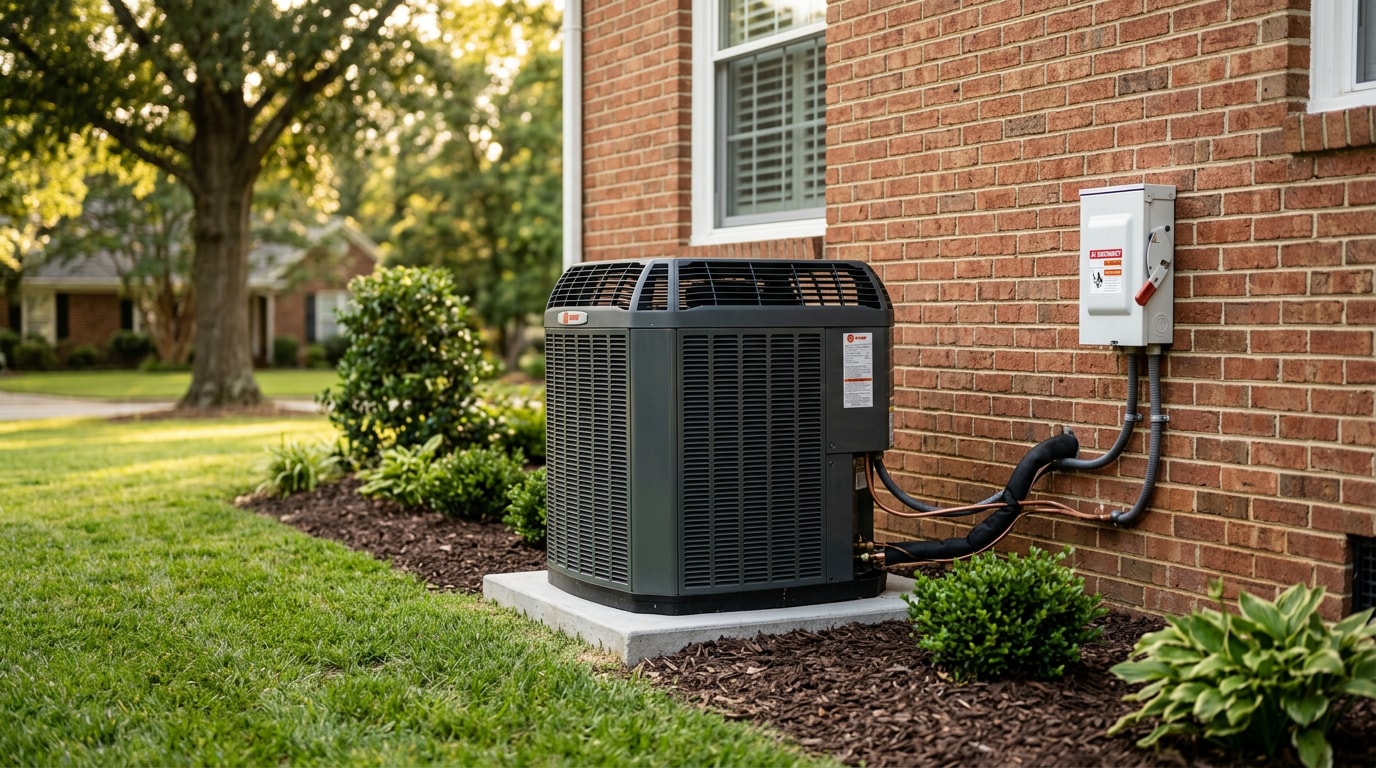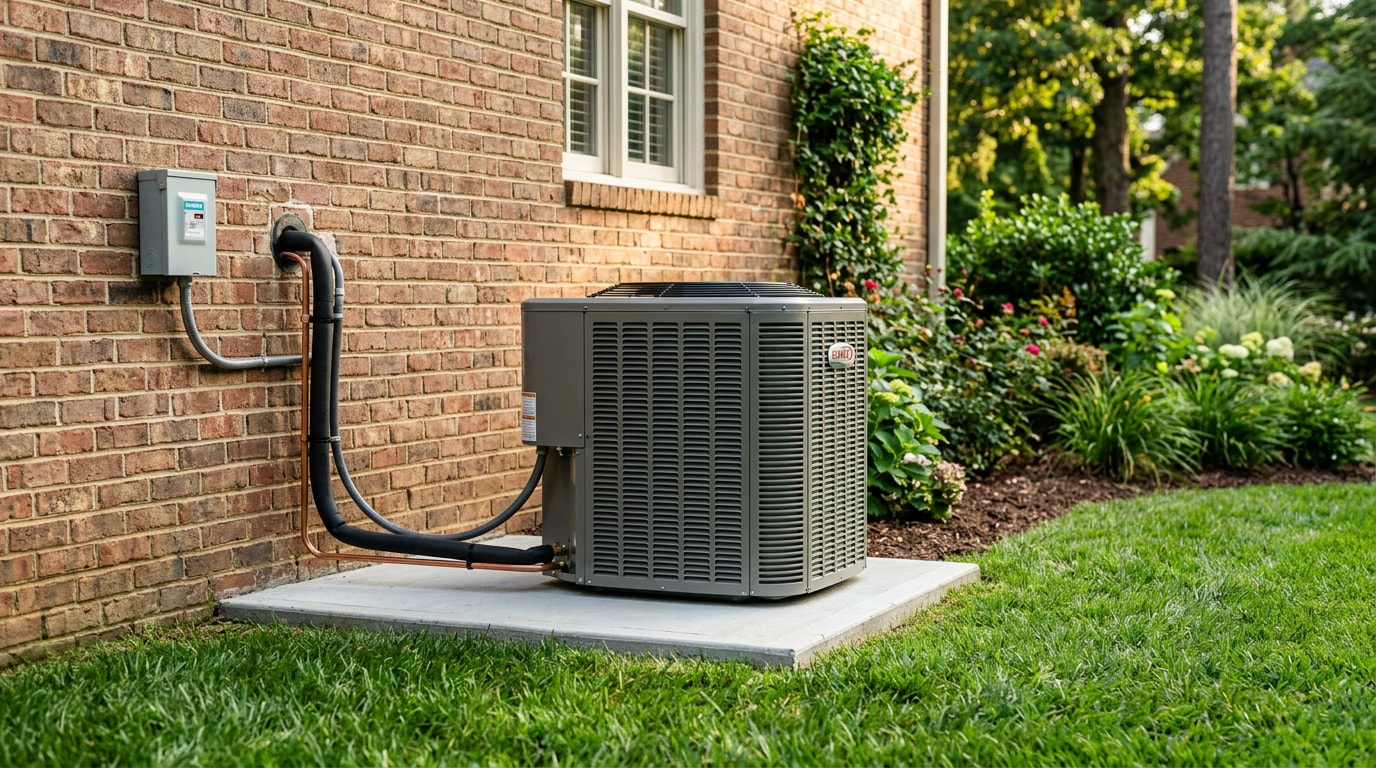
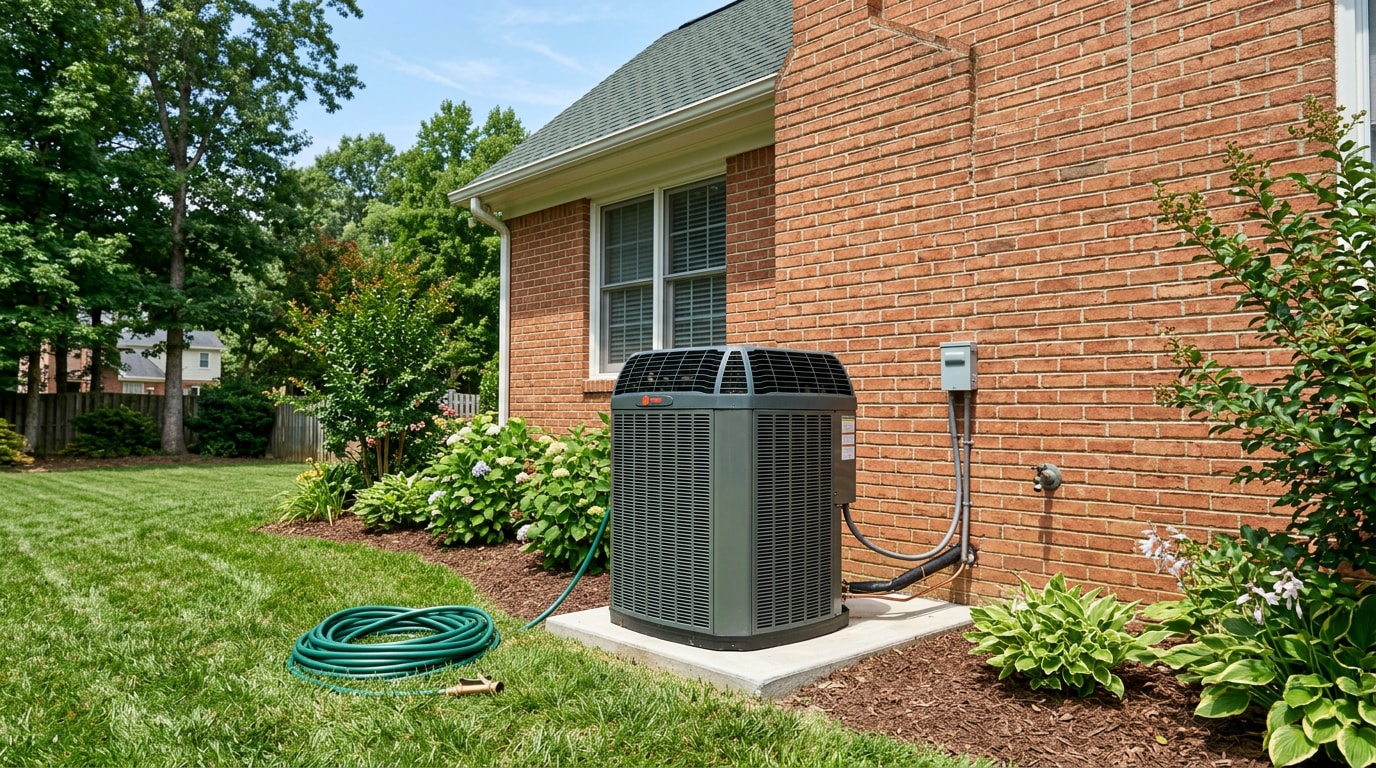
Spraying water on an AC unit gives a brief, temporary cooling boost through evaporation, but the effect disappears within minutes and does nothing to fix an underlying problem. For Jamestown, NC homeowners sweating through a humid Piedmont summer, that distinction matters more than it sounds.
The Direct Answer: Does It Actually Cool the House?
No, not in any lasting way. When water hits hot condenser coils, it evaporates and pulls a little heat with it, which briefly lowers the coil's surface temperature and the system's head pressure. Vents might blow slightly cooler air for a few minutes. Once the water dries, the coils reheat under the sun and the system is right back where it started.
If your house isn't cooling properly on a regular basis, a hose isn't the fix. That's usually a sign of a dirty coil, low refrigerant, a failing capacitor, or an undersized system struggling against Piedmont Triad humidity. Our AC repair team can diagnose the real cause in one visit instead of a quick spray that wears off before dinner.
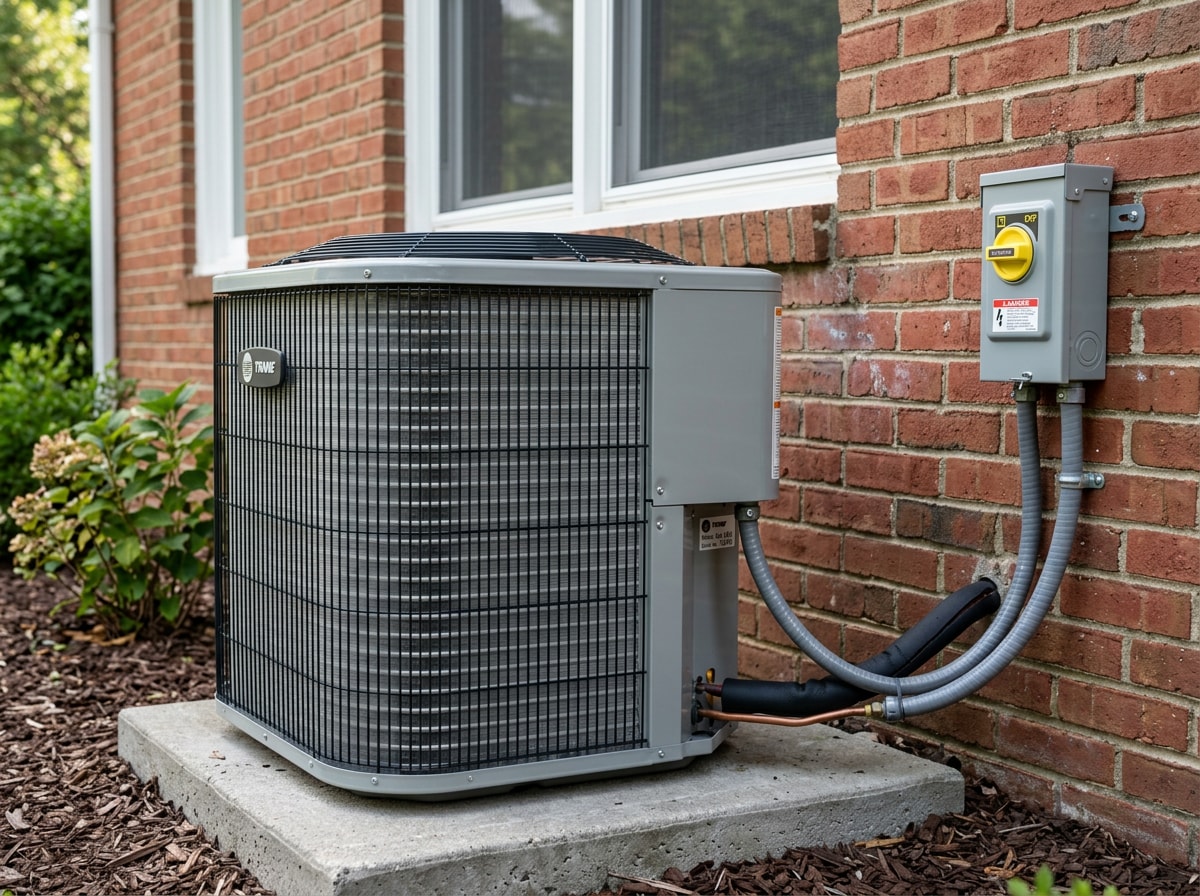
Why the Hose Trick Feels Like It Works
The physics behind it is real, just short-lived.
- Water lands on hot aluminum fins and evaporates almost instantly.
- Evaporation pulls heat out of the metal, dropping the coil's surface temperature for a few minutes.
- Lower coil temperature briefly reduces head pressure, which can make the compressor sound and feel like it's working less hard.
- Vents may blow a touch cooler for a short stretch, usually five to ten minutes.
- As the water dries, the coil reheats in the outdoor air and pressure climbs right back up.
That's the entire cycle. No lasting capacity is gained, and the unit hasn't gotten any more efficient than before you picked up the hose.
The Local Factor Most Articles Get Wrong: Jamestown's Water Isn't Actually Hard
Most national advice about spraying AC condensers leans hard on one warning: hard tap water bakes mineral scale onto the fins and permanently insulates them from releasing heat. That's accurate advice in places like Phoenix or Las Vegas, where municipal water runs 200 mg/L or higher.
It's a weaker argument here. Jamestown and High Point draw from Piedmont reservoirs sitting on granite and gneiss bedrock, and local utility testing has repeatedly measured hardness in the roughly 30 to 48 mg/L range, around 2 to 3 grains per gallon. The U.S. Geological Survey classifies anything under 60 mg/L as soft water, which puts the Piedmont Triad well inside that range rather than the "hard water" zone most warnings are written for.
| Location | Approx. Hardness | USGS Classification |
|---|---|---|
| Jamestown / High Point, NC | 30–48 mg/L | Soft |
| National average | ~100 mg/L | Moderately hard |
| Very hard-water region (example: Phoenix, AZ) | 200–350+ mg/L | Very hard |
So the scale-buildup risk that dominates most articles on this topic is a smaller concern locally than it is nationally. That said, "smaller" isn't "zero," and water hardness is only one of several problems with the hose trick.
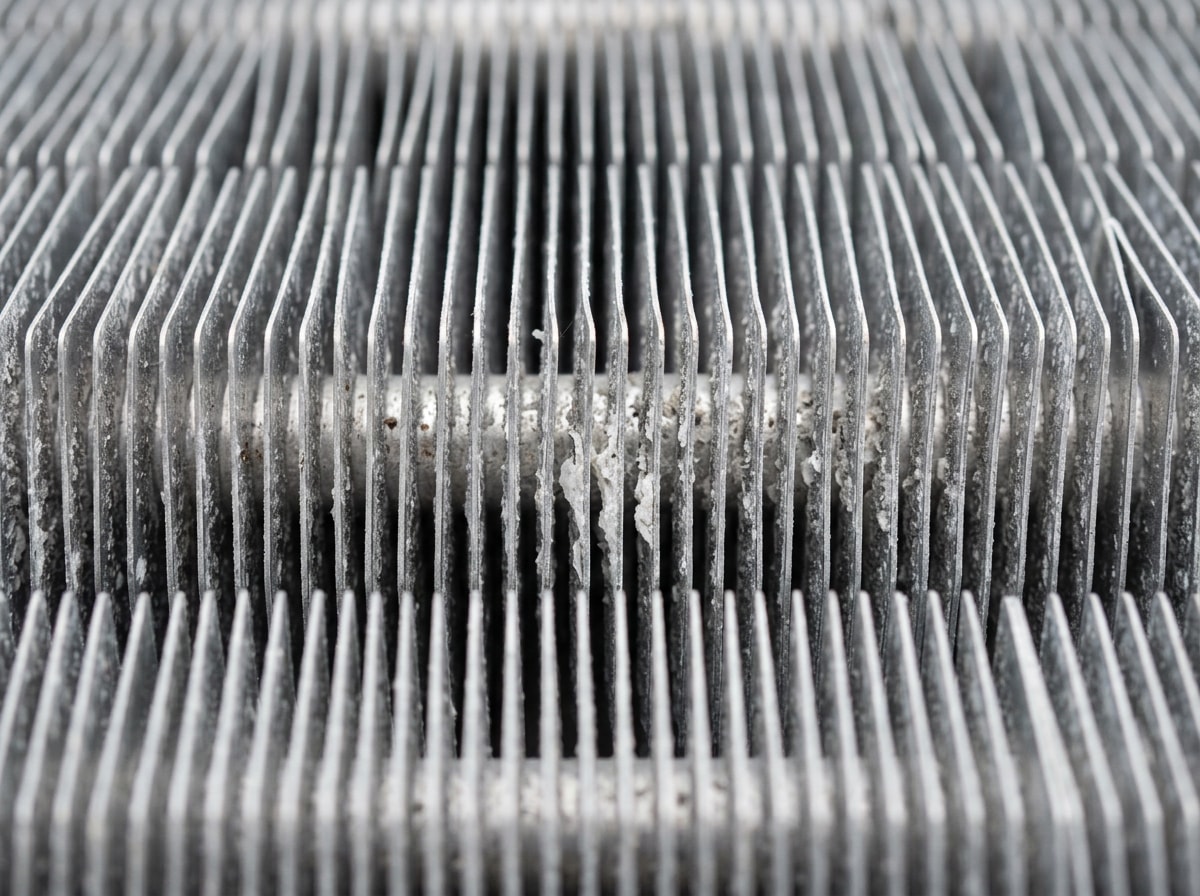
Why Soft Local Water Doesn't Make Spraying a Good Idea
Even with naturally soft water, three other issues still apply in Jamestown:
- Electrical risk. Condensers run on high-voltage circuits, and directing a hose stream into a live, running unit is never worth the risk, regardless of mineral content.
- Bent or packed fins. Direct spray pressure, even from a garden hose, can bend thin aluminum fins or drive debris deeper into the coil instead of out.
- Masking a real problem. A system that needs the hose trick to feel cool is usually already struggling with a dirty coil, a refrigerant leak, or a failing part. Spraying it just delays the repair.
Is It Safe to Spray a Running AC Condenser?
No. Spraying water into a powered, operating condenser puts water in direct contact with high-voltage components, and that's a genuine shock hazard no matter how soft your local water supply is. The Electrical Safety Foundation International specifically warns that water and outdoor electrical equipment are a dangerous combination and that products not built for direct water exposure can become a serious shock risk once wet.
The safe version of this task looks completely different from the viral "spray it down" trick.
The Right Way to Clean a Condenser in Jamestown, NC
Routine coil cleaning is legitimate maintenance. Cooling your unit mid-cycle with a hose is not. Here's the safe sequence:
- Shut off power at the outdoor disconnect switch (not just the thermostat).
- Let the unit sit for a few minutes so the coils aren't hot.
- Remove loose debris, leaves, and grass clippings by hand or with a soft brush.
- Rinse the fins gently from the inside out using a regular garden hose, not a pressure washer.
- Let everything air dry fully before restoring power.
ENERGY STAR's own maintenance guidance backs this approach, recommending that homeowners clean evaporator and condenser coils as part of a standard seasonal check-up, since dirty coils are what actually force a system to run longer and harder. Done this way, twice a year in spring and fall, you get the real benefit people are chasing when they reach for the hose, without the electrical risk or the wasted effort.
For a full walkthrough of what a professional tune-up covers beyond the coils, including refrigerant checks and electrical inspections, see our AC maintenance guide for the Triad.
When Spraying Water Is a Sign of a Bigger Problem
If you find yourself reaching for the hose more than once or twice a summer just to get relief, that's a symptom worth paying attention to, not a routine. Common underlying causes we see on service calls in Jamestown include:
- A refrigerant charge that's low from a slow leak.
- A condenser coil packed with pollen, grass, or cottonwood fluff.
- A failing capacitor that makes the compressor labor.
- An AC unit that was undersized for the home to begin with.
Any of these will make a system feel like it needs a boost on hot afternoons, and none of them get better with water. If that sounds like your setup, it's worth having a technician check the system before the next heat wave rather than relying on a garden hose to buy a few minutes. You can get a free estimate and have a technician look at the actual cause instead of guessing.
Homeowners outside Jamestown can find local service details on our Jamestown, NC area page, and our full list of HVAC services covers everything from repair to full system replacement.
FAQ
Does spraying water on an AC unit help it cool the house?
Only for a few minutes, and only around the outdoor unit itself. The water evaporates, briefly cools the coil, and then the effect is gone. It does not lower the indoor temperature in any meaningful or lasting way.
Is it safe to spray water on an AC condenser while it's running?
No. Spraying a live, running condenser puts water near high-voltage components, which is a shock hazard regardless of local water hardness. Any rinsing should happen with the unit powered off at the disconnect.
Will hard water ruin my AC fins?
In areas with genuinely hard water, repeated spraying can leave mineral scale that insulates the fins and reduces heat transfer over time. In Jamestown and High Point, local water tests soft, so the scale risk is lower, but it isn't a reason to spray a running unit anyway.
Can I put a sprinkler on my outdoor AC unit?
No. A sprinkler keeps the coil wet continuously, which raises both the electrical risk and the chance of corrosion over time, even with relatively soft water. Occasional, powered-off rinsing is the safer approach.
How often should I clean my condenser coils?
Twice a year is typical for most homes, once in spring before cooling season and once in fall. Homes with heavy pollen, cottonwood, or landscaping debris nearby may need it more often.
What should I do instead of spraying water to cool my AC down?
Schedule a coil cleaning and tune-up with the system powered off, check that nothing is blocking airflow around the unit, and have a technician check refrigerant levels and electrical components if the house still isn't cooling well. If your system is still struggling after basic maintenance, contact us for a free estimate.