A solar water heating system in High Point, NC can cut a household's water heating energy use dramatically, but 2026 changed the financial math in ways most online guides haven't caught up with yet. Before you call an installer, you need accurate numbers on cost, system type, and which incentives are actually still on the table this year. Here's what homeowners in Guilford County need to know before signing a contract.
Why Consider a Solar Water Heater in High Point?
Water heating is typically the second-largest energy expense in a home, behind only heating and cooling. Well-functioning solar water heaters can theoretically displace 50 to 80 percent of the output of a natural gas-fueled household water heater, depending on how hot water usage aligns with production and storage capacities , according to a California Energy Commission assessment of real-world performance.
North Carolina's Piedmont region gets decent sun for this kind of system. North Carolina averages 4.5 to 5.0 peak sun hours per day, with the coastal plain and Piedmont regions reaching the higher end of that range. That's enough solar resource to make a well-sized system genuinely useful here, not just in the Southwest.
The catch is winter. High Point sees multiple weeks of sub-freezing nights each year, which rules out some system configurations outright. We'll walk through which ones actually hold up locally.
Types of Solar Water Heating Systems: Active vs. Passive
Every solar water heater falls into one of two broad categories: active, which uses a pump to move fluid, or passive, which relies on gravity and natural convection with no moving parts. The right choice for a High Point home depends heavily on how the system handles the occasional hard freeze that hits the Piedmont each winter.
Active Direct Systems
An active direct system uses an electric pump to circulate household water straight through the rooftop collector and back into the storage tank. Because the potable water itself travels through the panels, direct circulation systems are ideal for climates where freezing is rare .
That's the catch for Guilford County homeowners. High Point logs repeated stretches of sub-freezing nights each winter, which puts an active direct solar water heater at real risk of frozen, cracked collector lines unless it includes drain-back protection. Most installers steer local customers toward a different configuration instead.
Active Indirect (Closed-Loop) Systems
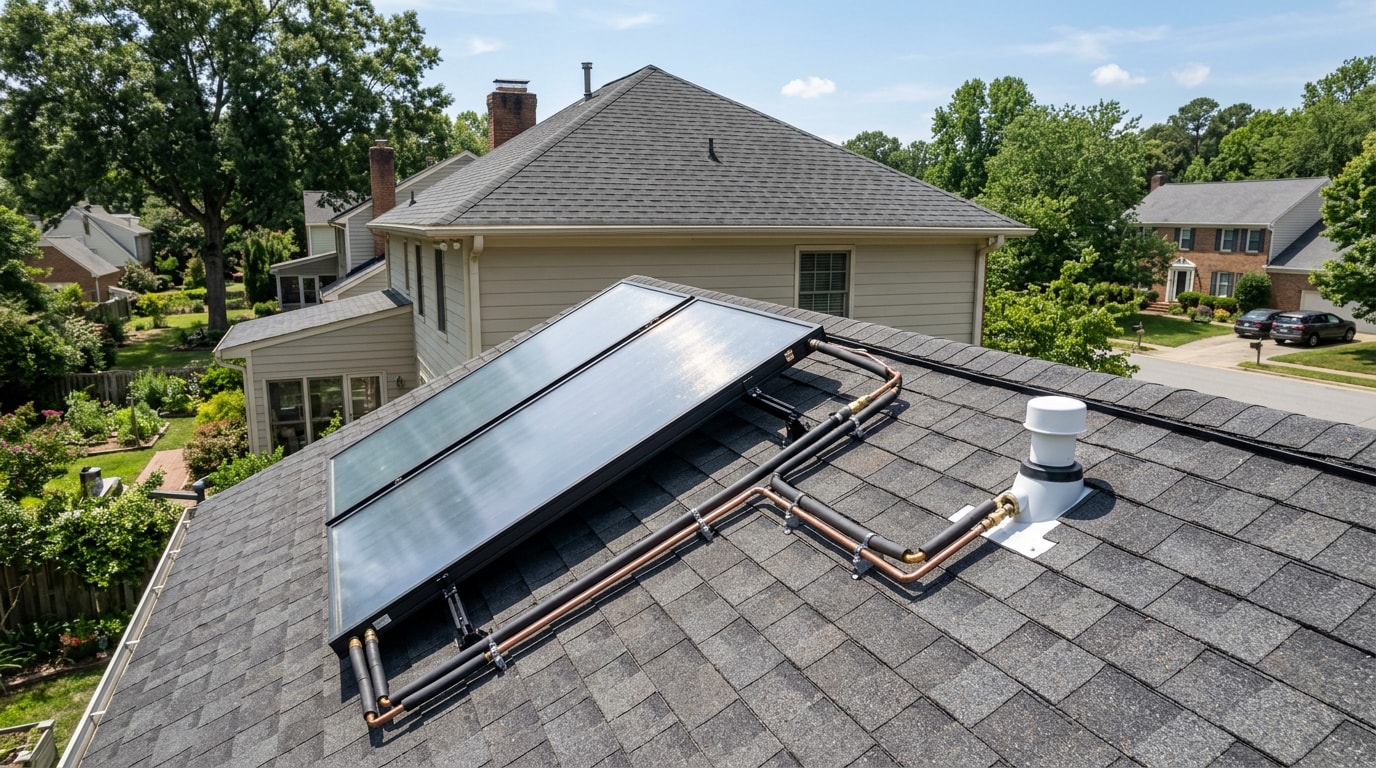
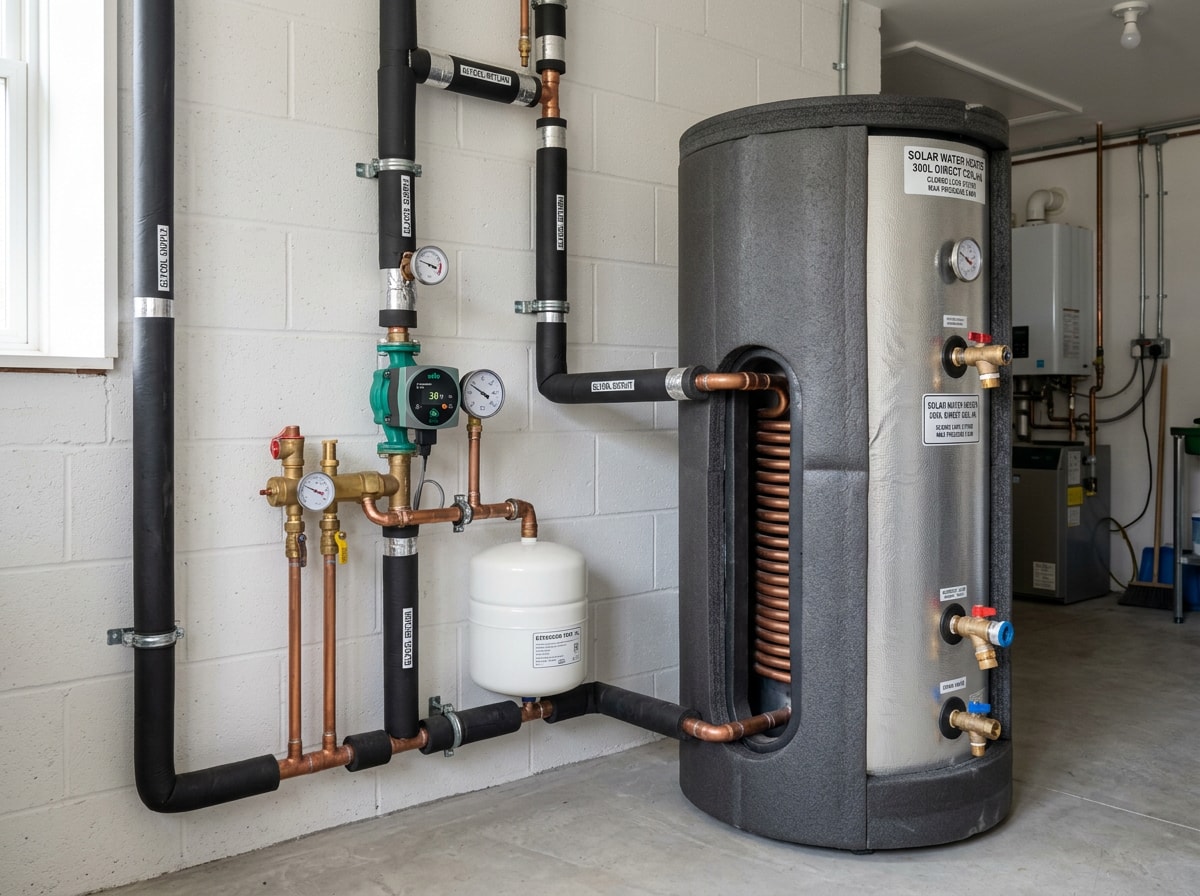
An active indirect, or closed-loop, system pumps a glycol-water mixture through the collector instead of the household's drinking water. That fluid passes through a heat exchanger, warming the potable water in a separate, sealed loop. For cold climates with freezing temperatures and less consistent sunlight, active systems with freeze protection like indirect circulation systems using non-freezing fluid are better suited.
An indirect solar water heater adds a small amount of complexity and cost compared to a direct system, but the freeze protection it provides is usually worth it in this climate. A closed-loop glycol system also tends to need less frequent part replacement, since the household water never directly contacts the collector plumbing.
Passive Thermosiphon Systems
A passive thermosiphon system has no pump, no controller, and no electricity requirement. Hot water simply rises naturally from the collector into a tank mounted above it. That simplicity makes it one of the lowest-maintenance options on the market and a genuine candidate for off-grid hot water setups on cabins or detached structures.
A thermosiphon system costs less upfront and has fewer parts to fail, but tank placement, usually above the collector and often on the roof, limits design flexibility for some homes.
Here's how the main configurations stack up against High Point's climate:
| System Type | Freeze Risk in High Point | Thermal Efficiency | Best Fit |
|---|---|---|---|
| Active Direct | High | Excellent | Mild climates only |
| Active Indirect | Low | Excellent | Most High Point homes |
| Passive Thermosiphon | Moderate (insulation-dependent) | Good | Simple, low-maintenance setups |
| Passive Integral | High | Fair | Not recommended locally |
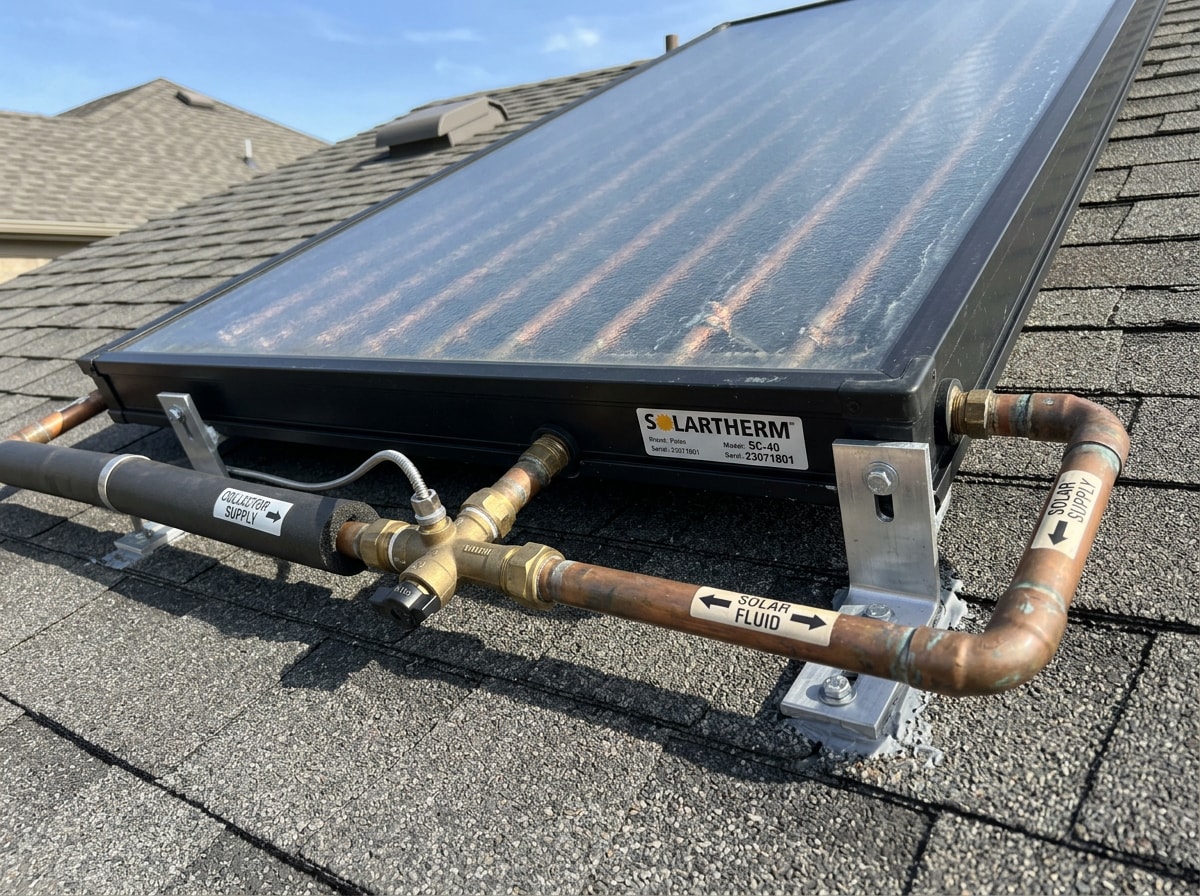
Solar Water Heating System Costs in High Point, NC (2026)
Cost is usually the deciding factor for a High Point homeowner weighing a solar water heater against a conventional tank. Pulling figures from several industry sources gives a more honest 2026 picture than relying on any single quote.
Installed Price by System Type
A solar water heater can cost from $2,000 to $6,000 depending on the type of system you choose , with more complex closed-loop setups running higher. General industry ranges for 2026 look like this:
| System Type | Typical Installed Price (2026) |
|---|---|
| Passive Thermosiphon | $2,000 – $5,000 |
| Active Indirect (Closed-Loop) | $6,000 – $10,000 |
| Active Direct | $5,000 – $8,000 |
The installed price depends on roof access, tank capacity, and whether existing plumbing needs rerouting. Getting a few local quotes remains the most reliable way to pin down an exact number for a specific home, and you can request a free estimate for your property directly.
Cost of Solar Water Heating System Components
A solar water heater quote typically breaks down into four main line items: the collector panels, the storage tank, the pump and controller (active systems only), and installation labor. Solar collector cost usually runs $1,500 to $3,500 depending on size and glazing type, while a dedicated storage tank adds another $1,000 to $2,000.
Installation labor, including roof mounting, plumbing connections, and electrical work for active systems, often makes up 30 to 40 percent of the total project cost. Permits and inspections add a smaller but necessary line item, and licensed plumbing work is required in most of Guilford County for any system tying into the home's water distribution. Homeowners can browse completed local installs on our projects page or review our broader plumbing contractor services before requesting numbers for their own roof.
2026 Incentive Update: What Happened to the 30% Tax Credit
Here's the piece most older guides and even some government pages haven't updated yet. For years, homeowners could claim a 30% federal tax credit on solar water heaters through the Residential Clean Energy Credit (Section 25D). That changed in 2025.
The One Big Beautiful Bill Act, the FY2025 reconciliation law, repealed the residential clean energy credit for expenditures made after calendar year 2025 . The law terminates the credit at the end of 2025, stating that it "shall not apply with respect to any expenditures made after December 31, 2025." In plain terms: a solar water heater installed and paid for in 2026 no longer qualifies for that 30% federal credit.
That doesn't mean every incentive is gone. North Carolina has historically offered a property tax benefit for active solar heating and cooling equipment, so the added value of the system isn't taxed like a typical home improvement. For most eligible renewable energy systems, the assessed value of the system is exempt from property tax, with solar energy heating or cooling systems exempt for the amount equal to the out-of-pocket expenditures for the components and labor associated with the system.
That said, this exemption has recently been narrowed by state legislation, and a 2025 state budget bill amended the exemption to apply only to property taxes imposed for an assessment date before January 1, 2025, with the exemption itself expiring entirely on January 1, 2027 . Rules like this change fast and are administered county by county, so confirm current status with your county tax assessor or a licensed installer before counting on it in your project math.
Pros and Cons at a Glance
Every system has tradeoffs, and a fair look at both sides helps before calling an installer for a quote.
Advantages
The clearest benefit is lower monthly bills and reduced reliance on rising electricity or gas rates common across North Carolina utilities. Most systems also deliver a notably long lifespan, with a typical payback of 5 to 15 years and systems lasting 20 to 30-plus years — though without the former federal credit, 2026 installs should expect to land toward the longer end of that payback range.
Beyond dollars, a solar water heater reduces a home's carbon footprint by offsetting the energy a conventional unit would otherwise consume. If you're comparing this upgrade against routine seasonal maintenance on existing equipment, our furnace maintenance guide for High Point homeowners is a useful companion read for the rest of the home's energy picture.
Disadvantages
The biggest drawbacks are the upfront cost and the need for professional installation — this isn't a weekend DIY project for most homeowners. Performance also depends on available sunlight and roof orientation, so heavily shaded lots see a smaller return.
Routine maintenance, like checking glycol levels on closed-loop systems or inspecting fittings annually, is generally light but shouldn't be skipped. It's also worth getting the plumbing details right: hot water should be stored above 140°F to limit Legionella growth, while circulating or delivered water should not fall below 120°F , per CDC guidance on potable water systems — which is exactly why a properly set thermostatic mixing valve at the tank matters, since it lets the storage side run hot for bacteria control while protecting people at the tap from scalding.
Solar Hot Water Heaters vs. Home Solar (PV) System
Homeowners researching "going solar" often conflate two different products. Thermal solar collectors are distinct from photovoltaic (PV) solar energy systems — you can heat your water with electricity generated by PV solar panels, but self-contained thermal solar water heaters are a separate solution that heats water directly using sunlight captured on a rooftop collector.
The practical tradeoff comes down to scope and price. A dedicated solar thermal setup is usually cheaper and more efficient specifically for water heating, while a full PV array offers broader whole-home value at a higher installed cost. Homeowners who'd rather pursue the electric route can also look at a heat pump water heater replacement, which delivers some of the same efficiency gains without a rooftop thermal collector.
Is a Solar Water Heater Worth It in High Point?
For homeowners who plan to stay in their home for several more years, the math still tends to favor solar water heating over the system's lifespan, even without the federal credit. The payback period, not the sticker price, is the number that matters most.
Solar water heaters can reduce water heating energy consumption by 50-80% depending on the climate zone, with annual savings for homeowners ranging from $150 to $450 . Compared to a standard electric tank, those annual savings compound every year utility rates rise, which has been a steady trend across the Piedmont Triad. You can see examples of completed local installs on the High Point area page or start with a conversation through the team at {{SITE_URL}} to get numbers specific to your roof and hot water usage.
FAQ
What Is the Price of a Solar Water Heater?
Installed solar water heater prices generally range from about $2,000 for a basic passive system to $10,000 for a fully equipped active indirect setup. See the cost section above for a detailed breakdown by system type.
Is There Still a Tax Credit for Solar Water Heaters in 2026?
No federal tax credit. The 30% Residential Clean Energy Credit ended for any system placed in service after December 31, 2025, under the One Big Beautiful Bill Act. North Carolina's property tax exemption for solar heating and cooling equipment may still apply in a limited form, but confirm current rules with your county tax office before counting on it.
How Long Does a Solar Water Heater Last?
Most solar water heater collectors last 20 to 25 years, while the storage tank may need replacement sooner. Lifespan depends heavily on water quality, routine maintenance, and how well the system was installed and sized for the home.
Do Solar Water Heaters Work on Cloudy Days or in Winter?
Yes, but at reduced output — collectors still capture diffuse sunlight on cloudy days, just less efficiently. A backup electric or gas element handles the gap during extended winter stretches, which matters in High Point given its occasional multi-day cloud cover and freezing nights.
How Much Maintenance Does a Solar Water Heater Need?
Upkeep is generally light: periodic panel cleaning, annual glycol level checks on closed-loop systems, and a professional inspection every year or two. Staying on top of maintenance protects the long lifespan these systems are known for, and it's a good item to bundle with any other plumbing contractor visit to the home.
Ready to find out what a solar water heater would actually cost on your High Point roof? Request a free estimate and we'll walk you through system types, local permitting, and realistic payback numbers for your household.