Heating furnace repair in Archdale, NC usually starts with one of three problems: no heat at all, weak airflow, or a furnace that short cycles on and off. Piedmont Triad cold snaps turn any of those into an emergency fast. This guide covers what repairs typically cost, which warning signs mean "call now," and how to tell if repair or replacement makes more sense for your furnace.
Signs You Need Furnace Repair in Archdale, NC
Most furnace failures give a warning before they fully quit. Catching these signs early usually means a cheaper, faster fix.
- No heat or weak heat — often a failed igniter, dirty flame sensor, or thermostat miscommunication.
- Short cycling — the furnace turns on and off repeatedly without finishing a heating cycle, usually from a clogged filter or overheating limit switch.
- Strange noises — banging, screeching, or rattling can point to a cracked heat exchanger, loose blower wheel, or failing motor bearing.
- Rising gas or electric bills — a furnace working harder than it should is a common early sign of a mechanical problem.
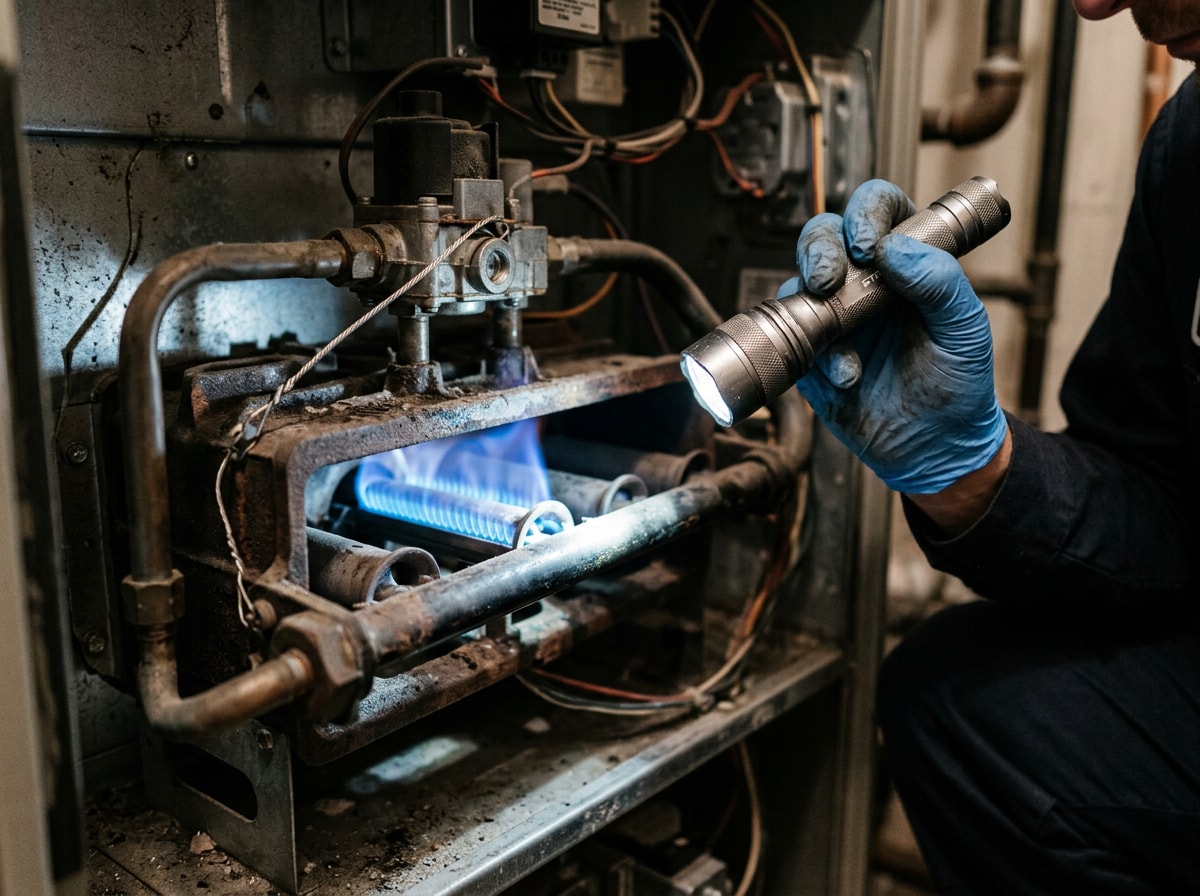
- Yellow or flickering burner flame — a healthy gas furnace burns blue. A yellow, flickering flame can signal incomplete combustion and a carbon monoxide risk.
- Frequent thermostat adjustments — if you're constantly bumping the temperature up, the system likely isn't keeping pace anymore.
If you notice soot near the unit or a yellow flame, shut the furnace off and have it inspected before running it again. Gas- and oil-burning furnaces are among the household items that can produce carbon monoxide, and the most common symptoms of CO poisoning are headache, dizziness, weakness, upset stomach, vomiting, chest pain, and confusion. If anyone in the home feels flu-like without an actual fever while the furnace is running, treat it as a CO risk and get fresh air, per CDC guidance on carbon monoxide poisoning.
What Furnace Repair Costs in Archdale, NC
Repair cost depends on what failed, the furnace's age, and whether parts are in stock locally. The table below is a general guide, not a quote, since every furnace and failure is different.
| Repair Type | Relative Cost | Typical Cause |
|---|---|---|
| Thermostat or sensor issue | Low | Miscalibration, dead battery, dirty flame sensor |
| Igniter or pilot assembly replacement | Low to moderate | Worn electronic igniter or faulty pilot |
| Blower motor repair or replacement | Moderate | Worn bearings, failed capacitor |
| Gas valve or control board replacement | Moderate to high | Electrical failure, age-related wear |
| Heat exchanger replacement | High | Cracking, corrosion, often age-related |
A diagnostic fee typically applies first, then a separate quote for parts and labor. Ask for that breakdown in writing before work starts, and ask whether the part is covered under a manufacturer warranty.
Repair or Replace? How to Decide
Furnaces don't fail on a schedule, so the repair-or-replace decision usually comes down to age, repair cost, and efficiency.
A commonly used guideline: if a repair costs more than roughly half of what a new furnace would cost, and the unit is past 15 years old, replacement is usually the better long-term value. A central furnace's efficiency is measured by annual fuel utilization efficiency (AFUE), and an AFUE of 90% means 90% of the energy in the fuel becomes heat for the home while the rest escapes up the flue. Older furnaces often run in the 56% to 70% range, which means a big share of every heating dollar is being lost before it ever reaches your living room. See the Department of Energy's furnace efficiency guidance for a full breakdown of AFUE ranges.
If your furnace is under 10 years old, has a solid maintenance history, and the repair is isolated to one component, repair is usually the smarter call. If you're facing a second or third major repair in two years, that pattern alone is worth a replacement estimate. Our gas furnace replacement team can walk through both options side by side before you commit to either one.
Emergency Furnace Repair: What to Expect
A rushed repair and a thorough one can look identical on the invoice until the furnace fails again a week later. A properly handled emergency call includes a technician familiar with varied furnace brands, working diagnostic tools, and a licensed background.
North Carolina HVAC technicians are licensed through a single statewide board. Plumbing and HVAC share a board in North Carolina, so the same license lookup covers the plumber fixing a water heater and the HVAC company replacing a heat pump. You can confirm a contractor's status through the North Carolina State Board of Examiners of Plumbing, Heating and Fire Sprinkler Contractors before scheduling work.
Before approving emergency repair work, ask:
- What exactly failed, and what's the evidence?
- Is this covered under manufacturer or labor warranty?
- What's the full cost if the part has to be special-ordered?
- Is the diagnostic fee applied toward the repair if I move forward?
Our emergency heating service line is staffed for exactly these calls when a furnace quits overnight or during a cold snap.
Furnace Maintenance Tips to Prevent Future Repairs
Dirt and neglect are the top causes of heating and cooling system failure and inefficiency , which makes basic maintenance the cheapest repair you'll ever make. A few habits go a long way:
- Check the filter monthly and replace it when it looks dirty.
It's worth checking your air filter once a month in your furnace, and cleaning it if it's reusable or changing it if it requires a replacement.
- Keep the area around the furnace clear of boxes, paint cans, and clutter.
- Test your carbon monoxide detector batteries every fall before heating season starts.
- Schedule a professional tune-up every autumn, before the first real cold snap hits the Triad.
In our service calls across Archdale and the surrounding Randolph County area, a dirty filter or a worn igniter accounts for most of the no-heat calls we run between November and February. That pattern is exactly why a fall tune-up pays for itself. Our seasonal heating maintenance visits check burners, ignition components, and safety switches before problems turn into no-heat emergencies. For a full walk-through of what a seasonal visit should cover, see our furnace maintenance guide for Piedmont Triad homeowners.
Other HVAC Services for Archdale, NC Homes
Furnace trouble rarely shows up alone. If your heating system is paired with ductwork, a heat pump, or whole-home air quality equipment, addressing one component often improves the rest of the system too.
- Heating system repair for boilers, electric furnaces, and hybrid systems
- Heat pump repair for dual-fuel and heat pump setups
- Indoor air quality service when dust or dry air is part of the complaint
- Gas furnace repair for standard natural gas and propane systems
Browse our full heating contractor services or visit the homepage for the complete list of HVAC, plumbing, and duct services we offer.
Service Areas Near Archdale, NC
Furnace repair coverage extends through Archdale and the surrounding Piedmont Triad, including Thomasville, High Point, and Kernersville. Visit our Archdale service area page for coverage details, or get a free estimate scheduled for your address.
FAQ
How much does furnace repair cost?
Furnace repair cost includes a diagnostic fee plus parts and labor, with the total depending on what failed and the furnace's age. A thermostat or sensor fix costs far less than a gas valve or heat exchanger replacement.
What are the signs your furnace needs repair?
Common warning signs include unusual noises, short cycling, weak or cold airflow, rising energy bills, and strange smells. A yellow or flickering flame, or soot near the unit, can signal a cracked heat exchanger and carbon monoxide risk, so shut the furnace off and have it inspected right away.
Is it better to repair or replace an old furnace?
A common rule of thumb is that if repair costs exceed roughly half of a replacement's price on a furnace over 15 years old, replacement usually makes more financial sense. Most furnaces last 15 to 20 years with regular maintenance.
How often should a furnace be serviced?
Most furnaces need one professional tune-up each fall before heating season starts. Furnaces older than 10 to 12 years may benefit from more frequent checks.
How long does a furnace repair appointment take?
Simple repairs like igniter or sensor replacement often take under an hour once the part is on the truck. Repairs involving a gas valve, control board, or blower motor can take two to four hours, and parts that need to be ordered will extend the timeline.
What's the most common reason furnaces stop working mid-winter?
A dirty filter restricting airflow is the single most frequent cause, followed by a failed igniter or flame sensor. Both are preventable with routine filter changes and a fall maintenance visit.